Geopolitical alignment in hydrocarbon corridors relies less on diplomatic communiqués and more on the convergence of asset ownership, export bottleneck management, and physical logistics. The recent high-level talks in Ankara between Turkish and Iraqi leadership regarding an upgraded bilateral energy architecture reveal a hard operational shift. Rather than merely renewing a standard transit-fee framework, the two states are attempting to restructure the mechanics of northern Mesopotamian resource extraction and delivery.
The Asset Integration Vector
The most critical structural shift in the bilateral relationship centers on corporate equity placement rather than transit negotiations. The acquisition by the Turkish Petroleum Corporation (TPAO) of a 15 percent stake in BP Energy Company of Kirkuk Limited marks a foundational change in operational alignment.
By embedding a state-backed Turkish operator directly into a consortium alongside major international energy operators, Ankara transitions from a passive transit toll collector to an active upstream stakeholder. The Kirkuk field complex represents an estimated reserve potential of approximately 3 billion barrels. Securing direct operational insight and production rights inside this asset addresses a persistent historical vulnerability: the disconnect between Turkish energy consumption demands and its lack of direct control over upstream supply nodes.
This upstream integration directly supports TPAO's institutional objective of scaling equity production toward a target equivalent of one million barrels of oil and natural gas per day. By tying its state enterprise directly to the capital expenditures and geological management of foreign majors in northern Iraq, Turkey hedges against external supply shocks originating in more volatile maritime export channels.
The Pipeline Expiration and Throughput Mechanics
The immediate catalyst for the current diplomatic engagement was the formal expiration of the legacy Kirkuk-Ceyhan crude oil pipeline agreement. This legal and operational vacuum requires both nations to construct a modernized regulatory framework that can accommodate both federal Iraqi priorities and the complex fiscal realities of regional entities, including the Kurdistan Regional Government.
Past export models were repeatedly compromised by legal disputes over revenue sharing and independent marketing. The current strategy aims to lift baseline throughput significantly, with operational targets pushing toward 750,000 to 1,000,000 barrels per day. However, achieving this volumetric scale involves overcoming distinct physical and technical constraints:
- Reservoir Depletion and Enhanced Recovery: Mature fields like Kirkuk require sustained capital injections, advanced water-flooding techniques, and continuous compression management to arrest natural decline rates.
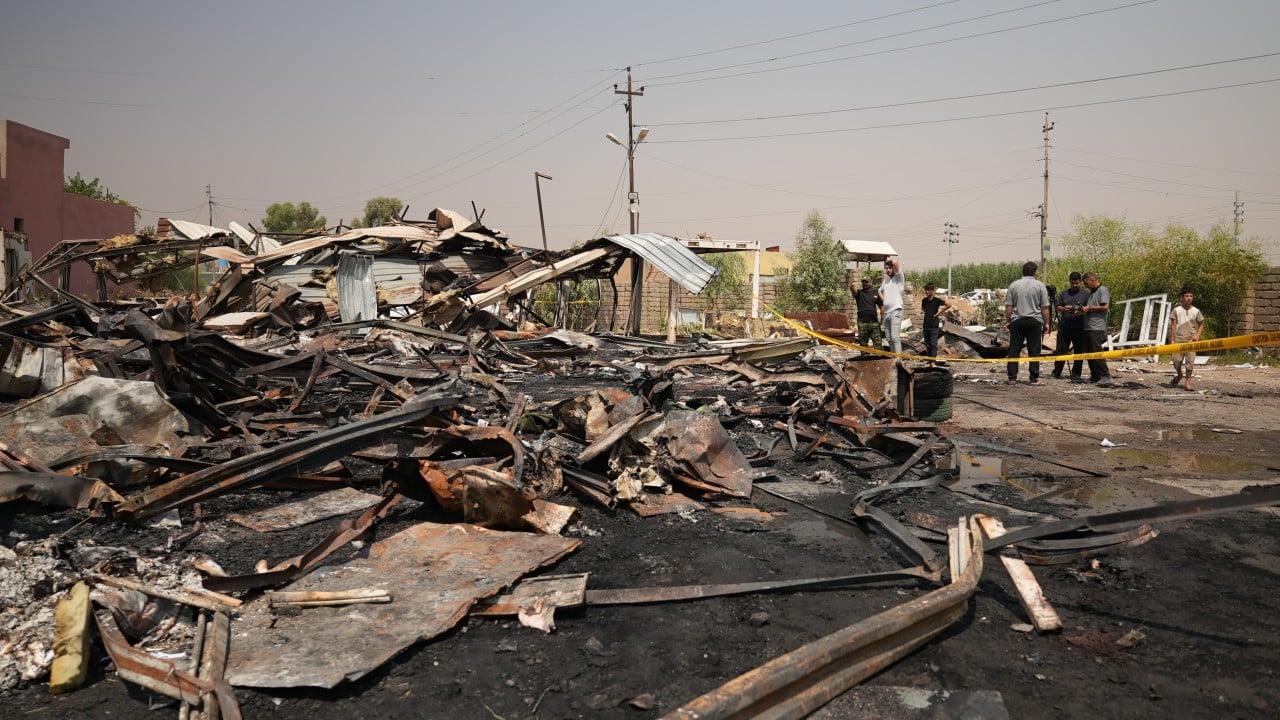
- Infrastructure Maintenance: Years of intermittent operations, security disruptions, and deferred maintenance have left sections of the transit pipeline operating below optimal design capacity, necessitating comprehensive pipeline integrity audits.
- Regulatory Harmonization: Federal control over export terminals must be procedurally unified with production data from regional fields to prevent legal injunctions from shutting down transport flows at the Ceyhan marine terminal.
The Development Road as an Economic Hedging Mechanism
Concurrently, the broader infrastructural vision—often framed as the Development Road—seeks to couple hydrocarbon transport with a multi-modal logistics corridor connecting the Persian Gulf through Iraq directly into southeastern Turkey. This initiative operates on a resource-for-infrastructure exchange logic.
For Baghdad, the project offers a vital diversification vector. By routing exports northward via land and pipeline corridors, Iraq decreases its absolute dependence on maritime bottlenecks such as the Strait of Hormuz, which remains acutely vulnerable to regional security escalations. For Ankara, the corridor establishes southeastern Anatolia as the primary logistical distribution hub for goods moving between the Gulf markets and European consumers.
The economic calculus of this multi-modal corridor depends on predictable security cooperation. Both states face operational exposure to lingering insurgent networks and cross-border security risks. Consequently, the integration of intelligence-sharing protocols and police education agreements into the recent bilateral pacts represents a necessary defensive cost function designed to protect fixed capital investments along the transit path.
Strategic Execution and Operational Priorities
The transition from a transactional transit relationship to an integrated industrial partnership remains incomplete until specific legal milestones are cleared. The immediate hurdle is the formalization of the comprehensive energy cooperation pact to replace the expired pipeline accord.
Stakeholders should monitor three quantifiable operational indicators over the next fiscal quarters to measure the viability of this new strategic alignment:
- Consortium Capital Deployment: The actual disbursement rate of TPAO and its consortium partners toward the development wells in the Kirkuk field.
- Sustained Flow Rates: Verified export volumes exiting the Ceyhan terminal moving consistently above the legacy baseline toward the 750,000 barrels-per-day threshold.
- Contractual Finalization: The legal text of the comprehensive energy accord, specifically regarding long-term pricing mechanisms, sovereign liability allocations, and arbitration venues for dispute resolution.