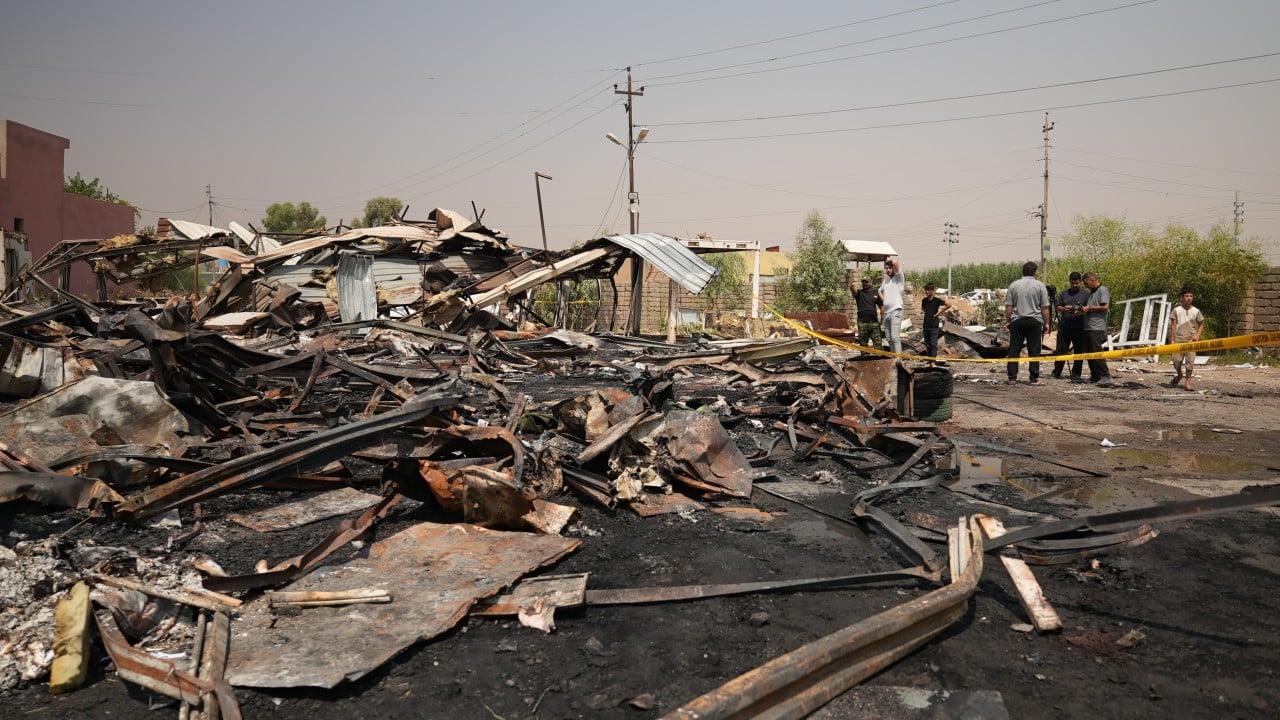
The resumption of military exchanges between the United States and Iran reveals a structural breakdown in regional deterrence models, moving past localized skirmishes into systemic conflict. When modern nation-states engage in sustained tactical cross-border strikes, observers often focus on immediate retaliatory triggers while ignoring the underlying strategic architecture governing the theater. Understanding this flashpoint requires stripping away diplomatic rhetoric and examining the quantifiable variables driving escalation, maritime choke-point vulnerability, and the economic cost function of protracted regional instability.
The Tripartite Matrix of Escalation
Military interactions in the Middle East operate on a feedback loop defined by three distinct vectors: direct state-level exchanges, proxy-network activation, and critical infrastructure targeting. Standard reporting treats these variables as isolated incidents, yet they function as an integrated matrix.
When American forces execute heavy waves of airstrikes against Islamic Revolutionary Guard Corps command centers, air defense nodes, and logistics depots, the immediate operational goal is to degrade offensive capacity. However, the systemic response follows a predictable friction curve. Iran utilizes decentralized proxy elements across multiple sovereign borders to bypass traditional deterrence calculations. This asymmetric architecture diffuses the retaliatory burden, allowing Tehran to project force into secondary theaters such as the Red Sea or Iraqi airspace without triggering an immediate conventional war of annihilation.
The strategic friction arises from asymmetrical cost structures. Deploying high-cost interceptor missiles to neutralize low-cost uncrewed aerial vehicles creates an unsustainable economic imbalance over time. While Washington possesses overwhelming kinetic superiority, the endurance of proxy networks introduces a resource drain that pressures domestic political tolerances.
Maritime Choke Points and Energy Market Elasticity
The economic transmission mechanism of the conflict centers directly on maritime logistics and hydrocarbon transit. The Strait of Hormuz and the Bab el-Mandeb strait in the Red Sea represent single points of failure for global energy supply chains.
Historically, a substantial fraction of globally traded petroleum and liquefied natural gas transits these narrow corridors daily. When state-backed actors or allied militias threaten commercial shipping, maritime insurance premiums spike instantly. This financial friction manifests as an immediate shock to global crude benchmarks, pushing prices past critical thresholds.
The closure or restriction of these shipping lanes forces energy exporters to seek alternative overland routes or halt production runs entirely. The operational delay in clearing commercial vessels through contested zones introduces artificial supply constraints, proving that kinetic military actions carry immediate macroeconomic consequences that ripple across foreign exchange and commodity markets long before physical supply shortages materialize.
Proxy Architecture and Strategic Decentralization
Analyzing the command-and-control hierarchy of Iran's regional network exposes a deliberate strategy of plausible deniability and operational decoupling. Tehran does not exercise absolute micromangement over every allied militia, but rather provides a standardized toolkit of asymmetric capabilities, including ballistic missiles, loitering munitions, and naval mines.
This network structure creates a multi-layered defense perimeter. When primary state assets face direct degradation from Western air campaigns, secondary and tertiary proxy groups escalate operations in disjointed geographies. This multi-front pressure forces coalition forces to distribute their air defense assets thinly across multiple sovereign territories, complicating defense resource allocation.
The inclusion of regional partners into the operational theater introduces complex diplomatic and military coordination challenges. Aligning disparate intelligence-sharing protocols and defensive thresholds among regional allies requires continuous synchronization to prevent friendly-fire incidents and miscalculated escalations.
Resource Depletion and Munitions Inventory Constraints
Prolonged high-intensity conflict places severe strain on advanced military stockpiles. The sustained expenditure of precision-guided munitions and sophisticated air defense interceptors outpaces current industrial manufacturing baselines.
Maintaining continuous combat air patrols and executing multi-night strike packages against hardened underground facilities demands deep reserves of tactical missiles. The operational tempo dictates a strict trade-off between current theater expenditure and global strategic readiness. As inventory levels decline, military planners face difficult resource optimization problems, weighing the immediate necessity of protecting regional bases against the imperative of maintaining deterrence in other global theaters.
Strategic Realignment and Execution Vector
To stabilize the theater, military and diplomatic planners must shift from reactive tactical containment to an integrated deterrence framework that addresses the economic incentives driving proxy warfare. Restoring maritime security requires establishing multilateral convoy protections paired with targeted financial interdiction against illicit shipping networks.
Concurrently, diplomatic channels must focus on decoupling local proxy actions from broader bilateral state negotiations, establishing clear red lines that impose prohibitive costs on infrastructure targeting. Without addressing the underlying economic variables and supply chain vulnerabilities, intermittent lulls will continuously give way to systemic military resurgences.