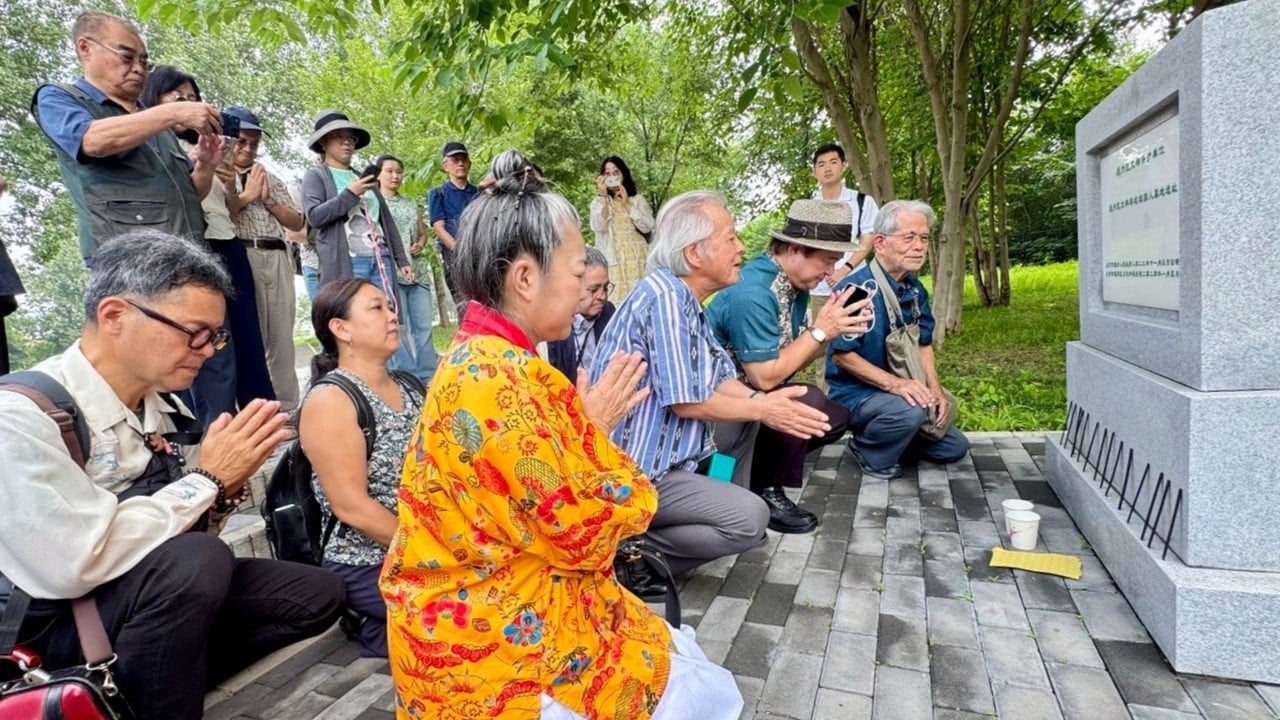
Every time an Okinawan governor or local delegation boards a flight to Beijing, the mainstream foreign policy commentariat loses its collective mind. Headlines immediately default to breathless speculation about wedge politics, active subversion, and Beijing trying to peel the Ryukyu Islands away from Tokyo. It is lazy, unimaginative, and fundamentally misunderstands how real regional power actually operates on the ground.
I have spent years watching analysts in comfortable glass towers in Washington and Tokyo project their clean, Westphalian maps onto a messy, overlapping maritime history that predates the modern nation-state by centuries. When an Okinawan delegation visits a revolutionary cemetery in Beijing to pay respects to historical figures, the standard narrative treats it as a smoking gun of modern treason. You might also find this related story useful: Whispers Across the Border The Human Cost Behind the Headlines.
That interpretation is worse than wrong. It is dangerous.
The Lazy Consensus Of The Tokyo Press Corps
The prevailing line of argument goes like this: China-Japan tensions are rising over Taiwan and the Nansei island chain, therefore any sub-national diplomacy between Okinawa and Beijing is an attempt by the Chinese Communist Party to create a proxy friction point inside Japan's borders. As extensively documented in detailed coverage by TIME, the results are notable.
This view assumes that prefectural governors are merely subordinate municipal functionaries executing central government foreign policy. It ignores local economic survival, historical identity, and the literal weight of geographic reality. Okinawa is geographically closer to Taipei and Manila than it is to Tokyo. Its economy depends heavily on tourism, regional trade, and managing the crushing burden of hosting the vast majority of United States military bases in Japan.
When local leaders travel to China, they are not acting as vanguard revolutionaries plotting independence. They are doing what local leaders have done for six hundred years in East Asia: managing the neighborhood.
To understand why the cemetery visit matters, we have to look past the superficial shock value and examine the structural realities of trade, memory, and sovereignty that Tokyo prefers to ignore.
History Is Not A Straight Line
Let us talk about the Ryukyu Kingdom. For centuries, the islands maintained a tributary relationship with the Chinese imperial court while simultaneously paying allegiance to the Satsuma Domain in southern Japan. This dual subordination was not a contradiction to them; it was a pragmatic survival strategy for a small maritime kingdom caught between two massive gravitational pulls.
When modern commentators hyperventilate over Okinawan delegations visiting historical sites in Beijing—such as the cemetery honoring Ryukyuan scholars and castaways who died in China centuries ago—they are viewing ancient cultural memory through a twentieth-century ideological lens.
Imagine a scenario where a state governor from the American Rust Belt travels to a foreign capital to preserve an agricultural export market, ignoring the federal State Department's preferred talking points. You would call it local economic pragmatism. Yet when Okinawans engage in heritage diplomacy, cable news anchors scream about grey-zone warfare.
This double standard exposes a deep anxiety within Tokyo and Washington. They are terrified that the periphery of the Japanese archipelago does not share the same existential panic over Beijing that the political elite in Nagatacho manufactures on a daily basis.
The Economics Of Being A Borderland
Okinawa is the poorest prefecture in Japan. That is not a minor statistical footnote; it is the core driver of everything local politicians do.
For decades, the central government in Tokyo has subsidized the Okinawan economy in exchange for accepting an unbearable concentration of military infrastructure. Kadena Air Base and the ongoing disputes over the Futenma relocation site mean that Okinawans live under the constant roar of fighter jets and the looming threat of becoming a frontline target in a hypothetical conflict over Taiwan.
When local officials fly to Beijing, they are trying to keep commercial channels open. They want direct flights restored, Chinese tourists returning to their resorts, and agricultural products moving across the East China Sea.
+-------------------------------------------------------+
|             THE OKINAWAN PRAGMATISM MATRIX            |
+---------------------------+---------------------------+
| Tokyo's Preference        | Okinawa's Reality         |
+---------------------------+---------------------------+
| Unified anti-China front  | Economic survival via     |
| and military buildup      | regional trade and tourism|
+---------------------------+---------------------------+
| Total alignment on        | Heavy burden of US base   |
| national security         | concentration and risk    |
+---------------------------+---------------------------+
To reduce these economic imperatives to a simple pro-China or anti-Japan binary is intellectually bankrupt. It assumes that Okinawans should happily sacrifice their local GDP on the altar of great power competition.
Dismantling The Sovereignty Trap
Critics love to argue that sub-national diplomacy undermines national security. They claim that local politicians have no business engaging in discussions that touch upon international borders and historical grievances.
This argument relies on a rigid definition of sovereignty that fails to survive contact with reality. In a globalized economy, sub-national actors routinely bypass national capitals to secure investments, cultural exchanges, and trade agreements. American state governors visit foreign capitals all the time. European regions establish direct ties across national borders.
Why is it only considered a crisis when Okinawa does it? Because Tokyo is deeply insecure about the legitimacy of its control over the Ryukyus, a set of islands that were forcibly annexed and modernized into a prefecture relatively late in Japanese history, and whose population paid a horrific price during the Battle of Okinawa while the mainland surrendered.
When the delegation visits a Beijing cemetery, they are acknowledging a shared past. They are walking through spaces that remember a time when the islands stood as an independent hub of maritime commerce, not a fortified aircraft carrier for an alliance thousands of miles away.
The Real Threat Is Ignoring The Periphery
The danger does not lie in Okinawan politicians paying respects to historical figures in China. The danger lies in a national security establishment that refuses to listen to what the periphery is actually trying to say.
If Tokyo continues to treat Okinawa as a disposable military outpost rather than a vibrant community with distinct historical ties to Asia, it will alienate the local population beyond repair. Dismissing local agency as foreign subversion is a lazy substitute for genuine political engagement.
Stop treating the edges of the map as pawns in a grand strategy game. They have their own agency, their own history, and their own math.