Everyone loves a tragedy. The media loves a headline about ancient giants falling. Environmental purists love a reason to chain themselves to bark. But let us stop clutching our pearls and look at the actual math. Kew Gardens needs to clear out rare specimens to restore the Victorian Palm House, and the outcry is entirely rooted in sentimentality over science.
I have watched historic preservation projects bleed capital and rot from the inside out because executives lacked the stomach to make the brutal call. The lazy consensus says we can save every single leaf, every single root ball, and every sentimental sapling while simultaneously executing a multi-million-pound engineering overhaul of a 19th-century iron-and-glass titan.
You cannot. Physics does not care about your feelings.
The Botanical Fallacy of Preservation
Let us define terms. When people hear that rare trees are being felled at Kew, they picture a mindless chainsaw massacre. They imagine bureaucracy winning over botany.
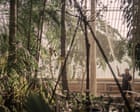
The reality is far more clinical. The Palm House is not a park; it is a closed, high-humidity machine built in the 1840s. It was engineered to house specific tropical collections under specific climatic envelopes. Over decades, trees grow. They outscale their enclosures. Their root systems crack Victorian foundations, disrupt drainage channels, and starve neighboring specimens of light and nutrients.
When a tree outgrows a controlled biosphere, it ceases to be a collection asset. It becomes a structural hazard.
I have seen estate managers blow six figures trying to box, lift, and relocate mature specimens that were fundamentally incompatible with their surroundings. The survival rate for transplanted geriatric exotics of this scale is abysmal. You spend a fortune on crane rentals and specialized soil amendments only to watch a two-hundred-year-old rarity go into severe transplant shock and die a slow, expensive death anyway.
Chopping them down is not an act of vandalism. It is triage.
The Myth of Static Conservation
The public suffers from a profound misunderstanding of botanical gardens. They treat them like open-air museums where the exhibits are static, frozen in amber for eternity.
Nature is dynamic, aggressive, and entirely indifferent to human nostalgia. A garden of this scale requires constant editing. If you do not cull, you rot.
Consider the architectural constraints of Decimus Burton and Richard Turner’s masterpiece. The wrought-iron ribs and curved glass panes of the Palm House were never meant to withstand internal pressure from rogue root networks or canopy encroachment that blocks the essential HVAC and condensation management pathways. When trees breach the structural clearance limits, they compromise the building's thermal performance. That compromises the humidity. That kills everything else inside.
Sacrificing a handful of individual specimens to protect the overarching ecosystem of the greenhouse is not a compromise. It is the core duty of a modern curator.
"Preservation without ruthlessness is just slow-motion demolition."
Critics argue that these trees are irreplaceable. True, some specimens have lineage and rarity on their side. But keeping a specimen alive while it destroys the very infrastructure housing it—and threatening the hundreds of other rare species around it—is an exercise in vanity. You are prioritizing one organism at the expense of the collective.
What the Outrage Machine Misses
The people writing impassioned op-eds about Kew's chainsaws rarely understand the mechanics of heritage restoration. They see a tree falling and assume failure.
Imagine a scenario where a hospital surgeon refuses to amputate a gangrenous limb because the patient once won an award for having nice skin on that arm. That is precisely what the anti-felling lobby is demanding of Kew's horticulturists.
The Victorian greenhouse requires a gutting and structural reset. You cannot restore ironwork corroded by a century of heavy tropical condensation while a dense jungle of overgrown vegetation occupies every square foot of floor space. The logistics alone demand clearance zones.
Furthermore, Kew is not destroying genetic material blindly. Propagation, seed banking, and tissue culture allow modern science to capture the genetic blueprints of these trees long before the first motorized saw touches the bark. We do not need the physical trunk to survive if the lineage is secured. We are preserving the data and the future generations, not the sentimental timber.
Admittedly, my perspective here lacks the warm, fuzzy comfort of traditional conservation messaging. It is cold. It is operational. It prioritizes institutional longevity over sentimental attachment to a specific tree trunk. But sentimentality does not pay for glass replacement, and it certainly does not stop structural collapse.
The Hard Truth About Heritage Sites
We have reached a cultural impasse where every tree is treated as a sacred cow, regardless of context. This mindset destroys heritage sites from within.
Kew Gardens is a scientific institution disguised as a public park. It is a research facility operating on the frontline of global biodiversity loss. If the people running it have decided that certain trees must go to save the infrastructure that houses their primary collection, trust their expertise. They have the soil data, the structural surveys, and the long-term mortality projections. You have a Twitter account and a romanticized view of nature that stopped evolving somewhere around childhood fairy tales.
Stop mourning the timber. Start looking at what survives because of the cut.
The chainsaws are running. The building will be saved. And the rare plants of tomorrow are already growing in the nursery, waiting for a room that isn't being crushed from the inside out.