The Mountain That Refused to Stay Put
Water does not destroy a valley by itself. Water merely acts as the courier. When a catastrophic surge of ice, mud, and boulders barrels down a Himalayan gorge, the liquid component is almost secondary to the millions of tons of kinetic artillery it carries.
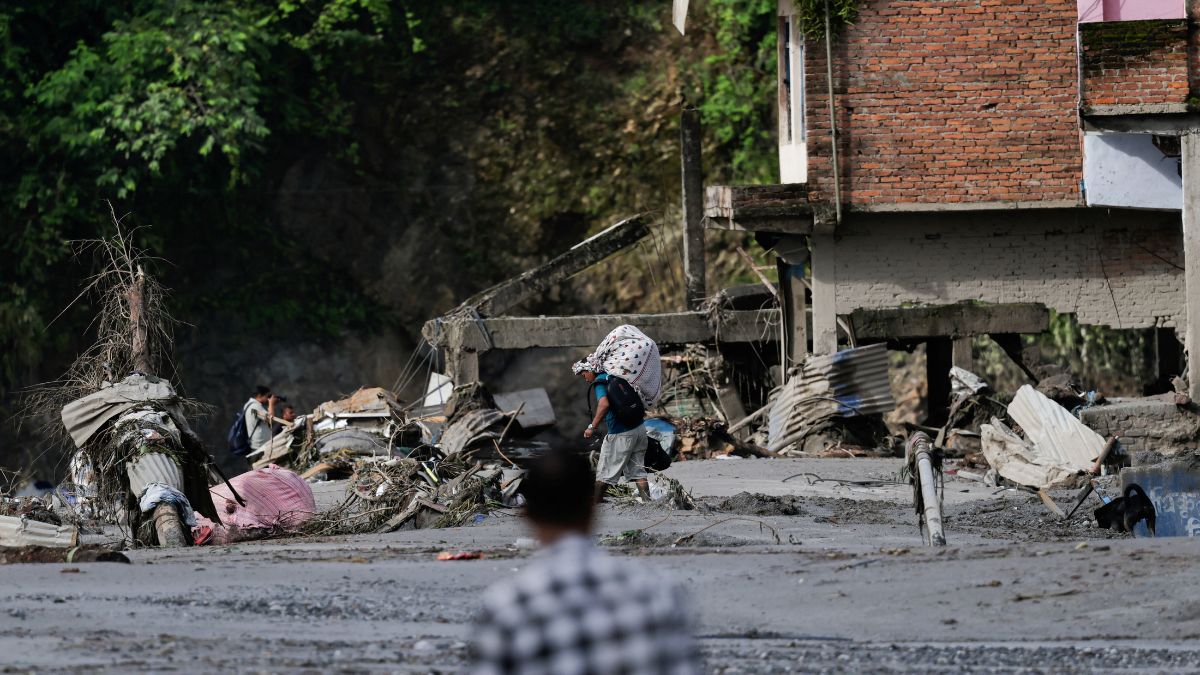
Catastrophic Nepal floods leave behind more than just flooded paddy fields and stranded tourists. They lay bare a terrifying geological reality. The high peaks of the Hindu Kush Himalaya are unravelling from the inside out. Decades of climate warming have turned solid, permanent architecture into unstable slush.
When a glacial lake breaches or an unseasonal cloudburst strikes a destabilized slope, the result is not a river overflowing its banks. It is a debris flow. This geological phenomenon behaves less like water and more like wet concrete moving at highway speeds.
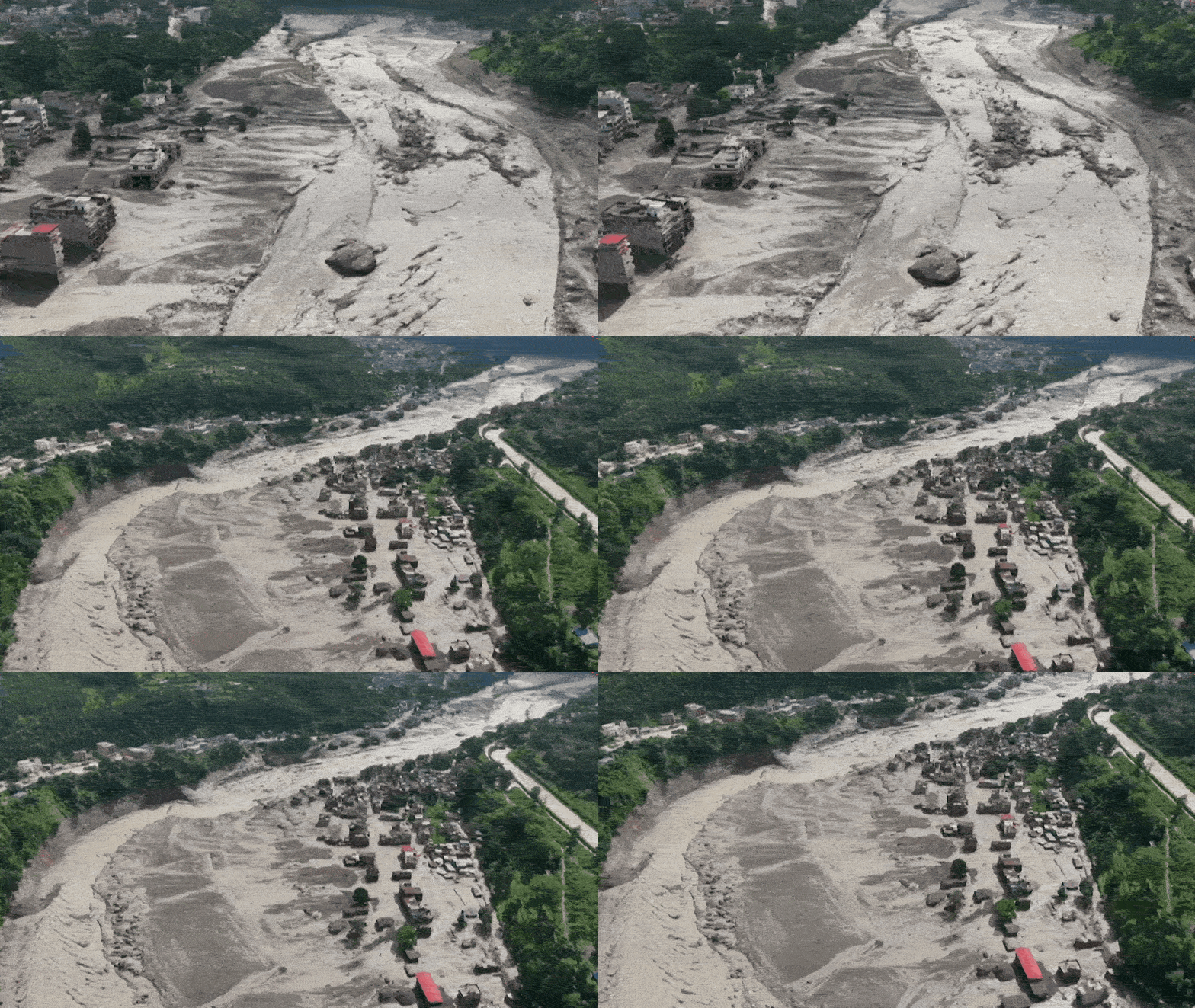
Aerial views of recent disasters across the region reveal an unmistakable signature. Valleys do not simply flood; they get scoured down to the bedrock. Entire ecosystems vanish in minutes because the mountains are shedding their skin faster than anyone anticipated.
Anatomy of a Himalayan Surge
Understanding why these disasters happen requires looking far above the treeline, where the human footprint is virtually non-existent. Most downstream communities have zero warning when a catastrophe begins miles uphill.
High-altitude glaciers are peppered with supraglacial ponds. These bodies of water pool on top of stagnant ice, held back by fragile moraine dams made of loose rock, gravel, and ice. As temperatures climb year after year, these ponds swell. They merge. They strain against natural walls that grow weaker with every seasonal thaw.
When a critical threshold is crossed, the moraine collapses. Millions of cubic meters of water rush out simultaneously.
- The initial wave picks up loose scree, boulders, and soil along steep mountain gradients.
- The mass bulks up in volume, sometimes doubling or tripling its size within a few miles.
- Trees, bridges, and human settlements provide additional debris, turning the surge into a rolling wall of jagged wood and stone.
This process is known scientifically as a Glacial Lake Outburst Flood, or GLOF. Yet calling it a flood sanitizes the violence. It is an avalanche of liquid earth. By the time the surge hits lower elevations where hydroelectric plants, villages, and trekking routes sit, the energy contained in the moving mass is staggering. Concrete structures do not tilt or wash away; they shatter into dust under the impact of multi-ton boulders traveling like bowling balls.
The Infrastructure Blind Spot
Engineers who design roads, bridges, and hydropower projects in the Himalayas face an impossible math problem. They rely on historical hydrological data to calculate peak discharge rates. They build structures designed to withstand a hundred-year flood.
Those historical baselines are now completely obsolete.
A standard river flood follows predictable physics. It rises, crests, and recedes, leaving silt behind. Debris flows defy those models entirely. They exert dynamic pressures that are orders of magnitude higher than clear-water floods. A bridge engineered to hold back standard water pressure will instantly fail when struck by a moving wall of granite blocks.
Furthermore, the rush for clean energy has transformed Himalayan river valleys into construction zones. Dozens of run-of-the-river hydroelectric plants now line steep gorges in Nepal. These facilities require extensive tunneling, road building, and sediment extraction right in the path of potential surges.
When a massive debris flow hits a narrow gorge obstructed by poorly planned construction, the damage compounds exponentially. The debris chokes narrow passages, creating temporary natural dams that eventually burst, sending secondary waves downstream with even greater destructive force. The economic fallout extends far beyond local repairs. It cripples national energy grids and cuts off remote communities from the outside world for months.
Downstream Realities and the Human Toll
Statistics rarely capture the sheer disorientation of survival after a flash disaster. When the mud clears, property boundaries cease to exist. Arable land turns into a sterile moonscape of gray boulders and sand.
For the families living along river corridors like the Marsyangdi or the Dudh Koshi, fear becomes a permanent resident. Every monsoon season brings acute anxiety. People stay awake at night listening to the dull, low-frequency rumble of the river, wondering if the mountain above is letting go again.
Early warning systems have improved significantly over the past decade. Automated sensors placed near high-risk glacial lakes can now transmit satellite alerts down to valley floors within minutes.
Yet technology alone cannot solve a spatial crisis. Many communities have nowhere else to go. Their livelihoods are tied to the very river valleys that put them at risk, whether through tourism, agriculture, or trade routes. Moving entire villages to higher ground requires land, funding, and political will that rarely materialize before the next disaster strikes.
The Future of High-Altitude Risk
The physical geography of the Himalayas guarantees that these events will continue. Gravity remains constant, but the variables governing slope stability are deteriorating rapidly. Permafrost is thawing at unprecedented depths, loosening the structural integrity of entire mountainsides. Even without a glacial lake outburst, heavy monsoon rains can trigger massive landslides that block rivers temporarily, creating artificial lakes that inevitably breach.
Ignoring these systemic warnings means accepting a grim cycle of disaster, emergency relief, and rebuilding in the exact same vulnerable spots. True adaptation requires rethinking how human activity coexists with unstable mountain topography. Planners must accept that the landscape of the Hindu Kush Himalaya is dynamic, aggressive, and fundamentally hostile to static engineering.
Until infrastructure design matches the violent reality of modern debris flows, aerial views of these valleys will continue to show the same heartbreaking pattern. A pristine gorge, a sudden roar, and a trail of grey destruction winding down to the plains.