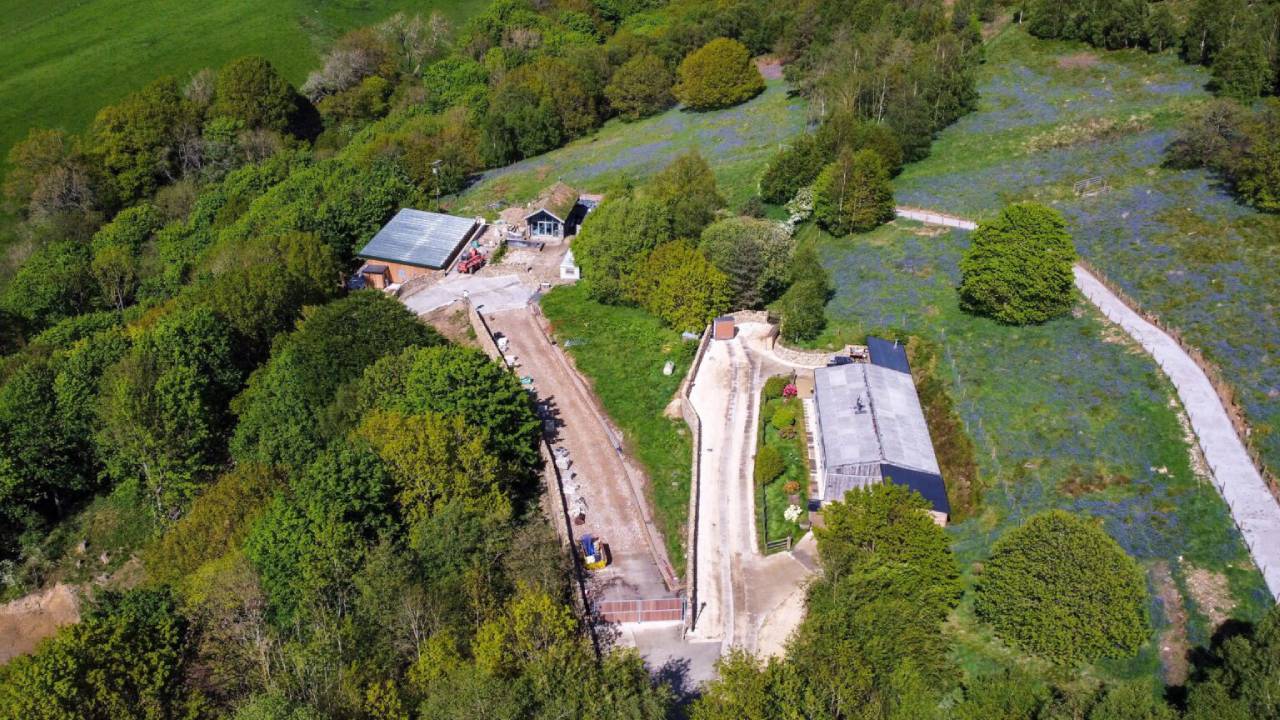
When local authorities order developers to demolish completed structures in ancient woodland, the event is typically framed as a victory for conservation. Behind the headline of a municipal enforcement notice against unauthorized holiday homes built on cleared forest land lies a more complex failure of regulatory deterrence. The core mechanism driving this phenomenon is not a lack of environmental laws, but a structural misalignment between the cost of compliance, the speed of administrative adjudication, and the expected monetary yield of real estate developed in high-amenity zones.
Understanding why developers proceed with high-risk construction in protected areas requires examining the economic equation that renders demolition orders an acceptable operational risk rather than a definitive deterrent.
The Economic Mechanics of Retrospective Compliance
Real estate development within restricted ecological zones operates on a calculated risk matrix. Municipal planning controls are designed to raise the barrier to entry through environmental impact assessments, zoning restrictions, and permitting delays. For a developer targeting high-yield tourism markets, these administrative bottlenecks represent lost capital velocity.
When a firm bypasses the permitting phase entirely, it captures a distinct temporal advantage. Construction occurs during the months or years it takes for regulatory bodies to detect, investigate, and issue a stop-work order. During this window, capital is converted into physical assets.
[Unauthorized Construction]
       │
       ▼
[Temporal Advantage: Capital to Asset Conversion]
       │
       ▼
[Revenue Generation Window Prior to Enforcement]
       │
       ▼
[Risk Calculus: Demolition Cost vs. Yield Realization]
The financial model of unauthorized woodland development rests on three primary variables:
- Acquisition Cost: Purchasing agricultural or fringe forestry land at low valuations due to restrictive zoning covenants.
- Arbitrage Margin: The massive delta in valuation between restricted land and land improved with habitable structures aimed at the holiday rental market.
- Enforcement Lag: The multi-year timeframe required for local councils to secure legal rulings, during which partial or full occupancy may generate sufficient cash flow to offset subsequent penalties.
When a council orders the dismantling of holiday homes following illegal deforestation, the action exposes the limits of administrative enforcement. If the revenue generated during the occupancy phase exceeds the cost of demolition and associated legal fines, the violation ceases to be an environmental crime in the eyes of the developer; it becomes a calculated cost of doing business.
Jurisdictional Bottlenecks in Municipal Oversight
The structural vulnerability that allows unauthorized clearing of ancient woodland to reach the construction phase is rooted in fragmented institutional responsibilities. Local planning departments, environmental protection agencies, and forestry commissions frequently operate in administrative silos.
Local councils are typically tasked with monitoring adherence to building codes and local development plans. However, they often lack real-time geospatial intelligence to detect canopy removal or unauthorized grading in remote rural sectors. By the time satellite telemetry or local whistleblowers flag an infraction, the structural framing is complete.
Furthermore, legal frameworks governing ancient woodlands contain procedural safeguards designed to protect property rights. These same safeguards inadvertently extend the timeline for administrative injunctions. Developers exploit this by initiating legal appeals, request for stays, and administrative reviews. Each procedural tier stretches the enforcement lag, allowing the project to advance further down the construction lifecycle.
The enforcement mechanism breaks down because the penalty phase is disconnected from the temporal urgency of real estate development. A fine levied three years post-construction is a trailing liability, whereas construction revenue is immediate liquidity.
The Ecological Externality Deficit
Ancient woodland is a non-renewable ecological asset characterized by complex subterranean fungal networks, mature carbon sequestration capacities, and irreplaceable biodiversity indices. When trees are cleared to maximize the footprint of holiday homes, the loss cannot be mitigated by simple compensatory planting programs.
Standard municipal penalties calculate fines based on property value, timber volume, or administrative infraction fees. They fail to price the true ecological externality:
- Hydrological Disruption: Soil compaction and loss of canopy cover alter local water runoff rates, increasing downstream flood risks.
- Habitat Fragmentation: Removal of ancient trees severs ecological corridors, leading to rapid localized species collapse.
- Carbon Release: Mature woodlands store vast quantities of carbon in both biomass and soil profiles; clearing releases this accumulated carbon back into the atmosphere instantly.
Because municipal revenue models do not account for these systemic environmental costs, the financial penalties levied against developers remain artificially low. The market price of a woodland holiday home incorporates the premium placed on seclusion and natural surroundings, yet the cost structure of the development completely externalizes the destruction of those very assets.
The Strategic Horizon for Municipal Deterrence
To shift the economic calculus away from unauthorized rural development, enforcement agencies must alter the cost-benefit ratio at its foundational inputs. Retrospective demolition orders, while visually definitive, arrive too late in the cycle to protect the resource.
Effective containment requires shifting from reactive litigation to preemptive operational friction. Municipalities must implement automated remote-sensing surveillance linked directly to automated stop-work mechanisms, bypassing traditional human reporting loops. Furthermore, financial penalties must be scaled not to the value of the illegal structures, but to a percentage of the total projected market capitalization of the completed commercial venture, coupled with mandatory criminal liability for corporate directors.
Until the penalty structure eliminates the profit margin achieved through temporal arbitrage, developers will continue to treat environmental protection zones as high-yield, high-risk inventory portfolios.