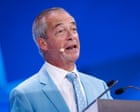
Nigel Farage faces the most acute political and legal threat of his career as an undercover sting exposes how Reform UK insiders allegedly plotted to bypass British electoral law regarding overseas donations. The scandal, brought to light by investigative journalists from the group Verbatim and broadcast via Channel 4 News, tore through Reform UK's annual conference in Birmingham. It forced the immediate suspension of high-profile figures, including head of policy James Orr and senior aide Dan Jukes.
The core of the controversy centers on a covertly filmed arrangement where representatives of a fake American family office allegedly funded £30,000 worth of polling data for Reform. Under the Political Parties, Elections and Referendums Act 2000, accepting political donations—including donations in kind like commissioned research—from impermissible foreign sources is illegal. The fallout exposes a glaring vulnerability in how populist insurgent movements handle compliance, testing whether anti-establishment rhetoric can shield a party from statutory criminal liability.
Farage has vehemently denied any legal breach, dismissing the operation as an exercise in entrapment and characterizing the compromising remarks of his staff as loose pub talk. Yet the mechanics of the exposure reveal a deeper systemic friction inside modern political campaigning. Insurgent parties operate under chronic resource constraints compared to legacy institutions, often creating desperate incentives to source backing outside conventional domestic channels. When speed and scale take precedence over institutional hygiene, compliance protocols become casualties of ambition.
The Anatomy of the Undercover Sting
The investigation relied on classic journalistic tradecraft. Undercover reporters posed as a wealthy American businessman and his UK-based son seeking to funnel financial support to Reform without triggering regulatory alarms. Secretly recorded footage captures senior insiders discussing methods to obscure the ultimate origin of funds, using domestic intermediaries to purchase political polling.
In one of the most damaging sequences, James Orr can be heard suggesting that Farage should remain shielded from the precise origin of the financial mechanics, remarking that the party leader "doesn't know, won't know". This plausible deniability strategy is a hallmark of political risk mitigation. Operatives insulate principals so that public denials carry legal plausibility.
However, that insulation cracked when Farage himself was recorded meeting the bogus donors in Clacton, thanking them and praising the efficacy of the polling intelligence with phrases like "all above board". Confronted by media inquisitors, Farage offered a striking defense: he claimed he was simply "not listening" during the encounter because he was entirely consumed by the intensity of election campaigning.
This defense strains credulity. A veteran political operator of decades standing does not accidentally endorse foreign financial arrangements over champagne and oysters. It exposes a calculated ambiguity where principals hover near the boundary of compliance, enjoying the strategic benefits of illicit assistance while maintaining enough physical distance to claim ignorance if exposed.
The Legal and Regulatory Precipice
The Metropolitan Police are currently assessing the gathered evidence to determine whether to launch a full criminal inquiry into potential breaches of electoral funding laws. Simultaneously, rival political entities including the Liberal Democrats and Labour have escalated formal complaints to parliamentary standards commissioners and the police.
For Reform UK, the stakes extend far beyond reputational damage. Electoral law infractions carry severe penalties, including unlimited fines and potential imprisonment for individuals found to have willfully conspired to accept impermissible donations. Even if a formal prosecution struggles to clear the high bar of proving criminal intent, the prolonged regulatory scrutiny drains organizational energy precisely when the party attempts to project national viability.
Compounding these troubles is the broader pattern surrounding Reform's balance sheet. The party has already faced intensive questions regarding substantial financial gifts, including a multi-million-pound contribution from a crypto entrepreneur intended for security costs. By operating more like a centralized corporate enterprise than a traditional democratic membership organization, Reform concentrates profound financial power in very few hands. That centralization lacks the institutional checks and balances designed to catch compliance failures before cameras start rolling.
The Populist Playbook Under Pressure
Farage deployed a well-worn counter-strategy to neutralize the crisis. Addressing his conference faithful, he framed the allegations not as a legitimate journalistic exposure of wrongdoing, but as proof of establishment panic. The narrative is straightforward: they are attacking us because they are terrified of our momentum.
This rhetorical pivot resonates powerfully with a base that already distrusts mainstream media institutions, electoral watchdogs, and legacy political parties. To the core supporter, an undercover sting executed by liberal-leaning journalistic initiatives is simply dirty tricks from a threatened political class.
Yet this defensive shell game has structural limits. While base voters may forgive or dismiss rule-bending as a necessary evil in a rigged political market, institutional gatekeepers, corporate donors, and potential coalition partners view compliance failures through a different lens. Electoral viability requires winning over skeptical median voters who demand baseline administrative competence and adherence to the rule of law. When a party's senior policy architect is caught on tape engineering workarounds for foreign cash, it validates the critique that anti-establishment politics often replaces traditional accountability with unchecked opacity.
The fallout from this sting forces an uncomfortable reckoning for Reform UK. Denials and defiant conference speeches can rally the converted, but they cannot rewrite statutory law or silence investigators. The fundamental test for Farage is no longer whether he can spin a hostile news cycle, but whether his political machinery can survive the cold mechanics of legal accountability.