The air in the room didn't just feel still; it felt heavy, as if the weight of forty years of distrust had physically manifested in the ventilation system. Across the table, the faces are tired. Not just the "long flight to Vienna" tired, but the kind of fatigue that settles into the marrow when you have spent decades arguing over the same three inches of diplomatic territory.
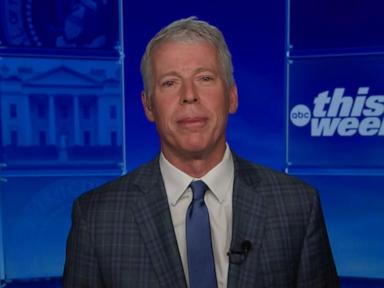
When a senior Iranian official stands before the press and declares that "significant differences remain," the world usually yawns. We have heard the script before. But if you listen past the dry jargon of enrichment levels and monitoring protocols, you hear the sound of a door being kicked shut. You hear the heartbeat of a region that exists in a permanent state of "almost."
This isn't about a checklist of technical grievances. It is about the fundamental inability of two civilizations to believe a single word the other says.
The Ghost in the Machine
Consider a technician in Natanz. Let’s call him Reza. He doesn't exist in the briefing notes, but he is the one who actually turns the dials. For Reza, the nuclear program isn't a bargaining chip or a headline in a Western newspaper. It is a point of national pride, a symbol that his country cannot be dictated to by powers half a world away. When he looks at his monitors, he sees progress. When a diplomat in Washington looks at those same numbers, they see a countdown clock.
The gap isn't just in the numbers. It’s in the soul of the negotiation.
The Iranian official’s recent admission—that the divide between Tehran and Washington remains a chasm—isn't just a status update. It is a confession. It tells us that the "Plan A" of global diplomacy is currently gasping for air on a cold floor. The core issues haven't moved. The United States demands a permanent freeze that feels like a surrender to Tehran. Iran demands a lifting of sanctions that feels like a risk to Washington.
Stalemate.
It is a word that feels clean and clinical on a page. In reality, it is a grinding, agonizing process that keeps millions of people in a state of economic suspended animation.
The Price of a Signature
We often talk about "nuclear issues" as if we are discussing a physics textbook. We aren't. We are discussing the price of bread in the bazaars of Isfahan and the availability of cancer medication in Tehran’s hospitals.
Sanctions are the invisible walls. They don't bleed, but they make sure others do. The "differences" mentioned by the Iranian leadership are the reasons those walls stay standing. To the official at the microphone, the nuclear program is his only lever. If he gives it up without a guaranteed, irreversible removal of every economic shackle, he has betrayed his people's future. To the American negotiator, if they lift those shackles without a foolproof guarantee that the centrifuges will never spin toward a weapon, they have betrayed the security of the globe.
Both sides are right. Both sides are terrified.
The tragedy of the current deadlock is that it rests on a foundation of "what if." What if the next U.S. administration tears up the deal again? What if Iran is hiding a facility under a mountain we haven't mapped yet? You cannot negotiate away a "what if" with a fountain pen. You need trust, and trust is the one commodity that neither side has been able to manufacture, despite their immense technical capabilities.
The Language of the Unsaid
When you read that "differences remain on nuclear issues," you are actually reading about a failure of translation. Not of Farsi to English, but of intent to reality.
The West speaks the language of "verification." They want to see every bolt, every wire, every gram of uranium. They want a transparency that borders on the voyeuristic. Iran speaks the language of "sovereignty." They see that demand for transparency as a colonial hangover, a way for outsiders to keep a thumb on their pulse.
Imagine trying to marry someone who insists on installing cameras in your bedroom and reviewing your bank statements every night because they don't believe you’ll stay faithful. Now imagine you feel you have every right to that privacy because of your family’s history. That is the dinner table in Vienna. It is a marriage of necessity where both partners are keeping a packed suitcase by the front door.
The senior official’s rhetoric signals that the "technical" hurdles are actually political ones. You can fix a broken sensor. You can recalibrate a centrifuge. You cannot easily recalibrate a national identity that is built on the very act of resisting the person across the table.
The Invisible Stakes
While the politicians argue over percentages of enrichment—3.67%, 20%, 60%—the world outside the room continues to spin toward a darker horizon.
Every day that "significant differences remain" is a day that the shadow of a wider conflict grows longer. The tension doesn't just sit in the room; it leaks out. It leaks into the shipping lanes of the Persian Gulf. It leaks into the proxy battles in the Levant. It leaks into the nightmares of parents in Tel Aviv and Riyadh and Tehran who wonder if the "failed diplomacy" of today is the "kinetic action" of tomorrow.
The Iranian official spoke of a lack of "political will" in Washington. Washington speaks of Iran’s "escalation." These are the polite ways of saying "I am waiting for you to blink first." But the staring contest has lasted so long that both sides' eyes are watering, and they are starting to see things that aren't there.
The problem with a chasm is that you can’t cross it in two small jumps. You either leap or you stay on your side. Right now, both sides are standing on the edge, looking down at the rocks, and deciding that the cold wind on the precipice is better than the fall.
The Rhythm of the Unresolved
We have become addicted to the cycle. The leak, the statement, the rebuttal, the silence. We treat these updates like weather reports—unpleasant, but ultimately out of our control.
But the "differences" aren't atmospheric. They are choices.
They are choices made by men in expensive suits who have forgotten what it feels like to be the person who has to choose between buying medicine and buying meat because the currency has collapsed under the weight of an unresolved argument. They are choices made by leaders who are more afraid of their own hardliners than they are of the slow-motion car crash they are currently steering.
The senior official’s words are a reminder that we are living in the intermission of a play that has no ending. The actors are back in the wings, the audience is restless, and the stagehands are nervously checking the props.
The lights aren't coming up. Not yet.
Maybe they never will. As long as the "nuclear issues" are treated as a math problem rather than a human one, the answer will always be zero. The tragedy isn't that we can't find the solution; it's that we have convinced ourselves that the search is the same thing as the result.
The official walks away from the podium. The cameras turn off. The room goes dark.
Somewhere, in a facility we aren't allowed to see, a centrifuge hums. It is a lonely, high-pitched sound—the sound of a country spinning in circles, waiting for a signal that may never come.