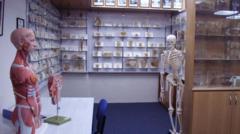
The Tasmanian government delivered a formal parliamentary apology today for a decades-long institutional scandal involving the unauthorized harvesting, retention, and public display of 177 human body parts. Between 1966 and 1991, pathologists routinely stripped organs and bone specimens from deceased citizens during coronial autopsies, transferring them to the University of Tasmania’s R.A. Rodda Museum of Pathology without the knowledge or consent of grieving families. While the state’s admission of guilt marks an official milestone, it exposes an ongoing administrative crisis. The systemic failure to act on ethical warnings for over twenty years, coupled with a bureaucratic redress process that families describe as deeply retraumatizing, reveals that the damage remains uncorrected.
Apologies costs nothing. True institutional accountability, however, requires confronting the systemic oversight that allowed this practice to persist long after it was flagged by federal authorities.
The Mechanics of Institutional Theft
For twenty-five years, the R.A. Rodda Museum functioned as an educational repository built on unconsented human remains. A coronial investigation spearheaded by Coroner Simon Cooper revealed that the bulk of these specimens were supplied by a single forensic pathologist, the late Dr. Royal Cummings, alongside a network of peers who operated with total autonomy.
When an individual dies under sudden, unexplained, or suspicious circumstances, the state coroner assumes legal jurisdiction over the body to determine the cause of death. This is a strictly defined legal mandate. Once the post-mortem examination concludes, the law requires the intact body to be released to the next of kin for burial or cremation.
Instead, pathologists treated coronial autopsies as a shopping ground for academic inventory. Brains, bones, and vital organs were severed and diverted to university shelves.
[Coronial Autopsy]
       │
       ▼
[Legal Mandate: Determine Cause of Death]
       │
       ├─► (Lawful Path): Release Intact Body to Family
       │
       └─► (Historical Reality): Unauthorized Organ Harvesting ──► R.A. Rodda Museum
The underlying mechanism of this crisis was not a lack of legislation, but a complete absence of internal auditing. The individual coroners overseeing these cases were entirely unaware that the bodies they released had been hollowed out. Pathologists operated within a closed professional loop, answering to medical faculties rather than statutory regulators. The university utilized these specimens to train generations of clinicians, treating stolen human tissue as standard teaching apparatus.
The Twenty Year Cover Up
The most damning element of the investigation is not that the harvesting occurred during the mid-to-late twentieth century, but that the Tasmanian government buried the problem when it came to light in the early 2000s.
In 2001, the Australian Health Ethics Committee issued a national report titled Organs retained at autopsy: ethical and practical issues. This directive forced states to audit their pathology collections and align with modern ethical standards. The Tasmanian government was explicitly informed that its state university held a vast collection of unconsented coronial specimens.
They did nothing.
For fifteen years, successive administrations chose bureaucratic inertia over transparency. The R.A. Rodda Museum continued to hold these specimens, and in some instances kept them on public display, until 2016. The crisis was only forced into the light because a museum curator raised internal alarms regarding three specific bone specimens, triggering a sluggish nine-year coronial probe that culminated in a final report.
This was an active choice to protect institutional reputations at the expense of citizens. By the time the names of 126 identified victims were quietly published online, decades had passed. Witnesses had died. Documents had vanished. The state delayed accountability until the individuals responsible were safely beyond the reach of criminal prosecution.
The Myth of Trauma Informed Redress
The current administration has heavily promoted its commitment to a trauma-informed response. The reality experienced by the families of the victims tells a vastly different story.
Independent Member for Nelson, Meg Webb, who campaigned for the state apology, has noted that the government’s management of the fallout has actively compounded the original violation. When the identity of the remains was verified, some families were handed cardboard boxes containing the long-lost organs of their siblings or children, decades after they believed they had laid them to rest.
Consider the case of Cheryl Springfield. In 1976, her 14-year-old brother, David Maher, died tragically in a car accident. Fifty years later, she received a portion of her brother’s brain. The government's solution to this profound psychological shock was an offer of four counseling sessions.
John Santi was 13 when his older brother Tony died in a motorcycle crash. He recently received his brother’s brain in a shoe-sized box. The long-term psychological toll has contributed to severe trauma and personal estrangement.
The state’s current framework treats this as a historic compliance issue rather than an ongoing injury. Offering minimal counseling sessions to individuals who have just discovered their dead relative was dismembered for public display is a failure of governance.
| Metric of the Crisis | Impact Detail |
|---|---|
| Total Specimens Retained | 177 human samples |
| Duration of Active Harvesting | 1966 to 1991 (25 years) |
| Delayed Action Period | 2001 (National Report) to 2016 (Investigation Launch) |
| Current Government Redress | 4 counseling sessions, formal verbal apology |
The Legal Void and the Path to Reparations
The formal apology delivered by Health Minister Bridget Archer is a necessary rhetorical gesture, but it lacks legal and financial teeth. Coroner Simon Cooper’s report made zero formal recommendations, noting simply that the practice was offensive to contemporary standards and expressing a belief that it would never happen again.
This brings cold comfort to the living. Because the offenses occurred decades ago, establishing criminal liability or pursuing civil litigation under standard tort law presents massive statutory hurdles. The limitation periods for personal injury claims have long expired for the majority of these families.
The state government is leveraging these legal technicalities to avoid establishing a comprehensive, structured financial redress scheme. If a state government unlawfully seizes private property, the law demands compensation. When the state unlawfully seizes the biological remains of a child or spouse, the obligation should be higher, not lower.
True accountability requires the immediate establishment of an independent tribunal to evaluate financial reparations for the 177 affected families. This tribunal must operate outside the standard framework of personal injury law, acknowledging that the harm caused was a systemic, state-sanctioned violation of human rights. Until the government attaches financial consequences to its past misconduct, words spoken on the parliament floor remain entirely superficial.