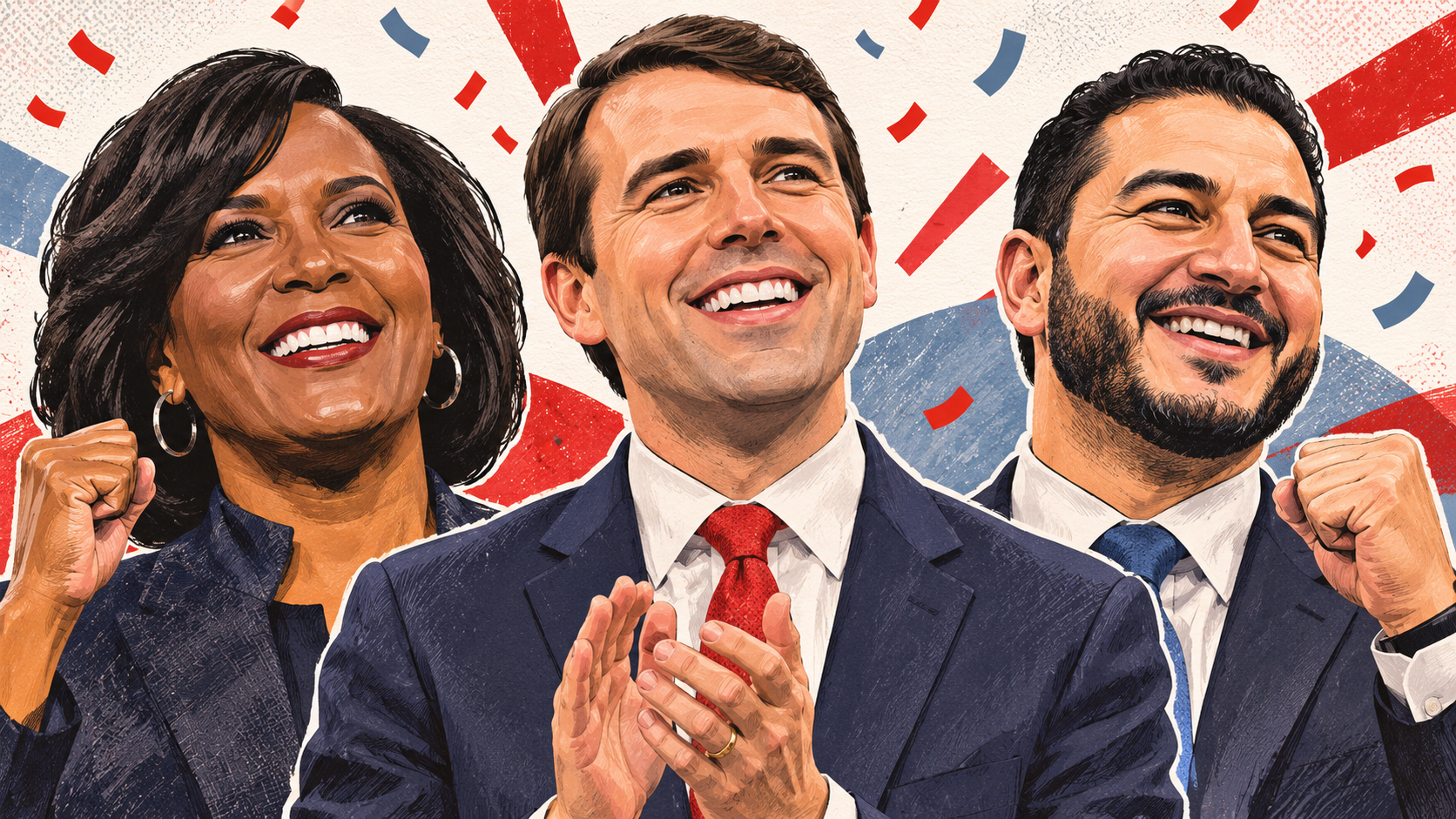
National pundits love a neat fairy tale. Give them a Democrat winning a red-leaning seat in Kentucky, and they immediately break out the magnifying glasses to hunt for signs of a sweeping ideological realignment.
They are looking at the wrong data.
When Zach Dembo defeated Ralph Alvarado in a Republican-leaning Kentucky House district, the national press framed it as a stunning progressive breakthrough in the heart of Appalachia and the Bluegrass State. That narrative is lazy, comforting to coastal donors, and completely detached from how local politics actually functions. Dembo didn't win because Kentucky voters suddenly fell in love with the national Democratic platform. He won because local party machines have rotted from the inside out, and nationalized branding no longer saves a candidate who treats a district like an entitlement.
If you want to understand what actually happened in Kentucky—and why both parties are drawing the exact wrong lessons from it—you have to strip away the cable news talking points and look at the mechanics of ground-level campaigning.
The Myth of the Red-State Realignment
Every time a Democrat squeaks past a Republican in a Trump-won district, Washington consultants start hyperventilating about "messaging shifts" and "suburban revolt." They treat voters like passive consumers waiting for the right television ad to reprogram their brains.
I've watched political committees burn millions of dollars on glossy mailers and focus-grouped slogans trying to replicate these upsets, only to get crushed by twenty points the next cycle. They fail because they confuse a localized tactical victory with a macro-level cultural shift.
Kentucky's political geography hasn't magically turned purple. The structural advantages Republicans hold in the Commonwealth—voter registration trends, cultural conservatism, and deep skepticism of federal overreach—remain firmly intact. Assuming Dembo's victory signals a sudden appetite for progressive governance is like seeing a single sunny day in January and throwing away your winter coat.
What actually broke down wasn't the conservative electorate. It was the assumption that an "R" next to a name automatically guarantees a seat in Frankfort.
Why Name Recognition Can Become a Liability
Ralph Alvarado wasn't some fresh-faced amateur stumbling onto a ballot. As a physician, a former state senator, and a prominent figure in Kentucky GOP circles, he had the exact resume party bosses drool over. On paper, he had the money, the connections, and the institutional backing to cruise.
On paper, campaigns don't lose. In reality, high-profile resumes often breed fatal blind spots.
When a candidate has spent years operating at higher levels of state politics or stepping outside the district's immediate orbit, voters notice. In smaller legislative districts, politics isn't an abstract battle over national talking points; it is intensely personal. Voters expect to see their representative at the high school fish fry, the county fair, and the local diner—not just on campaign literature or at state party fundraisers.
Long-standing political figures frequently fall into the trap of running a "rose garden" strategy in a district that demands street-level retail politics. They rely on residual name ID and broad partisan loyalty while their opponent is wearing out shoe leather on front porches. By the time the establishment realizes the race is competitive, the narrative on the ground has already hardened: one candidate is working for the job, and the other thinks they already own it.
The Retail Politics Blind Spot
Nationalizing local races has ruined modern political strategy. Both parties do it because it's cheap and easy. Instead of researching local zoning battles, school board disputes, or regional infrastructure failures, consultants copy-paste national culture war scripts onto local candidates.
For Republicans in red states, this strategy has worked just well enough to make them lazy. If you can win a primary and a general election simply by tying your opponent to national Democratic leadership, why bother knocking on ten thousand doors?
Because eventually, you run into someone like Zach Dembo.
When a challenger refuses to take the national bait and keeps the conversation relentlessly hyper-local, the partisan shield cracks. Voters are remarkably good at compartmentalizing. A Kentucky homeowner can pull the lever for a conservative president at the top of the ticket and still vote for a local Democrat if they believe that Democrat actually cares about their property taxes, their local hospital, and their roads.
Dembo didn't run away from his district; he leaned into the specific, unglamorous realities of living there. That requires an exhausting amount of unglamorous work—the kind of door-to-door, handshake-by-handshake grinding that modern campaign managers hate because you can't bill a fifteen percent commission on shoe leather.
What the Pundits Missed About Voter Psychology
If you look at the commentary surrounding this race, you'll see endless speculation about demographic shifts and turnout models. Let's dismantle the most common questions people are asking about this upset—because the standard answers are completely backwards.
Did Republican voters stay home in protest?
No. Pure apathy doesn't flip a well-funded, Republican-leaning district on its own. What happens in these races is ticket-splitting driven by perceived disrespect. When voters feel taken for granted by their own party, they don't necessarily boycott the election; they actively punish the candidate who ignored them. Voting for the other party's local candidate is the loudest warning shot a constituent can fire without abandoning their broader political identity.
Does this mean Democrats have found a winning formula for rural and suburban seats?
Only if they are willing to fire half their consultants. The national Democratic apparatus is structurally allergic to the kind of localized, independent-minded campaigning required to win red districts. Every time a local Democrat finds a winning formula by focusing on bread-and-butter district issues and distancing themselves from national orthodoxy, party purists demand they fall back in line. Until Democrats stop treating local candidates as foot soldiers for national ideological battles, victories like Dembo's will remain rare exceptions rather than a repeatable blueprint.
Is money no longer the deciding factor in state legislative races?
Money still matters, but how it's spent matters infinitely more. In a state House race, $200,000 spent on out-of-state direct mail firms and generic cable spots has a fraction of the return on investment of $50,000 spent on field organizers, local data, and sustained community presence. Alvarado's side had every institutional resource imaginable, proving once again that capital cannot buy credibility when an opponent owns the physical ground game.
The Structural Rot Inside Safe Districts
The real story of the Dembo-Alvarado race isn't about Kentucky at all. It is about what happens to any political organization when it enjoys a structural monopoly for too long.
In political science, scholars like V.O. Key Jr. long ago observed what happens when one party dominates a region: internal discipline collapses, candidate recruitment turns into a patronage system, and the dominant party loses the muscle memory required to fight real elections.
When a party assumes a district is "safe," three things happen immediately:
- Candidate quality plummets. Instead of recruiting hungry, deeply rooted community leaders, party bosses reward loyalists, donors, or recycled politicians looking for a soft landing.
- Data gets stale. Campaigns rely on outdated voter files and broad assumptions about turnout rather than constantly refreshing their understanding of who is moving into the district and what keeps them up at night.
- Arrogance replaces urgency. Consultants advise candidates to avoid debates, skip local forums, and minimize unscripted interactions to "avoid making a mistake." In reality, hiding from voters is the mistake.
Imagine a scenario where a dominant local business stops updating its inventory because it has been the only store in town for twenty years. The moment a nimble, attentive competitor opens across the street, the legacy store goes bankrupt—not because the town's tastes radically changed overnight, but because the incumbent forgot how to serve customers. That is the exact dynamic playing out in "safe" legislative districts across America.
The Downside of the Hyper-Local Playbook
Now for the part most contrarians won't admit: running the hyper-local, anti-establishment playbook has a brutal shelf life.
Winning as the underdog challenger who listens to everyone is one thing. Governing as a member of the minority party in a deeply conservative legislature is another beast entirely. Once Zach Dembo takes his seat in Frankfort, the luxury of being the blank-slate reformer evaporates. Every vote he casts on the state budget, social legislation, and tax policy goes onto a permanent public record.
In two years, his opponents won't be running against a charismatic guy knocking on their front door. They will be running against a voting record—and they will spend hundreds of thousands of dollars tying every single one of those votes to the most unpopular figures in national politics.
Hyper-local retail politics can break through partisan gravity once. Surviving the gravitational pull of a partisan wave election while holding an incumbent voting record requires an entirely different level of political survival skill.
How to Actually Win When the Map Is Against You
If you are managing a campaign, running for local office, or trying to figure out why your side keeps losing winnable races, stop reading national polling averages and execute the fundamentals that actually move votes:
- Ban national talking points from local literature. If a campaign mailer mentions a national politician who isn't on the ballot in that district, throw it in the trash. Talk about the specific bridge that needs repairing, the specific school district funding formula, and the specific local tax burden.
- Force unscripted contact. Town halls, coffee shop hours, and door-knocking are non-negotiable. Voters forgive policy disagreements much faster than they forgive a candidate who acts like they are too important to show up.
- Audit the local party infrastructure. Stop handing contracts to politically connected consultants who haven't walked a precinct in a decade. Put money directly into field operations run by people who actually live in the zip codes they are organizing.
- Treat every seat like a toss-up. The second a campaign starts planning its victory party based on historical partisan lean, it has already lost its edge.
Zach Dembo didn't rewrite the laws of political gravity in Kentucky. He simply proved what happens when one candidate shows up to work and the other expects a coronation.
Stop looking for a blue wave in the Bluegrass State, and start looking at what happens when politicians forget who actually owns the seat.