Listen.
Two continents apart, a ballot box closes in Michigan, and before the ink on the tally sheets has even dried, a microphone lights up thousands of miles away in northern India. A single word travels across fiber-optic cables, satellite relays, and crowded newsrooms.
Abdul.
Not a policy white paper. Not a census report. Just a name that millions of people recognize in their bones, carrying decades of unspoken grief, pride, bargaining, and hope.
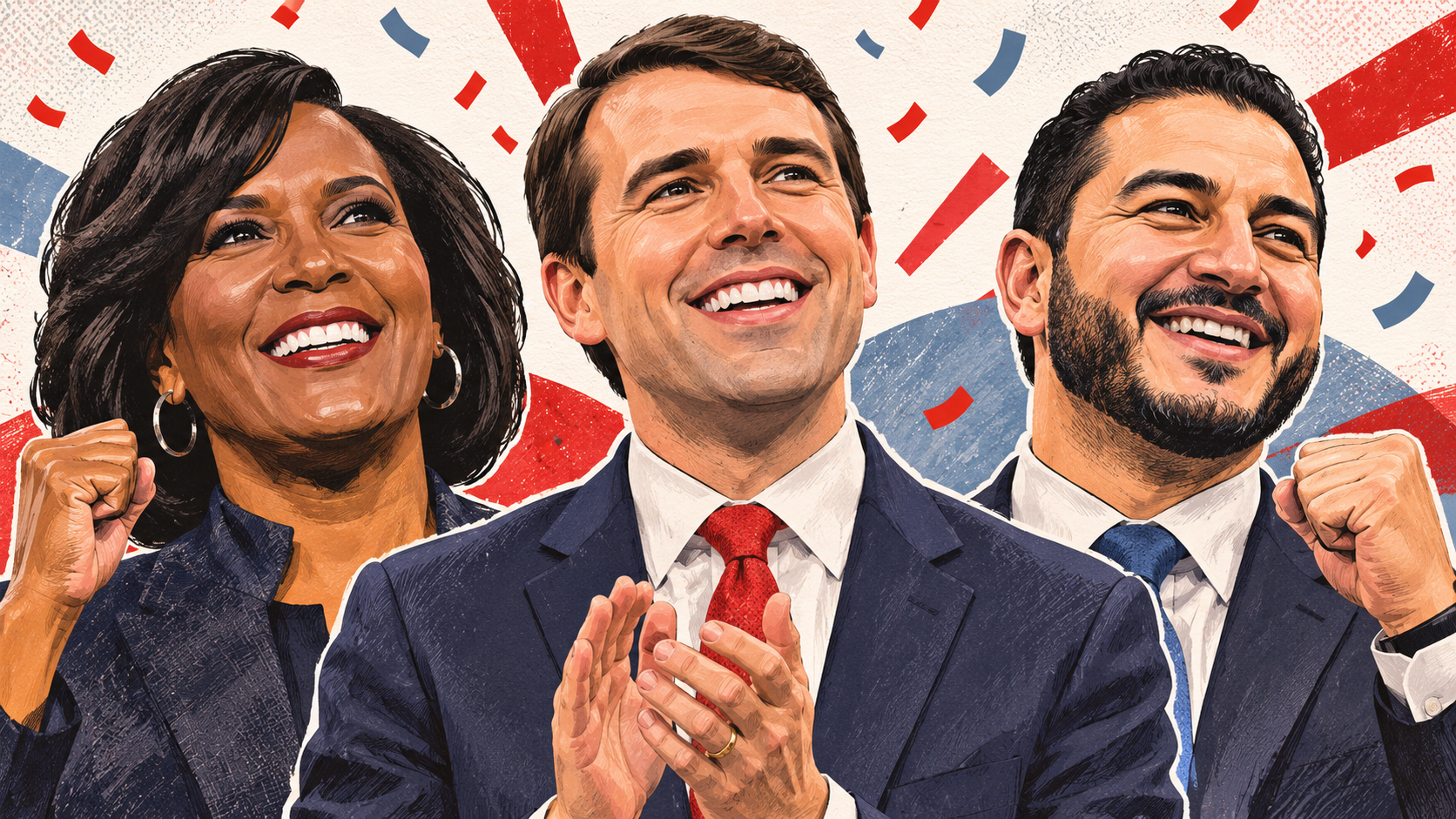
When Asaduddin Owaisi pointed toward the American Senate race and told voters in Uttar Pradesh that an Abdul had won in Michigan, he was not offering a lesson in American constitutional law. He was holding up a mirror in a room filled with smoke. Anyone who has spent enough time listening to election rallies in dusty town squares knows that politicians rarely speak about distant capitals by accident. They reach across oceans when the ground beneath their own feet feels unstable, searching for a symbol strong enough to shift how ordinary people see their own standing.
I have stood in enough hot, loud campaign crowds in South Asia to know the smell of crushed marigold petals, cheap diesel generators, and sweat mingled with anticipation. You feel the tension before the speaker even touches the podium. Voters sit on plastic chairs or directly on sun-warmed ground, guarding their hopes with a quiet skepticism earned over generations of promises made before ballots are cast and forgotten once they are counted. When a leader invokes a victory abroad, the air in that crowd changes. For a heartbeat, distance collapses. Someone with a familiar name made it through a crowded, fiercely contested race in a country far away.
Yet politics is never just about the name spoken at the podium. It is about what listeners hear inside their own histories.
To understand why a remark about a U.S. Senate outcome lands with such weight in Uttar Pradesh, we have to step back from the headline and look at the mechanics of representation. In many democracies, minority voters face a recurring dilemma that political scientists call the trade-off between symbolic visibility and coalition power. Put simply, a candidate or leader who shares your background can make you feel seen in places where you usually feel invisible, while a broader coalition can sometimes deliver tangible local leverage even without a mirror on the ballot. Neither side of that equation is simple, and neither solves every problem on its own.
Let us use a metaphor here—a clear, deliberate one. Think of political power like a heavy iron gate guarding a courtyard. Some people argue you need your own hand on the latch so the gate never swings shut against you. Others argue you need enough weight behind the door to push it open even when the latch is stiff. In real elections, voters rarely get both choices neatly packaged on the same day.
To see how this plays out on the ground, consider a hypothetical voter—let us call him Tariq, a small-shop owner in a mid-sized town in Uttar Pradesh—sitting with his brother after dusk as a television clip loops on a phone screen. Tariq is not a political analyst. He counts daily receipts, worries about school fees, and watches local municipal work move at a snail's pace. When he hears a speech pointing to an electoral win in Michigan, his first reaction is not constitutional theory. It is a quieter, sharper question: Does that mean anything can shift here, or is it just noise from far away?
That question sits right at the heart of the friction sparked by Owaisi's remark.
In India's largest and most electorally decisive state, Muslim voters represent a substantial share of the population—roughly one-fifth according to census benchmarks—yet their political clout has long been pulled in competing directions. Some leaders argue for assertive, independent representation that refuses to take any major party for granted. Others contend that fragmenting votes or framing contests strictly around identity can backfire in pluralistic constituencies where winning requires stitching together multiple social groups.
When Owaisi brings up Michigan, he is pressing on that exact fault line. By highlighting that a Muslim candidate—referred to in the shorthand of his speech as "an Abdul"—won in a major American race, he challenges a defeatist instinct that often lingers in high-stakes Indian elections: the idea that certain offices or outcomes are permanently out of reach. At the same time, critics and rival strategists immediately push back, arguing that comparing a U.S. Senate contest to state or national politics in Uttar Pradesh blurs crucial differences in voter demographics, district boundaries, and party systems.
Both arguments tap into real anxieties. That is why the clip refuses to fade after a single news cycle.
Why Distance Makes Symbols Sharper
Geography plays a strange trick on political arguments. Up close, every election is messy. You see local caste arithmetic, municipal drainage complaints, candidate personalities, ticket distribution fights, and last-minute alliances. The grand themes get tangled in everyday compromises.
Far away, the clutter falls away. A distant election looks cleaner, sharper, easier to mold into a parable.
Consider what happens next: when a leader in Lucknow or Varanasi or Meerut points to the United States, the U.S. itself becomes a screen. Depending on who is speaking—and who is listening—America can be framed as a place where minority participation broke through a high barrier, or as a warning about polarization and shifting coalitions. Neither framing captures the full reality of American voters, yet both can be used to argue a point about domestic politics.
I will admit something candidly: watching political leaders reach for overseas examples often leaves me uneasy. Not because comparisons are always invalid—studying how democracies handle representation can be genuinely illuminating—but because foreign examples are so easy to simplify. A single election result in a U.S. state involves millions of individual choices, local economic grievances, national media waves, and state-specific rules. Reducing all of that to a single takeaway for a rally thousands of miles away requires leaving out ninety percent of the story.
Still, dismissing the speech as mere rhetoric misses why it resonates. Rhetoric works when it touches a nerve that already exists.
If you have spent years feeling that your vote is treated as a foregone conclusion—assumed to go one way out of fear or habit rather than earned through respect and results—hearing about a competitive race won elsewhere can spark a sudden jolt of possibility. Even if the analogy stretches across an ocean, the emotion underneath it is immediate and local.
The Tug of War Over Representation
Every election cycle in Uttar Pradesh brings a familiar debate over strategy. Should voters consolidate behind the strongest challenger to a ruling party, even when their own preferred candidates or demands are sidelined? Or should they back parties and leaders who foreground community representation directly, even at the risk of splitting opposition votes?
There is no easy consensus, and pretending otherwise would be dishonest. History offers mixed lessons. In some places and eras, consolidated voting has shaped decisive outcomes; in others, fragmentation has handed victory to rivals while leaving smaller groups with less bargaining power. Voters weigh these odds in real time, often making painful calculations in the voting booth.
Owaisi's All India Majlis-e-Ittehadul Muslimeen has consistently championed a more assertive model of political identity, arguing that communities cannot build lasting power if they remain perpetually silent or subordinate within larger coalitions. Invoking a win in Michigan fits squarely into that argument. It says: look, representation does not have to be an apology.
Yet opponents view that same pitch through a very different lens. To critics, framing electoral politics around identity—even in response to perceived exclusion—deepens divisions and helps rivals consolidate their own base. They argue that Uttar Pradesh's complex social map demands broad cross-community appeal rather than sharp symbolic contrasts drawn from abroad.
Notice how neither side is arguing in a vacuum. Both are responding to decades of political memory. In Uttar Pradesh, memory is heavy. People remember past governments, shifting alliances, promises kept, promises broken, and moments when security or dignity felt fragile. When a speech echoes those memories, it is never just about today's news ticker.
What Gets Lost in Translation
Let us pause and look closely at the phrase itself—"An Abdul has won in Michigan."
On the surface, it sounds like a straightforward boast or observation. Beneath the surface, every word carries freight. Using a common Muslim given name as a stand-in for an entire community captures a sense of familiarity and shared belonging. To supporters in a rally, it can feel like hearing a friend's name called out across a crowded courtyard.
To critics, that same shorthand can sound reductive, flattening a complex American election and a diverse electorate into a single label. And for anyone watching from afar who cares about accuracy, there is an obvious gap between a U.S. Senate race—where candidates campaign across an entire state on issues ranging from inflation and manufacturing to healthcare and foreign policy—and a local or state contest in northern India.
Still, politics rarely runs on precision alone. It runs on momentum, emotion, and framing.
Think back to Tariq, our hypothetical shopkeeper in Uttar Pradesh. Suppose the next morning he opens his shutter at dawn, sweeps dust from the threshold, and talks to two neighbors over small glasses of tea. One neighbor shrugs and says politicians always find a story from somewhere else to make their point. The other leans forward and says at least someone is talking about winning instead of just surviving.
Neither man has solved the riddle of modern electoral strategy over breakfast. Both are doing what ordinary citizens always do when powerful voices clash: sorting the signal from the noise, trying to figure out who actually cares about their lives once the microphones are packed away.
And that is the real test that outlasts any viral clip.
Speeches travel fast. Crowds roar. Headlines flare up for forty-eight hours and cool down just as quickly. What remains after the noise settles is much quieter and much harder to fake: whether representation translates into real voice, real accountability, and real dignity for the people listening in the back row.
A name can cross an ocean in a second.
Trust takes years to build—and sometimes only a moment to lose.