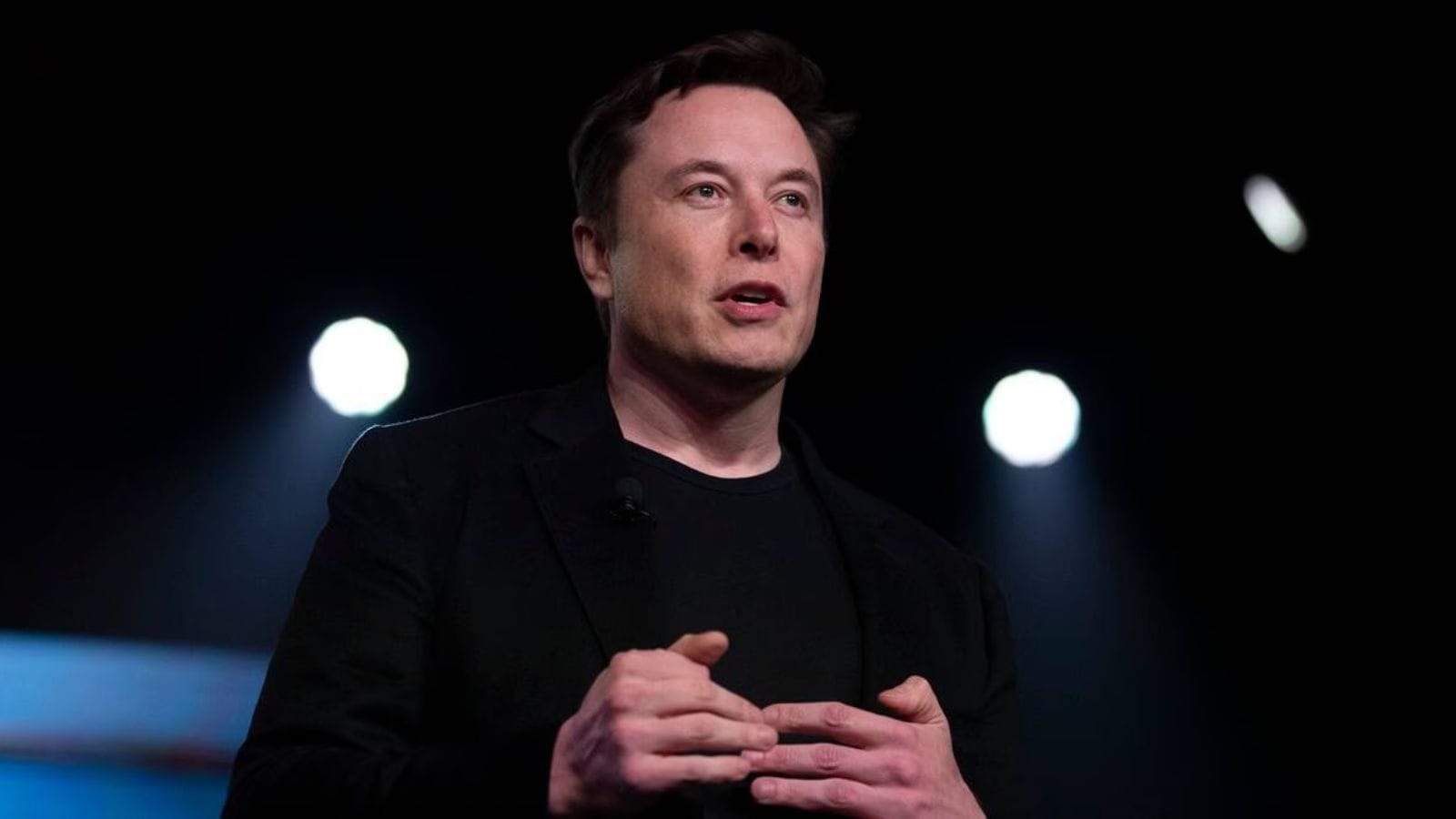
The compressed timeline of personal wealth accumulation reached a structural inflection point on June 12, 2026, when the initial public offering (IPO) of SpaceX on the Nasdaq exchange pushed Elon Musk’s net worth to an estimated $1.1 trillion. Four days later, on June 16, a momentum-driven rally escalated this figure to a peak of approximately $1.32 trillion. Yet, by June 23, less than two weeks after crossing the threshold, a broader macroeconomic contraction erased more than $360 billion from his balance sheet, dropping his net worth to an estimated $957 billion. While public commentary frames this rapid ascent and subsequent decline as a standard market correction, an empirical financial analysis reveals that the loss of trillionaire status is a structural inevitability dictated by asset concentration, lock-up constraints, and asymmetric market-maker dynamics.
Evaluating this phenomenon requires isolating the exact mechanisms that drive multi-hundred-billion-dollar valuation swings, rather than viewing personal wealth through the lens of liquid currency. Musk remains the world’s wealthiest individual, outstripping secondary peers by hundreds of billions of dollars. The volatility of his net worth does not reflect a change in his operational capital or personal consumption capacity; instead, it illustrates the structural fragility of indexing extreme personal wealth to a hyper-concentrated, dual-asset equity base.
The Core Architecture of Multi-Asset Concentration
The primary structural driver of Musk's wealth contraction is a fundamental lack of diversification. Unlike institutional portfolios or historically diversified family offices that hedge beta exposure across real estate, debt instruments, and defensive equities, this multi-billion-dollar balance sheet operates with an extreme level of asset concentration.
Musk’s net worth is supported by two primary equity pillars:
- SpaceX Equity Holdings: Accounting for nearly 80% of total tracked wealth post-IPO, Musk maintains an approximate 42% equity stake in the aerospace, satellite, and artificial intelligence corporation. At the June 16 peak share price of $225.64, this single asset accounted for more than $860 billion of his total valuation.
- Tesla Inc. (TSLA) Equity Holdings: Comprising the majority of the remaining balance, Musk owns approximately 12% of Tesla’s outstanding common stock, complemented by unvested and vested performance-based options.
This dual-asset dependency creates a structural vulnerability. When macroeconomic indicators trigger a systemic risk-off environment, there are no un-correlated assets within the portfolio to absorb the shock. The asset allocation behaves as a leveraged bet on a specific technological ecosystem, making the total valuation hypersensitive to industry-wide capital outflows.
The Disconnect Between Market Pricing and Underlying Liquidity
The primary error in conventional assessments of trillion-dollar wealth is the assumption that market capitalization correlates directly with liquid capital. Net worth calculations rely on mark-to-market valuation, which multiplies the total number of shares owned by the marginal price of the last share traded on the public exchange. This methodology ignores the mechanics of market depth and liquidity constraints.
The Lock-Up Bottleneck
The SpaceX prospectus mandated a standard 12-month post-IPO lock-up period for insider holdings. This structural constraint means that the 42% equity stake used to calculate Musk’s trillion-dollar milestone is entirely illiquid. It is legally impossible to convert these shares into cash or use them as collateral for fresh credit facilities without triggering regulatory violations or massive market panic. Consequently, the transition from billionaire to trillionaire status was a mathematical artifact of public pricing rather than a expansion of deployable liquidity.
The Liquidation Paradox
If an insider attempts to liquidate a significant portion of an equity stake to realize paper gains, the volume of shares would instantly overwhelm the buy-side order book. The structural mechanics of block trades dictate that large-volume liquidations suffer severe price slippage.
$$\text{Slippage Cost} = f(\text{Order Volume}, \text{Market Depth})$$
Selling even 5% of a concentrated 42% stake in an environment short on liquidity would trigger institutional algorithms to front-run the trade, driving down the share price and destroying the paper valuation before the execution completes.
The Microeconomic Transmission of Market Volatility
The specific catalyst for the $360 billion wealth reduction traces back to a microeconomic chain reaction that exposed broader vulnerabilities within the technology sector. The correction was not an isolated re-rating of Musk's ventures, but an algorithmic contagion triggered by shift in institutional spending guidance.
[Accenture Revenue Downgrade]
         │
         ▼
[Enterprise Tech Spend Fears]
         │
         ▼
[Systemic Tech Stock Sell-Off (Nasdaq -2.2%)]
         │
         ▼
[Asymmetric Correction in SpaceX (-30% from peak)] & [Tesla Slump (-6%)]
         │
         ▼
[Erasure of Trillion-Dollar Paper Wealth]
When global IT consulting firm Accenture revised its fiscal revenue growth forecast downward to 3-4%, institutional asset managers interpreted the revision as a leading indicator of an enterprise slowdown in discretionary technology expenditure. This triggered a systemic capital reallocation out of high-beta tech names. The tech-heavy Nasdaq index fell 2.2% in a single session, dragging megacap equities downward.
Because SpaceX was freshly public and priced for perfection at an opening valuation exceeding $1.77 trillion, it bore the brunt of the capital flight. The stock suffered an asymmetric correction, dropping more than 30% from its June 16 high of $225.64 to stabilize near $156 per share. On June 22 alone, a 16% single-day drop in SpaceX equity wiped out approximately $240 billion from Musk's net worth. This pressure compounded when Tesla shares slid nearly 6% the following day, completing the erasure of the trillion-dollar paper premium.
Institutional Skepticism of Capital Spending Models
Beyond macro contagion, specific internal operational disclosures accelerated the capital flight from SpaceX, highlighting the strategic risks embedded in the firm’s capital structure. Barely a week after generating $75 billion in gross proceeds from its public equity offering, SpaceX initiated a massive investment-grade bond sale to secure billions in additional debt.
This rapid sequence of capital raises signaled to institutional credit analysts that the company’s burn rate remained unsustainably high, driven primarily by its intensive capital commitments to AI infrastructure and global satellite constellation scaling. The company’s S-1 filing confirmed an operational loss of $4.9 billion for the fiscal year 2025, with its dedicated artificial intelligence unit alone consuming $12.7 billion in capital expenditure.
When capital markets face macroeconomic headwinds—such as sticky interest rates and shifting monetary policy expectations—the tolerance for long-duration growth assets with massive capital expenditures narrows. Investors re-price these firms by expanding the discount rate applied to future cash flows, directly depressing the equity value of the enterprise.
Operational Execution as the Path to Structural Wealth Recovery
To permanently stabilize personal equity above the trillion-dollar threshold, the underlying enterprises must transition from valuation models based on momentum and speculative multiples to models rooted in structural cash-flow generation. The volatility observed in June 2026 demonstrates that multiple expansion alone cannot sustain a trillion-dollar valuation without corresponding operational execution.
The strategic play requires achieving specific operational milestones to match the public market's expectations:
- De-risk the Capital Expenditures of the AI Infrastructure: The AI division must convert its $12.7 billion capital burn into commercialized enterprise software and autonomy solutions to achieve unit-economic profitability, reducing the reliance on debt markets.
- Establish High-Margin Free Cash Flow (FCF) Streams: The satellite internet network must expand its commercial enterprise and government subscription bases to offset the highly cyclical, lower-margin launch services division.
- Execute the Monetization of Autonomous Networks: For Tesla to support its share of the valuation, the company must clear regulatory bottlenecks surrounding its autonomous driving network, transitioning from a vehicle manufacturer to a high-margin software-as-a-service platform.
Until these operational transitions mature, the valuation of these equity stakes will remain highly volatile, fluctuating based on macro liquidity trends and sentiment cycles. Trillionaire status will continue to function as a floating metric, repeatedly crossed and surrendered as the public markets continuously re-evaluate the price of long-duration technological infrastructure.



.jpg?width=1200&auto=webp&trim=1%2C0%2C1%2C0)