High winds sweep across Antonito, Colorado, carrying dry sagebrush, grit from unpaved alleys, and the sharp, cold bite of the San Luis Valley. Sitting nearly eight thousand feet above sea level, this quiet corner of southern Colorado feels far removed from grand cathedrals or gilded palaces.
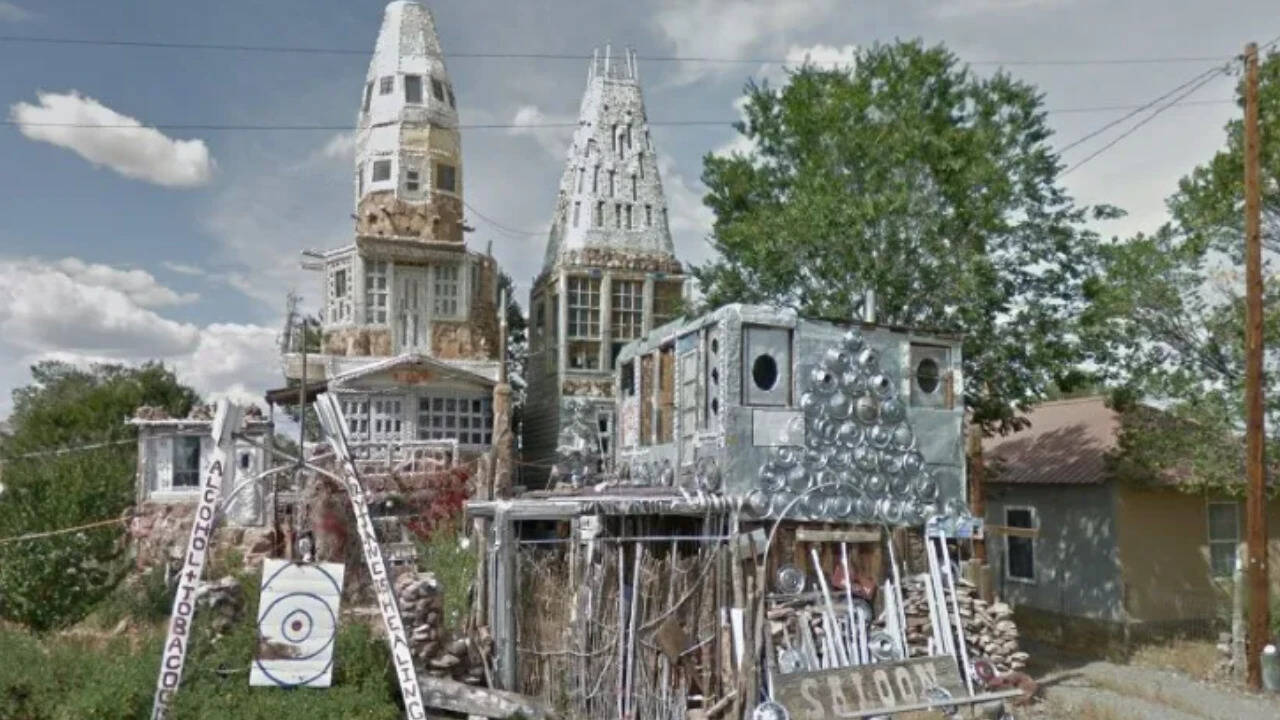
Yet rise out of a small residential lot on the edge of town are gleaming towers that catch the afternoon sun like silver armor. Flattened aluminum cans, dented hubcaps, license plates, bicycle reflectors, corrugated tin, and discarded wood cover walls that never followed a blueprint. Recently making news lately: Why Gulf Air Travel is Facing Severe Disruptions Right Now.
Built by Cano Espinoza, a Vietnam War veteran, Cano's Castle began with something far smaller and sharper than architectural ambition. It began with neighbors complaining about a pile of empty beer cans in his yard.
Most people would have hauled the cans to a recycling bin or buried them out of sight. Cano did something else entirely. He flattened them. He nailed them up. Piece by piece, year after year, he turned what others called eyesores and refuse into a towering monument he dedicated as a castle for Jesus. Additional information into this topic are detailed by Lonely Planet.
A Pile of Cans Becomes a Reckoning
To understand Cano's Castle, you have to sit with what happens after a war ends on paper but refuses to end inside a person's chest.
Coming home from Vietnam meant stepping off a plane into a country that often did not know how to hold its soldiers, or chose not to look at them at all. Sleep comes thin when your nervous system has spent months or years wired to scan for danger. Noise hits harder. Silence feels heavy. Reach for a cold drink on a hot afternoon just to quiet the static in your head, and before long, empty cans stack up along the fence line.
In a small town where everyone knows everyone else's business, a pile of cans carries weight. Neighbors see clutter. They see unfinished business. They see a man struggling to fit into tidy rows.
When complaints came about his cans, Cano faced a choice that millions of people face in quieter ways every day. You can hide your mess, or you can remake its meaning. Think of a chef handed bruised peaches and stale bread at the end of a long shift: throwing them away is easy, while turning them into a warm cobbler takes patience and fire. Cano took the metal that reminded people of what he was carrying and started fastening it to wood and stone.
It was not a neat process. Folk art rarely is. When you build without an architect's permit or a warehouse full of lumber, your raw materials dictate your rhythm. Whenever someone left behind scrap metal, old window frames, license plates, or salvaged timber, Cano worked with what arrived.
Imagine a Sunday Walk Past the Towers
Picture a hypothetical visitor—let's call her Maya—driving down a dusty street in Antonito on a crisp October morning. (This walk is a hypothetical illustration meant to capture the sensory shift of arriving on foot.) Maya pulls her car to the curb, steps out, and hears metal clicking softly in the breeze.
Up close, the castle is not smooth or uniform. It is textured, jagged, layered like a bird's nest woven from silver wire and sun-bleached twigs. Red and amber bicycle reflectors wink beside flattened aluminum; curved pieces of tin wrap around soaring spires. The structure is organized around distinct sections—often described as parts like the King, the Queen, the Rook, and the Crown—rising upward like stubborn prayers made of junk.
Maya expects a novelty roadside stop, the kind of place you snap a quick photo at and keep driving. Instead, her chest tightens a little. Look closely at any single square foot of the walls and you see hours. Thousands of hours. Every flattened can had to be pressed flat, trimmed or punched, and anchored against mountain wind and snow.
That is the invisible stake inside outsider art and self-taught monuments. People often ask why someone pours decades into building something out of castoffs when they could buy clean materials or leave the yard alone. The answer is rarely about real estate value. It is about survival, agency, and voice. When words fail—or when nobody seems to be listening—building gives hands something honest to do.
Why Scrap Metal Holds So Much Memory
I know what it feels like to look at a room full of half-finished projects and wonder if you are fixing your life or just rearranging the wreckage. We all have closets, garages, and habits full of things we meant to outgrow. When you feel judged for what is messy in your life, shame makes you want to shrink.
Cano refused to shrink.
Consider what happens next when a person stops apologizing for their raw materials and starts shaping them deliberately. A beer can is cheap, disposable, and sharp if you slice your thumb on the rim. Flatten it under pressure, fasten it tightly alongside neighbors' castoffs, and it becomes part of a shield against the wind.
Psychologically, turning stigma into craft changes the narrative. A complaint says, This is unwanted. A builder replies, Watch what I make of it.
Of course, building from found materials comes with real uncertainty and risk. Salvaged metal rusts in mountain moisture. Wind tests every nail and bracket. Without formal engineering, maintenance never truly finishes; repairing one loose panel leads to adding another brace, another layer of tin, another gleaming strip of aluminum. Anyone who has ever patched a leaky roof or jury-rigged a fence knows that holding things together in harsh weather is a quiet, ongoing discipline.
Even the spiritual thread matters here. Cano called it a castle for Jesus. You do not have to share a specific religious faith to recognize what that dedication signals: a belief that even broken, discarded things can be offered up as something sacred. In a culture obsessed with brand-new shiny surfaces, there is something radical about saying that cast-off aluminum is worthy of a castle.
A Quiet Truth About What We Throw Away
Spend enough time thinking about Cano's Castle, and the questions start turning inward.
We live in a throwaway age. Appliances break and get replaced instead of repaired. Clothes lose a button and head for the back of a drawer. Even people sometimes get treated like spent batteries once they are tired, scarred, or inconvenient.
A dry summary will tell you that a Vietnam veteran in Antonito, Colorado, built a famous folk-art structure out of beer cans and recycled materials after complaints from neighbors. That is true, plain and simple. Yet facts alone leave out the grit under the fingernails and the quiet triumph in the San Luis Valley air.
Truthfully, I sometimes worry that modern convenience has made us impatient with slow, imperfect healing. We want instant fixes, clean lines, and instant applause. Cano's work moves at human speed—weather-beaten, stubborn, unmistakably personal.
What Remains When the Wind Dies Down
Late afternoon settles over Antonito. Shadows stretch long across the valley floor toward the mountains while the upper towers still catch a final flash of gold before dusk cools the metal.
A single flattened can glints near the top.
Not gold. Not marble. Just aluminum that once held a drink, hammered flat by a veteran's hands and lifted high enough to catch the light.