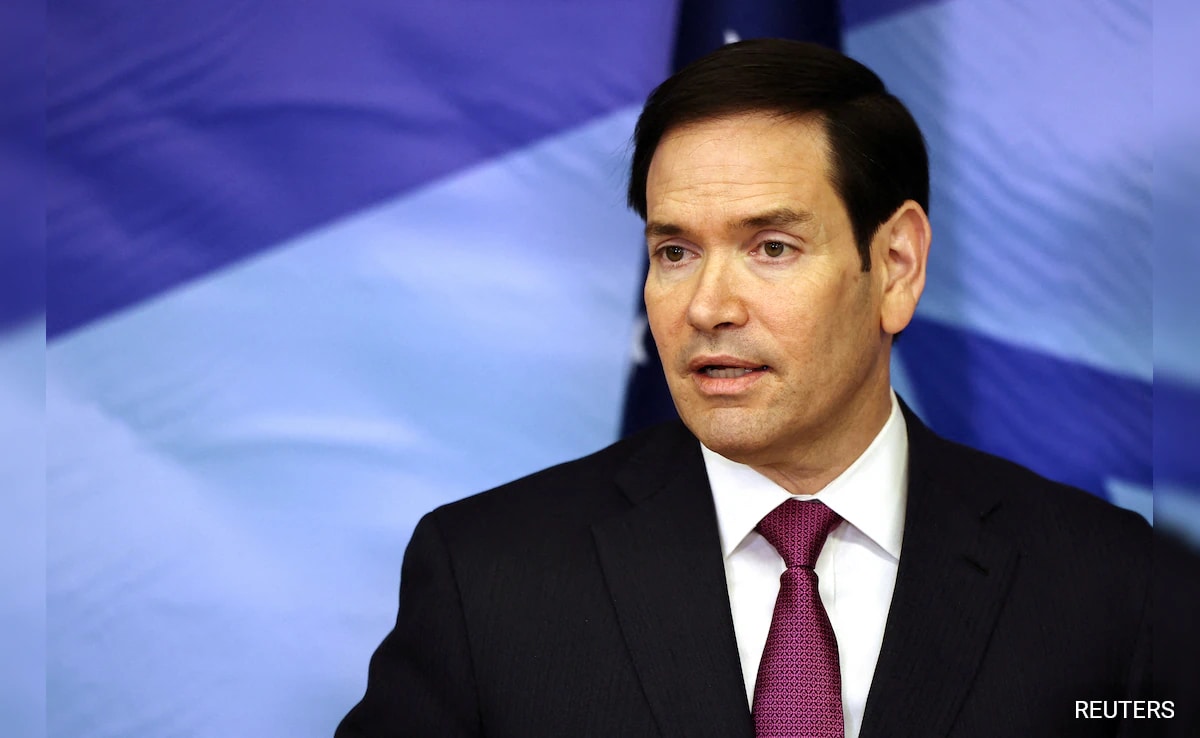
Don't let the headlines about high-stakes summits and "great leader" flattery fool you. While President Donald Trump and Xi Jinping were busy trading pleasantries in Beijing this week, the real story wasn't what changed, but what didn't. Secretary of State Marco Rubio spent his Thursday morning doing damage control, or perhaps more accurately, "consistency control."
The message coming out of the first U.S. presidential visit to China in nearly a decade is clear. Despite the flashy optics and Trump’s penchant for the unpredictable, the official line on Taiwan remains exactly where it’s been for decades. "U.S. policy on the issue of Taiwan is unchanged as of today," Rubio told reporters after the meeting. It’s a statement designed to calm nervous allies and remind Beijing that some lines are still drawn in permanent ink.
Behind the closed doors in Beijing
Xi Jinping didn't exactly mince words during the summit. He called the Taiwan question the "most important issue" in the entire relationship. He even went so far as to warn that mishandling it could lead to "clashes and even conflicts." That’s a heavy vibe for a meeting where Trump was busy talking about a "special relationship" and pushing for more soybean sales.
But here’s the thing. China always raises Taiwan. It’s their opening move, their mid-game, and their closing argument. Rubio’s takeaway was basically: "Yeah, they said their thing, we said ours, and then we talked about the Strait of Hormuz."
This isn't just about diplomatic script-reading. It’s about the reality of the Taiwan Relations Act. Trump might be the one in the room with Xi, but he isn't the only one with a say. Congress effectively holds the purse strings and the legal mandate for Taiwan's defense. Even if Trump wanted to trade Taiwan away for a better trade deal—a fear that keeps many in Taipei up at night—he’d have to go through a very skeptical Capitol Hill first.
The arms sales elephant in the room
One of the big questions looming over this trip was whether Xi would get Trump to blink on weapons sales. Rubio was quick to shut that down. While the topic was "discussed in the past," he noted it didn't feature prominently this time around.
The U.S. recently approved a massive defense budget for Taiwan, including packages worth billions that run through 2033. We’re talking HIMARS, F-16 upgrades, and naval tech. These aren't just symbols; they're the "porcupine strategy" in action. By the time this summit even started, the hardware was already on the books.
Why Beijing prefers a vote over a fight
Rubio dropped an interesting bit of insight during his NBC interview. He argued that China’s preference isn't to start a war they might lose. Instead, they’d much rather see Taiwan "willingly, voluntarily join them." In a perfect world for Xi, there’d be a referendum where Taiwan simply agrees to fold in.
It’s a softer take than the usual "invasion is imminent" rhetoric, but it doesn't mean the pressure is off. China has been flying sorties into Taiwan's ADIZ almost daily. They’ve squeezed Taiwan’s diplomatic space, like blocking President Lai Ching-te's overflight rights earlier this month. It’s a slow-motion tightening of the noose, designed to make "voluntary" reunification feel like the only way to breathe again.
Rubio was blunt about the alternative. Using force would be a "terrible mistake" with global repercussions. He’s not just talking about U.S. ships in the strait. He’s talking about the total meltdown of the global semiconductor supply chain and a direct hit to the Chinese economy that Xi can't afford right now, especially with the world already on edge over the crisis in the Middle East.
The Thucydides Trap tension
Xi brought up the "Thucydides Trap"—the idea that an established power and a rising one are destined for war. It’s a term international relations nerds love, and Xi uses it to frame China as an inevitable force that the U.S. needs to make room for.
Trump, predictably, focused on the "now." He wants trade wins. He wants China to buy more beef and aircraft. He wants Beijing to stop buying Iranian oil while the Strait of Hormuz is a mess. There’s a fundamental disconnect here. Xi is playing a game of centuries; Trump is looking at the next fiscal quarter and his domestic base.
What this means for the next six months
If you’re looking for a massive shift in the Pacific, you won't find it in this summit’s readout. The U.S. is sticking to its "Strategic Ambiguity"—a policy that essentially tells China "don't try anything" and tells Taiwan "don't start anything."
It’s an awkward, tense, and sometimes frustrating status quo, but it’s the one we’ve got. Rubio’s job is to be the guy who keeps the guardrails on while the President tries to cut deals. For now, those guardrails are holding.
If you want to stay ahead of how this actually affects the tech and trade sectors, start by tracking the delivery of the NT$300 billion arms package approved last December. That’s the real metric of U.S. commitment, not the handshakes in Beijing. Also, keep a close eye on the upcoming legislative sessions in Taipei. If the KMT and TPP keep pushing through massive defense bills, it tells you they don't believe the "unchanged" rhetoric is enough to stop the pressure from the mainland.
Check out this Breakdown of the Trump-Xi summit to see the actual footage of Rubio's comments and the atmosphere in Beijing. This video provides the direct context of the Secretary of State's remarks and the specific "unchanged" phrasing he used during the press cycle.