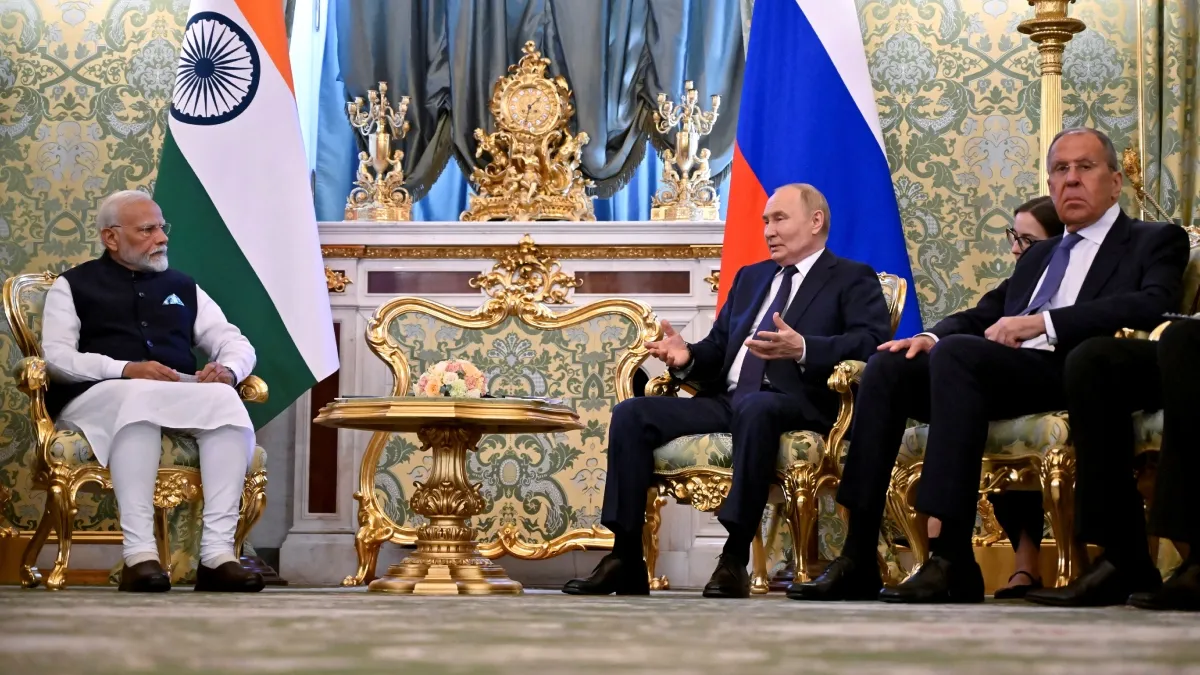
When Sergey Lavrov lands in New Delhi, the world stops to watch. It's not just another diplomatic photo op or a routine exchange of pleasantries between old allies. The recent sit-down between the Russian Foreign Minister and Prime Minister Narendra Modi happened at a moment when the global order feels like it’s held together by scotch tape. You see the headlines about Ukraine and West Asia, but the real story is New Delhi’s refusal to pick a side in a fight it didn't start.
India isn't just sitting on the fence. It's building its own fence.
While the West wants India to turn its back on Moscow, and Moscow wants a full-throated endorsement of its actions, Modi is playing a much longer game. This meeting wasn't about bowing to pressure. It was about solidifying India's position as the only major power that can still talk to everyone. If you’re looking for a simple "us vs. them" narrative, you won't find it here. This is about cold, hard national interest.
The Ukraine Problem and the Peace Broker Gambit
Let's talk about the elephant in the room. Ukraine. The West has been banging the drum for India to condemn Russia since day one. They haven't succeeded. During the talks, Lavrov and Modi spent significant time on the "special military operation." But look closely at the language New Delhi uses. They don't use the Kremlin’s terminology, yet they won't sign on to the G7’s sanctions list either.
Modi has consistently told Putin—and reminded Lavrov—that "today’s era is not an era of war." That’s a blunt statement. It’s not a soft suggestion. India needs the fighting to stop because the disruption to fertilizer, fuel, and grain hits the Indian wallet hard. When Lavrov briefs Modi on the situation, he’s not just giving a status report. He’s trying to ensure that India remains a neutral ground for potential future negotiations.
India is one of the few countries with the "strategic autonomy" to tell the Americans "no" and the Russians "behave." That’s a rare power. During this visit, the discussion shifted toward how India could facilitate a dialogue. Don't expect a sudden peace treaty, but do expect India to be the room where the talking eventually happens.
West Asia is a Powder Keg India Can’t Ignore
While the world focuses on the border near Kharkiv, the situation in West Asia—what many call the Middle East—is arguably more dangerous for India’s immediate economy. Modi and Lavrov didn't just touch on this; they dove into the risks of a wider regional conflagration.
India has millions of citizens working in the Gulf. It has massive energy stakes there. Any escalation between Israel and Iran, or further instability in the Red Sea, ruins India's maritime trade routes. Russia, which has its own complicated but deep ties in Syria and Iran, offers a different perspective than what Modi gets from Washington.
The two leaders looked at the "Two-State Solution" as the only viable path forward. It sounds like a cliché, but in the context of a Russian Foreign Minister and an Indian Prime Minister, it's a signal. They’re saying that despite the chaos, the basic framework of international diplomacy must hold. They discussed the humanitarian crisis in Gaza with a level of urgency that suggests India is worried about radicalization spilling over into its own neighborhood.
The Oil and Arms Reality Check
Critics love to say India is only "pro-Russia" because of cheap oil and old tanks. That’s a lazy take. Yes, India’s imports of Russian crude have kept its economy afloat while Europe scrambled for alternatives. And yes, about 60% of India’s military hardware has Russian DNA. You don't just swap out an entire army’s inventory overnight.
But it’s deeper than that.
During the deliberations, there was a clear focus on the S-400 missile defense system and the manufacturing of AK-203 rifles in India. This isn't just buying stuff. It's about "Make in India." Moscow is willing to share technology that the US often guards with a jealous intensity. If you’re Modi, you take the deal that builds your own factories.
Russia needs India to stay relevant as Western markets close off. India needs Russia to ensure it doesn't become too dependent on any single Western power. It’s a marriage of convenience that has survived the Cold War and is now surviving the "New Cold War."
Navigating the BRICS and the Global South
Moscow is currently chairing BRICS. This gives Lavrov a lot of leverage to talk about a "multipolar world." To the average person, that sounds like academic jargon. In reality, it means a world where Washington doesn't make all the rules.
Modi’s vision of India as the "Vishwa Mitra" (Friend to the World) fits perfectly here. By engaging with Lavrov, Modi is signaling to the Global South—countries in Africa, Southeast Asia, and Latin America—that India won't be bullied by the old guard. They discussed the expansion of trade using national currencies. Basically, they want to bypass the US Dollar where they can.
Is it working? Slowly. But the intent is clear. India wants to lead the developing world, and Russia is more than happy to help them do it if it means weakening the grip of the Euro-American financial system.
The China Factor in the Room
You can't talk about Russia and India without mentioning the shadow of Beijing. This is where the tension lies. Russia and China are closer than ever. India and China are practically in a cold war on their Himalayan border.
I suspect the private conversations between Modi and Lavrov were much more pointed than the public statements. Modi needs to know if Russia is becoming a junior partner to China. If Moscow becomes Beijing’s lapdog, India’s "special and privileged strategic partnership" with Russia loses its value.
Lavrov’s job was to convince Modi that Russia remains an independent power. He had to reassure the Indian leadership that Moscow’s ties with Beijing won't come at New Delhi’s expense. It’s a tough sell. India is watching the Russia-China "no limits" partnership with a very skeptical eye.
What This Means for You
So, why should you care? Because the price of your petrol, the stability of the tech supply chain, and the likelihood of a third world war are all influenced by these two men in a room in Delhi.
India’s refusal to abandon Russia is a masterclass in pragmatism. It keeps the channels open. It prevents Russia from being totally isolated and driven entirely into China's arms. If you want a world that isn't split into two warring blocks, you should actually be rooting for India’s middle path.
The takeaway from the Lavrov-Modi meeting isn't that India is "pro-Russia." It's that India is "pro-India."
Watch the upcoming trade numbers. Look for announcements on the International North-South Transport Corridor (INSTC). That’s a massive project designed to connect India to Russia via Iran, bypassing the traditional sea routes. If that picks up steam, the West’s attempt to isolate Moscow is effectively dead in the water.
Don't buy the narrative that India is being "difficult." They’re being smart. They’re ensuring that when the dust settles in Ukraine and West Asia, India is the one standing in the center of the new map. Keep an eye on the next G20 and BRICS summits. The seeds planted in this meeting will determine who holds the balance of power for the next decade.