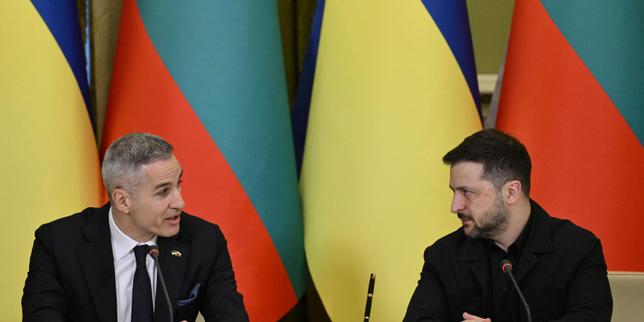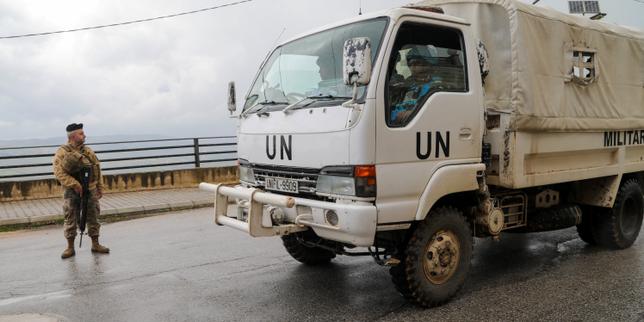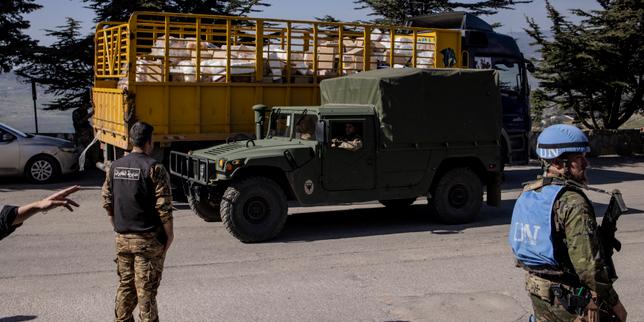
The Israeli Defense Forces (IDF) have opened an internal investigation into the deaths and injuries of United Nations peacekeepers in Southern Lebanon. This move follows a series of kinetic incidents where UNIFIL positions—established by international mandate—found themselves directly in the line of fire. While the military describes these events as accidental or a byproduct of urban combat with Hezbollah, the recurring nature of the strikes points to a much deeper breakdown in the protocols meant to protect neutral monitors in a war zone. The global community now faces a grim reality. If blue helmets are no longer a shield, the very architecture of international mediation in the Middle East is on the verge of total collapse.
This is not a simple story of collateral damage. It is a story about the narrowing space for neutrality in modern warfare. When an army as technologically advanced as the IDF strikes a static, well-mapped UN position, the explanation of "fog of war" begins to lose its weight. Meanwhile, you can explore related events here: The Calculated Silence Behind the June Strikes on Iran.
The Geography of a Failed Buffer Zone
To understand why peacekeepers are dying, you have to look at the dirt. The "Blue Line" is not a wall; it is a porous, mountainous boundary where Hezbollah has spent decades weaving itself into the literal bedrock. For years, UNIFIL was criticized by Israel for failing to prevent the buildup of rocket caches and tunnels right under its nose. On the other side, Lebanon viewed the peacekeepers as a passive observer of frequent Israeli airspace violations.
Now, the IDF has moved from surveillance to clearance. In this phase of the conflict, the IDF strategy relies on high-intensity movement and heavy engineering. They aren't just fighting a militia; they are reshaping the landscape to ensure Hezbollah cannot return to the border. Peacekeepers are sitting in the middle of this terraforming project. When the IDF orders a village evacuated, the UNIFIL post remains. It becomes a static obstacle in a high-speed maneuver corridor. To see the complete picture, check out the excellent article by NPR.
The military logic is brutal. If Hezbollah fires from a position near a UN bunker, the IDF responds with the tools at its disposal. In the heat of an exchange, the distinction between a hostile firing point and a neutral observation tower can vanish in a cloud of dust and thermal imaging noise. But the frequency of these "accidents" suggests that the threshold for engaging targets near UN personnel has been lowered significantly.
The Investigation as a Diplomatic Pressure Valve
Israel’s announcement of an investigation serves a specific purpose in the theater of international relations. It buys time. By promising a formal review, the state can deflect immediate calls for UN Security Council sanctions or harsher condemnations from European allies like France and Italy, who provide the bulk of the UNIFIL troops.
These investigations usually follow a predictable pattern. They will examine GPS logs, drone footage, and radio transcripts. They will likely conclude that "procedural errors" occurred or that the peacekeepers were not identified in time due to "complex operational environments." Rarely do these probes result in high-level disciplinary action. Instead, they offer a technical explanation for what is essentially a political decision.
The political decision is this: Israel has prioritized the absolute removal of Hezbollah's infrastructure over the safety of the UN mission. By continuing operations despite the presence of peacekeepers, the IDF is signaling that the old rules of engagement—where the proximity of a UN flag meant a total ceasefire in that sector—are dead.
Hezbollah’s Tactical Use of Neutrality
We cannot ignore the role of the adversary in this equation. Hezbollah is an expert at using the environment to its advantage. This includes the presence of international observers. By operating in close proximity to UNIFIL sites, the group forces the IDF into a "no-win" scenario. If the IDF strikes, they face international blowback for hitting the UN. If they don't strike, Hezbollah retains a tactical sanctuary.
This creates a cycle of escalation. The IDF becomes frustrated with the perceived "human shield" utility of the UN positions. This frustration eventually manifests as a willingness to take riskier shots. The peacekeeper in the watchtower is no longer seen as a neutral observer; they are seen as a complication to be managed or, in the worst cases, ignored.
The Breakdown of the Deconfliction Mechanism
In theory, there is a "deconfliction" system. This is a direct line of communication where the UN tells the IDF exactly where their people are, and the IDF acknowledges those coordinates. For this to fail, one of three things must happen.
- Technical Failure: The maps aren't updated, or the units on the ground aren't receiving the data. In a modern military, this is almost impossible.
- Operational Negligence: Local commanders are so focused on their immediate targets that they ignore the red flags on their digital displays.
- Deliberate Intent: The strikes are intended to "encourage" the UN to withdraw its forces so the military has a completely free hand in the border zone.
UNIFIL has stated repeatedly that they will not leave. They view their presence as a legal necessity. If they leave, the last shred of international legitimacy on that border vanishes, leaving only two bitter enemies to fight until one is erased.
The Cost of Staying Put
The soldiers wearing those blue helmets are often from countries like Ireland, Spain, and India. These are professional militaries, but they are not equipped for a full-scale conventional war between a state and a heavily armed non-state actor. They carry light weapons for self-defense, not anti-tank missiles or heavy artillery.
When a Merkava tank points its main gun at a UN observation tower, there is no "fight" to be had. There is only the hope that the person inside the tank follows the manual. But the manual is being rewritten in real-time. The IDF’s current doctrine emphasizes the total neutralization of threats. In that mindset, "neutral" is a luxury the infantry feels it can no longer afford.
The physical damage to UN facilities—walls breached, cameras destroyed, and bunkers collapsed—is quantifiable. What is harder to measure is the psychological damage to the concept of peacekeeping. If the UN can be fired upon with relative impunity by a democratic state and its sophisticated military, then the blue helmet has lost its status as a sacred object. It is just another piece of plastic on the battlefield.
A Precedent for Future Conflicts
This isn't just about Lebanon. The precedent being set right now will ripple across every other frozen conflict in the world. If the IDF investigation ends with a shrug and a "sorry," it tells every other military power that UN observers are optional.
We are seeing the end of the post-1945 consensus on how wars are monitored. The "En Direct" updates and the frantic diplomatic cables are symptoms of a world where the referee has been tackled by the players. The investigation may find that a specific shell was fired by mistake, but it will not address the fundamental truth that the border has become a kill zone where even the world's representatives are fair game.
The IDF knows this. Hezbollah knows this. The UN knows this. The only people who seem to be clinging to the old reality are the diplomats in New York who still believe a strongly worded resolution can stop a 120mm tank round. The investigation is not the solution; it is the tombstone of a mission that no longer fits the reality of the ground it occupies.
The mission of UNIFIL was built for a world that wanted a buffer. Today, the combatants want a collision. In a collision, anything in the middle gets crushed. The investigation will provide the technical details of that crushing, but it will not change the fact that the buffer is gone, and the peacekeepers are now just targets in a war that has no room for witnesses.