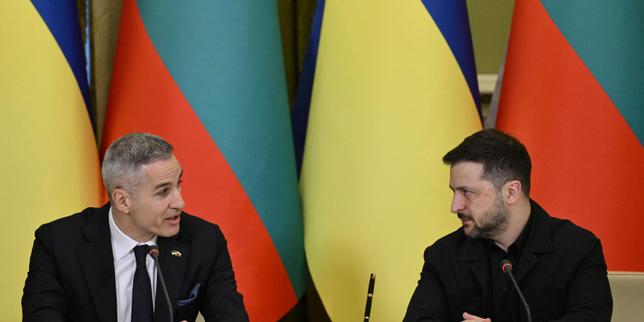
Ukraine and Bulgaria have locked themselves into a ten-year security pact that moves far beyond the standard diplomatic handshake. This agreement, signed in the shadow of shifting European political winds, marks a fundamental change in how the Balkan region views its own survival. While the headlines focus on the immediate transfer of hardware, the real story lies in the long-term integration of Ukraine into the Black Sea’s defensive architecture. This is not just about keeping Kiev in the fight today. It is a calculated move to ensure that Bulgaria, a nation once seen as a weak link in NATO's eastern flank, becomes a permanent logistical and industrial base for Ukrainian defense.
The core of this deal involves a decade-long commitment to military support, intelligence sharing, and, crucially, the revitalization of old Soviet-era defense infrastructure. Bulgaria still houses the machinery and the technical knowledge to maintain and repair the exact systems Ukraine uses daily on the front lines. By formalizing this relationship, Sofia is no longer just a donor; it is an active partner in the industrial sustainment of a war of attrition.
Moving Beyond the Shadow of Moscow
For decades, Bulgaria operated in a grey zone of Russian influence. Its energy sector, its intelligence services, and even its political parties were deeply entangled with Kremlin interests. This new ten-year pact represents a clean break that many analysts thought impossible only three years ago. It signals a shift from "neutrality" to "fortress" status.
The mechanics of the deal are specific. Bulgaria is not just handing over crates of ammunition. They are opening a corridor for the joint production of military hardware. This solves a massive problem for Kiev: the need for reliable, nearby manufacturing that is protected by NATO’s Article 5. If Ukraine can manufacture or repair components in Bulgaria, those facilities are safe from the missile strikes that plague factories in Lviv or Kharkiv. This creates a strategic depth that Russia cannot easily disrupt without risking a direct confrontation with the entire North Atlantic alliance.
The Black Sea Security Gap
Control of the Black Sea is the hidden engine behind this agreement. Both nations recognize that if Russia dominates these waters, their economies will wither. Bulgaria’s ports at Varna and Burgas are becoming the new gateways for Ukrainian grain and Western military supplies. The pact includes deep cooperation on demining operations, a task that has become a matter of daily survival for commercial shipping.
The security of the maritime route is not a luxury. It is a requirement. Without a clear path through the Black Sea, Ukraine is landlocked and economically strangled. Bulgaria’s commitment to this ten-year timeline suggests they expect the threat of naval blockades or mine warfare to persist long after the current kinetic phase of the war ends.
The Logistics of Longevity
Western military aid is often criticized for being "one and done." A country sends a battery of tanks, takes a photo, and moves on. This pact is the opposite. It focuses on the unglamorous but vital reality of "sustainment."
When a Ukrainian howitzer breaks down, it needs specific parts. It needs engineers who understand the metallurgy of 1980s Soviet designs and the software of 2020s Western upgrades. Bulgaria possesses this hybrid expertise. The agreement streamlines the legal hurdles for Ukrainian military personnel to enter Bulgaria for training and for Bulgarian contractors to work on Ukrainian equipment.
- Standardization: Moving Ukraine toward NATO calibers and equipment sets while maintaining the old stock.
- Ammunition Pipelines: Ensuring a steady flow of 152mm and 122mm shells, which Bulgaria still produces in significant quantities.
- Infrastructure Investment: Upgrading rail and road links between the two countries to bypass the bottlenecks of the Polish border.
Political Risk and the Domestic Front
This move is not without internal friction in Sofia. Bulgaria’s political scene is notoriously fractured. Pro-Russian elements within the country view this ten-year commitment as a betrayal of historical ties. They argue that tying the nation’s security so closely to Kiev invites unnecessary risk.
However, the current leadership in Sofia has made a different calculation. They see the writing on the wall. A Russian victory in Ukraine would leave Bulgaria vulnerable and isolated. By doubling down on this partnership, they are securing their place as a central player in the new European security order. They are betting that the future of the Balkans is inextricably linked to a free and armed Ukraine.
The ten-year duration is particularly telling. It bypasses several election cycles in both countries. It is designed to be "future-proof," making it difficult for a subsequent pro-Kremlin government in Bulgaria to simply tear up the document without facing massive diplomatic and legal repercussions from the European Union and NATO.
Economic Undercurrents
While the pact is framed in terms of defense, the economic ripples are massive. The Bulgarian defense industry is experiencing a gold rush. Factories that were nearly derelict ten years ago are now running triple shifts. This isn't just "aid"; it's an industrial policy.
The money flowing into these factories often comes from "circular exchanges" funded by the US or Germany. Bulgaria sends old equipment to Ukraine; the West pays Bulgaria to modernize its own military with new Western gear. This process is effectively rebuilding the Bulgarian military for free while simultaneously arming Ukraine. It is a masterclass in leveraging a crisis to upgrade national infrastructure.
The Strategy of Attrition
Russia's strategy relies on the hope that the West will grow bored or go broke. By signing ten-year deals, Ukraine is signaling that it has no intention of running out of friends. These bilateral agreements—which Kiev has now signed with several European capitals—create a web of commitments that are much harder to break than a single, centralized NATO agreement.
If one country’s domestic politics shifts, the others remain. It is a decentralized, resilient model of international support. Bulgaria’s entry into this group is significant because of its geographic proximity. It is one thing for London or Paris to sign a pact; it is quite another for a neighbor that shares the same sea and the same history.
The pact also addresses the "grey zone" of cyber warfare and disinformation. Both nations have been primary targets for Russian hybrid operations. Part of the agreement involves setting up a joint task force to identify and neutralize the bots and troll farms that attempt to destabilize their respective governments. This is a recognition that the war is being fought in the minds of the voters just as much as it is being fought in the trenches of the Donbas.
The Hard Reality of the Ten Year Window
Ten years is an eternity in modern warfare. By the time this pact expires, the geopolitical map of Europe will be unrecognizable compared to 2021. The agreement essentially bets that the current conflict will transition from a high-intensity war into a long-term frozen conflict or a period of armed peace similar to the Cold War.
In this scenario, Ukraine needs to become a "porcupine"—a nation so prickly and well-defended that the cost of an attack is always higher than any potential gain. Bulgaria is providing the quills. This isn't about a quick victory or a grand peace treaty. It is about the grueling, expensive, and necessary work of building a permanent deterrent in the East.
The signed papers in Sofia are a middle finger to the idea of "Ukraine fatigue." They prove that while the headlines might fade, the industrial and military machinery is only getting started. The focus is shifting from survival to sustainability. For Ukraine, having a neighbor committed to a decade of support is a strategic win that no single shipment of tanks could ever match.
The real test will be the speed of implementation. Bureaucracy often kills what diplomacy creates. If the joint production lines don't start moving within the next eighteen months, the pact risks becoming a historical footnote rather than a strategic pillar. Both governments are now racing against a clock that doesn't care about their ten-year plan. They must turn the ink on the page into steel on the ground before the next winter.
The Balkan front is no longer a secondary concern. It is the new logistical heart of the resistance. Bulgaria has chosen its side, and it has chosen it for the long haul. This is the new reality of European security: a series of interlocking, long-term defense marriages that make the prospect of a Russian sphere of influence increasingly impossible.
Governments that fail to see the shift in the Black Sea power balance will find themselves sidelined. Bulgaria has ensured it won't be one of them.