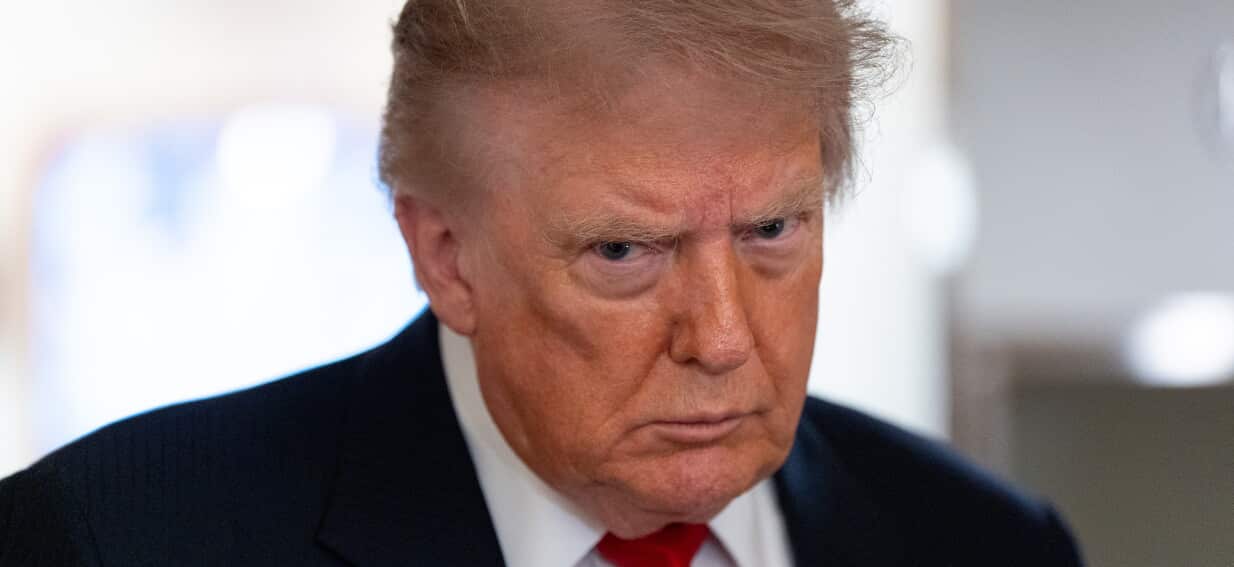
The fragile lull in the Middle East is officially over. US President Donald Trump didn't mince words when addressing the latest escalation from Tehran, stating plainly that American forces would retaliate with severe force after ballistic missiles targeted US military infrastructure in Jordan. "So it's our turn," Trump told reporters at the White House, making it clear that Washington views the recent cross-border strikes as a major breach of any implicit understandings.
When Iran's Islamic Revolutionary Guard Corps launched ballistic missiles toward a US air base and associated military installations in Jordan, they shattered a brief window of diplomatic optimism. Jordan's air defense systems successfully intercepted multiple incoming projectiles, preventing a catastrophic loss of life on the ground, but the strategic fallout was immediate. Oil markets reacted violently to the renewed hostilities, with Brent crude surging roughly 8 percent to settle near 91 dollars a barrel amid fears of prolonged supply chain disruptions.
The Anatomy of a Breaking Regional War
This flare-up isn't happening in a vacuum. The tit-for-tat dynamic has expanded across multiple borders, drawing in regional players and proxies with alarming speed. Just hours before Trump's hardline remarks, the United States and Saudi Arabia launched joint airstrikes targeting Iran-backed militia positions in Iraq. These strikes were executed in direct response to persistent drone threats directed at Saudi crude facilities by regional armed groups.
According to reports from local authorities and military officials, the joint US-Saudi operations in Iraq resulted in significant casualties, killing approximately 20 members of the Popular Mobilization Forces, including several Iranian advisers. The presence of these advisers highlights the deep institutional ties between Tehran and its network of regional militias, turning Iraq into an active theater for a proxy war that threatens to boil over into a full-scale direct confrontation.
To make matters more volatile, maritime security has taken a direct hit. Fires broke out aboard two liquefied natural gas vessels stationed at Egypt's Mediterranean port of Damietta after suspected drone strikes. While Egyptian petroleum officials confirmed that the blazes were quickly brought under control and no injuries were reported, the incident underscores how vulnerable global commerce and energy transit routes remain whenever hostilities flare up in the region.
Behind the Rhetoric and Military Posturing
Trump's response to the Jordan base attacks reflects a calculated shift from cautious containment to aggressive deterrence. Behind closed doors, intelligence briefings have focused heavily on Iran's ongoing efforts to rebuild its depleted military inventory. Reports indicate that Tehran has been attempting to secure substantial shipments of advanced Chinese-made shoulder-fired air defense missile launchers. Such acquisitions point to a desperate push by the Iranian leadership to patch glaring vulnerabilities in their short-range aerial defense infrastructure, which took a beating during earlier rounds of conflict with the US and Israel.
This arms race dynamic complicates any long-term diplomatic off-ramp. While Trump noted that Washington remains open to discussing terms for ending the conflict if conditions permit, his public posture relies on overwhelming military retribution to force Tehran's hand. The administration's stance is that talks only work when the opposing side faces insurmountable pressure on the battlefield.
What Comes Next for Global Markets and Security
The immediate concern for global leaders is containment. Energy markets are hyper-sensitive to every movement in the region, and a sustained spike in oil prices threatens economic stability across North America, Europe, and Asia. Governments are already rolling out contingency plans and economic buffers to handle persistent supply shocks.
At the same time, military commanders on the ground are bracing for the next wave of retaliation. As Washington prepares its promised hard strike against Iranian targets, the risk of miscalculation grows exponentially. Security analysts note that cyber warfare and asymmetric proxy actions remain Tehran's preferred response when conventional military parity fails, meaning commercial shipping lanes, regional allies, and digital infrastructure remain high-risk targets.
The threshold for a wider regional conflagration has never been lower. Watch the Persian Gulf, monitor energy futures closely, and prepare for a prolonged period of high-stakes volatility.