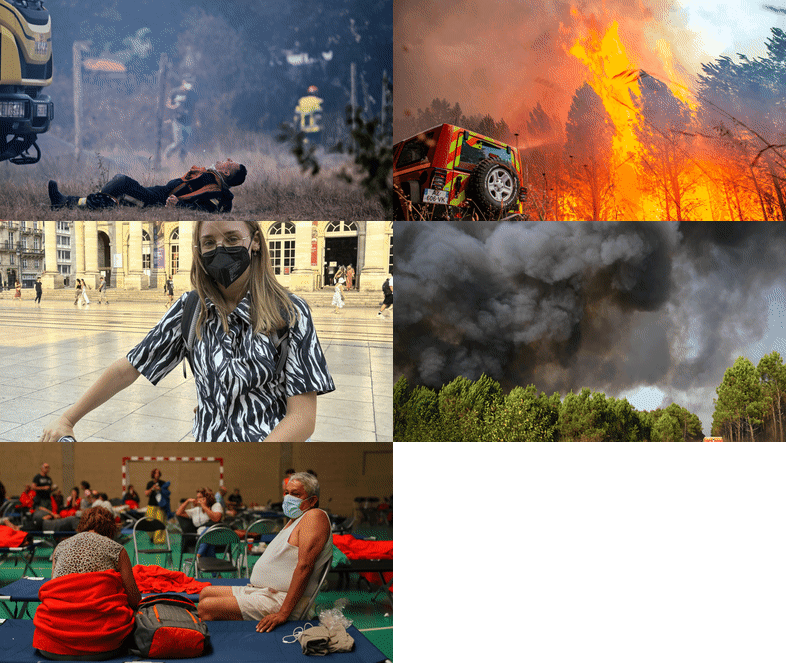
The smoke clears over the pine forests of the Gironde, and the headlines roll in on cue. Media outlets point the finger at rising temperatures, parched brush, and the usual suspects of environmental neglect. Residents fret, politicians pledge more funding for water-dropping aircraft, and the public nods along to a comfortable narrative.
It is completely wrong.
Focusing solely on the flames misses the structural failure happening in broad daylight across south-west France. I have walked those ash-choked tracts of Landes de Gascogne. I have watched millions in state subsidies go toward reactive firefighting while the fundamental ecosystem management strategy remains stuck in the nineteenth century.
The lazy consensus is that climate change is an active arsonist and we are helpless victims waiting for the next heatwave. The reality is far less convenient for policymakers. The disaster is not just the fire. The disaster is the policy that treats a natural, cyclical ecological event as an unpredictable emergency rather than an inevitable line item in regional management.
The Myth of Pristine Wilderness
Ask anyone why the fires spread so fast, and they will tell you the woods are dry. They act as if a forest is a museum exhibit that needs to be kept behind glass, untouched and wild.
Nature does not work that way.
The Landes forest is not an ancient, untamed wilderness. It is a massive, human-planted timber plantation created in the nineteenth century to drain swamps and secure a resin and lumber economy. For decades, industrial forestry prioritized monoculture planting of maritime pine. Trees were crammed together in dense, uniform grids to maximize timber yields per hectare.
When you plant thousands of acres of a single, highly flammable resinous tree species right next to each other without natural firebreaks or biological diversity, you are not building an ecosystem. You are building a tinderbox.
The Bureaucracy of Prevention
The official stance from regional authorities focuses heavily on suppression capability. Buy bigger planes. Hire more seasonal crew. Station trucks closer to the tree line.
This is like treating a chronic heart condition with a box of band-aids.
European Union agricultural policies and local zoning laws actively discourage the kind of aggressive land management that actually stops mega-fires. Prescribed burns—deliberately setting controlled fires to clear out underbrush and dead biomass during the wet season—are choked by red tape, public complaints about smoke, and liability fears.
Landowners are caught in a bizarre regulatory trap. They are penalized if their timber burns, but they are heavily restricted by environmental protection agencies if they want to clear deadfall or introduce deciduous tree species that slow down fire progression.
The system punishes proactive defense and rewards dramatic, last-minute heroics.
What Actually Works
If you want to stop south-west France from burning every summer, stop listening to politicians who promise zero risk. Zero risk does not exist in a Mediterranean and sub-Mediterranean climate zone.
The fix requires three uncomfortable shifts in strategy.
First, dismantle the monoculture. Maritime pine has its place, but unbroken expanses of it are an ecological liability. Introducing mixed-species forestry—breaking up pine stands with oak, chestnut, and other fire-resistant broadleaf trees—creates natural dampeners that slow the velocity of a crown fire.
Second, legalize and mandate aggressive fuel reduction. This means accepting the temporary ugliness of charred undergrowth during winter controlled burns so that summer infernos do not have the fuel to jump containment lines.
Third, stop subsidizing rural depopulation. Wildfires thrive where people have abandoned the land. Traditional pastoralism, small-scale farming, and active logging kept the forest floor clean for centuries. When you clear out the local population and replace them with seasonal tourists and distant corporate timber conglomerates, nobody is watching the brush pile up.
The next time you see footage of smoke billowing over the vineyards and pines of Aquitaine, do not ask how hot it is outside.
Ask why the people in charge are still surprised by wood that burns.