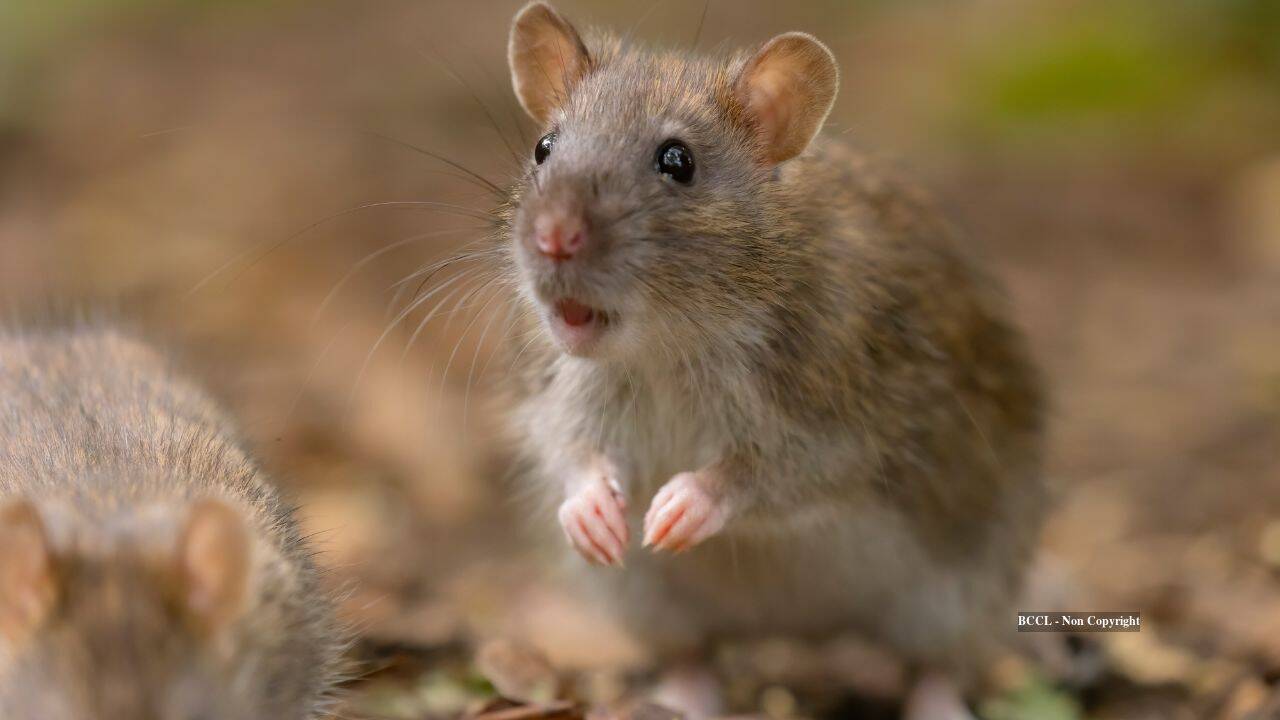
Removing an apex or mesopredator from an isolated island system does not restore an equilibrium; it triggers a violent, asymmetric release of suppressed biomass. On Antipodes Island, a subantarctic territory 860 kilometers southeast of New Zealand, the 2016 aerial eradication of invasive house mice (Mus musculus) produced a 40-fold increase in native ground beetle populations within five years. Standard conservation reporting frames this rebound as a straightforward ecological victory. That framing misses the operational reality: the 40-fold surge is a diagnostic metric revealing the sheer scale of chronic top-down suppression that mice exerted on subantarctic invertebrate trophic webs for over a century.
To understand how an eradication campaign translates into an order-of-magnitude invertebrate explosion, we must deconstruct the intervention into its mechanical components: the baseline suppression architecture, the eradication execution protocol, the post-intervention trophic release, and the secondary risks of rapid biomass expansion.
The Suppression Architecture of Subantarctic Islands
Before 2016, Antipodes Island operated under a distorted food web governed by a single invasive mammal. House mice, likely introduced via sealing vessels in the 19th century, functioned as the sole mammalian predator on the 2,025-hectare volcanic island. Because Antipodes lacked rats, stoats, or feral cats, mice escaped intraguild predation and competition, allowing their population density to scale directly against seasonal invertebrate availability.
In temperate mainland ecosystems, small rodents face constant mortality from raptors, mustelids, and larger rodents. On Antipodes, the absence of mammalian predators meant mouse populations fluctuated primarily with winter mortality and summer breeding pulses. During peak summer months, mouse densities reached levels that turned the soil and tussock litter into a high-efficiency caloric extraction zone.
Ground beetles (family Carabidae), particularly large flightless endemic species, bore the brunt of this predation. Flightlessness—an evolutionary adaptation to high-wind subantarctic environments—eliminated their primary escape vector. Large body size, which previously carried no fitness penalty in a mammal-free environment, made them high-value caloric targets for foraging mice.
This created a persistent trophic bottleneck across three distinct ecological functions:
- Direct Predation on Adult Biomass: Mice selectively targeted large-bodied carabids because a single adult beetle provided a high caloric return relative to foraging energy expenditure.
- Larval Recruitment Failure: Ground beetle larvae inhabit the upper soil and peat layers, making them vulnerable to subterranean and litter-level foraging by mice throughout the winter months when adult insects were scarce.
- Nutrient Cycling Stagnation: By suppressing detritivorous and predatory invertebrates, mice slowed the breakdown of maritime tussock (Poa litorosa) and megaherb litter, locking nutrients in undecomposed organic matter.
The baseline state prior to 2016 was not a stable ecosystem with a minor pest problem. It was a heavily suppressed invertebrate system held artificially near its minimum viable population threshold by continuous mammalian harvest.
Operational Mechanics of the Million Dollar Mouse Eradication
Eradicating mice from a remote, mountainous subantarctic island requires zero-margin operational execution. Unlike population control—which aims to reduce pest density below an economic or ecological threshold—eradication demands the removal of 100% of breeding individuals. Missing a single gravid female invalidates the entire capital expenditure within two breeding seasons.
The New Zealand Department of Conservation (DOC) and its partners executed the "Million Dollar Mouse" project in the austral winter of 2016. Winter deployment is a calculated operational requirement driven by two variables:
- Caloric Scarcity: During winter, natural seed and invertebrate food sources drop to their annual minimum, maximizing bait uptake by starving mice.
- Reproductive Pause: Mouse breeding slows or halts during the coldest months, ensuring that non-foraging neonates remain absent from burrows during baiting windows.
Helicopters guided by differential GPS dispersed cereal-based pellets laced with brodifacoum, a second-generation anticoagulant rodenticide, across the entire landmass. The flight lines overlapped precisely to guarantee that no territory—down to the home range of a single mouse, often less than 100 square meters in dense tussock—remained unbaited. Coastal cliffs, sea stacks, and steep scree slopes required specialized rigging and flight patterns to eliminate refugia.
By 2018, following intensive monitoring with tracking tunnels, chew cards, and trained detection dogs, Antipodes Island was officially declared mouse-free. The eradication removed the primary top-down mortality driver overnight, setting the stage for an exponential demographic response among surviving invertebrates.
Quantifying the 40-Fold Trophic Release
Monitoring conducted by DOC researchers and university ecologists tracked invertebrate recovery using standardized pitfall trapping across multiple habitat zones, including coastal tussock, interior peatlands, and fellfield. Comparing pre-eradication baselines to post-eradication surveys revealed that ground beetle catch rates jumped by a factor of 40.
This 40-fold metric requires precise interpretation. Pitfall traps measure "activity-density"—a composite variable reflecting both absolute population size and individual movement rates. However, an increase of this magnitude cannot be explained by behavioral boldness alone. It represents a massive expansion in actual biomass driven by three compounding biological mechanisms.
Elimination of Juvenile Mortality Bottlenecks
Prior to 2016, the majority of ground beetle eggs and larvae were consumed before reaching reproductive maturity. With mice removed, survival rates from egg to pupa to adult surged. Because female carabids produce dozens to hundreds of eggs over their lifespan, removing juvenile predation shifted the population growth curve from flat replacement to exponential expansion.
Release of K-Selected Endemics
Subantarctic insects typically exhibit K-selected life history traits: slow larval development, long adult lifespans (often spanning multiple years), and low fecundity compared to tropical or temperate counterparts. Under heavy mouse predation, long-lived adults were harvested before they could complete multiple breeding cycles. Post-eradication, adult beetles survived across consecutive summers, stacking reproductive cohorts on top of one another.
Trophic Cascade Through the Detrital Web
The surge was not restricted to carabids. Weevils, spiders, amphipods, and flightless moths experienced parallel rebounds. Because ground beetles are generalist predators and scavengers, the simultaneous recovery of smaller soil invertebrates provided an abundant, uncontested food supply. Beetles were no longer competing with mice for the same prey base; they inherited the entire caloric budget previously consumed by the rodent population.
| Trophic Variable | Pre-Eradication Baseline (Pre-2016) | Post-Eradication State (Post-2018) | Primary Mechanism |
|---|---|---|---|
| Apex Consumer | Invasive House Mouse (Mus musculus) | Endemic Flightless Carabids and Spiders | Complete removal of mammalian mesopredator |
| Juvenile Beetle Survival | Severely suppressed by litter foraging | High recruitment across multiple cohorts | Elimination of winter subterranean predation |
| Caloric Allocation | Dominated by endothermic rodent metabolism | Shifted to ectothermic invertebrate biomass | Endotherms require ~10x more energy per gram |
| Avian Foraging Base | Depleted; birds competed directly with mice | Abundant terrestrial arthropod prey | Release of shared invertebrate food web |
A critical thermodynamic principle governs this shift: metabolic efficiency. Mice are endotherms that burn roughly 80% to 90% of their caloric intake simply maintaining body temperature in a cold, wet subantarctic climate. Ground beetles are ectotherms. When the caloric flow of the island shifted from endothermic mice to ectothermic invertebrates, the total biomass supported by the exact same primary plant production multiplied dramatically. The island did not suddenly produce 40 times more plants; it stopped burning its caloric budget on rodent thermoregulation.
Secondary Downstream Effects on Avian and Plant Systems
The explosion in ground beetle numbers is an intermediate step in a broader island-wide restructuring. On Antipodes Island, terrestrial birds—specifically the endemic Antipodes Island snipe (Coenocorypha aucklandica meinertzhagenae), the Antipodes parakeet (Cyanoramphus unicolor), and the Reischek's parakeet (Cyanoramphus hochstetteri)—rely heavily on invertebrates to provision chicks and survive winter.
Under the mouse regime, Antipodes snipe faced direct competition for soil invertebrates. Snipe probe soft peat and litter using sensitive bill tips, targeting the exact same beetle larvae and amphipods consumed by mice. The 40-fold increase in ground beetles directly expands the carrying capacity for snipe and other insectivorous birds, reducing juvenile starvation and increasing nesting attempts per season.
Simultaneously, the plant community undergoes a structural shift. Mice consumed vast quantities of seeds from native tussocks and endemic megaherbs such as Anisotome antipoda and Stilbocarpa polaris. With seed predation eliminated, seedling recruitment increases, which in turn generates more plant litter, feeding the detritivorous invertebrates that sustain the booming ground beetle population. This creates a self-reinforcing positive feedback loop across trophic levels.
Analytical Limitations and System Overshoot Risks
Treating a 40-fold population spike as a static endpoint is an analytical error. Ecological systems undergoing rapid trophic release rarely glide smoothly into a balanced state; they overshoot.
First, pitfall trap bias inflates apparent abundance. In the absence of nocturnal mammalian predators, ground beetles forage more openly and travel greater distances across the surface. Increased movement increases trap encounter rates, meaning the true population increase—while massive—may be somewhat lower than the raw 40-fold catch-rate multiplier suggests.
Second, hyper-abundance creates transient instability. A 40-fold surge in predatory beetles exerts intense downward pressure on smaller, slower-reproducing invertebrates such as endemic earthworms, springtails, and rare flightless flies. Until avian predators (like snipe and pipits) scale their own populations to harvest the beetle surplus, the system experiences a temporary predator-prey imbalance where beetles overexploit their own food base.
Third, biosecurity failure remains an existential threat. The eradication proved that Antipodes Island's invertebrate fauna retained the genetic and demographic resilience to recover after more than a century of suppression. However, the island's geographic isolation is no longer a sufficient barrier against modern maritime traffic, fishing vessels, and research expeditions. A single reinvasion event by mice or rats would reset the system, collapsing the newly recovered invertebrate biomass within five to ten years.
Strategic Allocation for Island Conservation Operations
The Antipodes Island dataset provides a clear operational blueprint for conservation capital allocation globally. Historically, island eradication budgets prioritized islands infested with rats, stoats, or feral cats, treating mice as a lower-priority nuisance because their impacts were less visibly dramatic than seabird chick predation by rats.
The 40-fold ground beetle surge proves that mice act as silent ecosystem engineers capable of suppressing entire trophic levels by over 95%. Conservation agencies must recalibrate their intervention models around three operational rules:
- Prioritize Single-Predator Mouse Islands: Islands where house mice are the sole invasive mammal represent the highest-return targets for invertebrate and terrestrial bird recovery, because mice occupy the apex niche without suppression from larger predators.
- Shift Monitoring Metrics from Vertebrates to Invertebrates: Relying solely on seabird breeding success underestimates the ecological damage of rodents. Standardized invertebrate biomass tracking (pitfall arrays and soil core extraction) must be integrated as a primary KPI before and after every eradication.
- Reallocate Post-Eradication Budgets to Biosecurity: Once an island undergoes trophic release, its biological value—and its vulnerability to reinvasion—scales exponentially. Permanent quarantine protocols, automated camera traps at landing sites, and rodent-detection dog inspections for all incoming vessels are non-negotiable fixed costs required to protect the initial eradication investment.