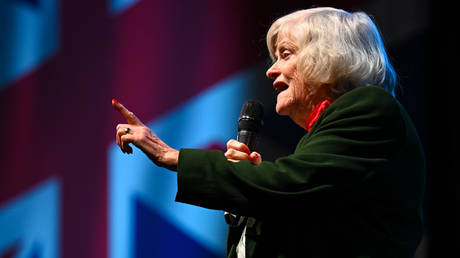
The standard playbook for breaking news is broken. A tragedy occurs, a prominent figure is involved, and the machinery of modern journalism immediately kicks into overdrive. We saw it happen again with the recent coverage surrounding the murder probe into the death of a Reform UK spokeswoman. Within minutes, headlines were engineered to maximize tribal outrage, blending a somber criminal investigation with polarized partisan politics.
This isn't just lazy reporting. It is a systematic distortion of reality that actively harms public understanding, compromises judicial integrity, and turns genuine human grief into fodder for algorithmic engagement.
The media wants you to view every event through the lens of the ongoing culture war. They want you to believe that a tragedy involving a political figure is inherently a political statement. It sells papers, drives retweets, and keeps eyes glued to screens. But when we look past the sensationalized framing, the reality is far more clinical, far more nuanced, and deeply unsuited for the 24-hour news cycle's reductionist narratives.
The Mirage of the Political Motive
The immediate trap most commentators fall into is assuming causation based on association. Because the victim represented a controversial or high-profile political party, the immediate, unspoken implication in the early hours of reporting is that the crime must be politically motivated.
I have spent over a decade analyzing media narratives during high-profile criminal investigations. Time and again, the rush to tie a violent crime to a victim’s ideology proves to be a massive disservice to the facts. In the vast majority of violent crimes, the motives are deeply personal, domestic, or opportunistically criminal. They are rarely the act of a stylized political assassin.
By hyper-focusing on the victim's political affiliation in the very first sentence of a breaking news alert, outlets prime the public to expect a specific kind of culprit. This creates a dangerous feedback loop:
- Public hysteria builds based on speculation rather than evidence.
- Police resources are pressured by political scrutiny instead of being allowed to follow standard investigative procedures.
- Online mobs weaponize the death to attack their political rivals before a suspect is even charged.
When the press prioritizes a victim's job title over the objective reality of the crime, they aren't informing the public. They are setting a stage for political theater.
Sub Judice and the Absolute Failure of Legal Literacy
There is a fundamental legal principle that mainstream digital journalism routinely ignores in the race for traffic: sub judice. Once a murder probe is officially launched and arrests are made, strict legal boundaries exist to protect the integrity of a trial. In jurisdictions like the UK, publishing material that creates a substantial risk of serious prejudice to active legal proceedings is a criminal offense under the Contempt of Court Act 1981.
Yet, look at the comment sections, the opinion pieces, and the speculative analysis surrounding high-profile cases. Outlets frequently skate right to the edge of what is legally permissible, drop hinting details, and allow their social media feeds to become a cesspool of unverified theories.
Imagine a scenario where a high-profile trial is completely derailed because a defense attorney successfully argues that their client cannot receive a fair trial due to pervasive, prejudicial media coverage. That is the real-world consequence of this reckless behavior. The pursuit of immediate clicks risks jeopardizing the ultimate goal of the justice system: a fair trial and a definitive conviction.
The press justifies this by claiming they are serving the public interest. Let us be clear: satisfying public curiosity is not the same as acting in the public interest. The public interest is served when the police can investigate without interference and the courts can try a case based strictly on evidence, not on the court of public opinion.
Dismantling the People Also Ask Premise
Whenever a story like this breaks, search engines light up with predictable queries. Let's address the flawed premises behind what people are actually searching for.
Is political violence on the rise?
The media wants you to answer yes because fear drives consumption. However, criminological data consistently shows that violent crime rates fluctuate based on socio-economic factors, policing strategies, and local dynamics—not because of shifting parliamentary polling numbers. Labeling every tragedy involving a politician or political worker as "political violence" artificially inflates the perception of ideological warfare, creating a self-fulfilling prophecy of fear.
Why does the victim's political party matter in a murder investigation?
To the police, it doesn't. A life lost is a life lost, and the methodology of a homicide investigation remains identical whether the victim was a politician, a teacher, or a factory worker. The only reason the party matters to a newsroom is because it acts as a keyword tag that guarantees traffic from both supporters and detractors of that party. It is a commercial metric masquerading as editorial relevance.
The Cost of Dehumanization
The most insidious side effect of this narrative style is the complete erasure of the individual. The moment a person's death is transformed into a macro-political event, their humanity is stripped away. They stop being a daughter, a friend, or a colleague, and instead become a prop for pundits to deploy in television debates.
This partisan weaponization of tragedy forces a grotesque binary choices on the audience. You are expected to care about the crime only if you align with the victim's politics, or conversely, minimize the tragedy if you dislike their organization. This is a profound moral failure engineered entirely by the architecture of modern media consumption.
We must reject the demand to view every human event through a hyper-partisan lens. Stop reading articles that substitute speculative political analysis for hard, verified facts from law enforcement. Demand that news organizations respect the legal boundaries of active investigations.
The next time a headline attempts to turn a tragedy into a political referendum, close the tab. Wait for the indictment. Wait for the trial. Let the justice system do its work in the quiet, methodical manner it requires, far away from the toxic noise of the 24-hour news machine.