You don't go to Hawaii to end up in federal custody. But that’s exactly what happened to Igor Mykhaylovych Lytvynchuk, a 38-year-old from Washington state who thought a beach in Lahaina was a good place to play target practice with a living, breathing endangered species.
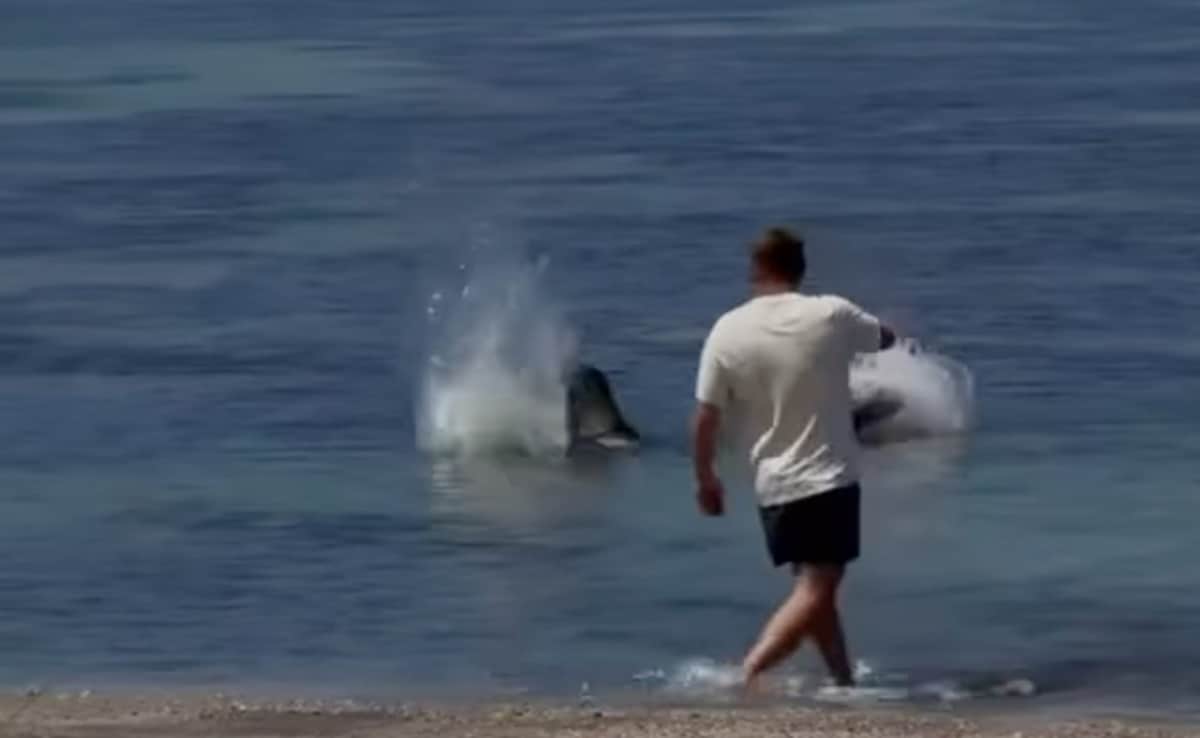
It wasn’t just a "mistake." It was a deliberate choice caught on camera. On May 5, 2026, witnesses watched—and filmed—as Lytvynchuk tracked a Hawaiian monk seal named Lani. Lani is local royalty. She’s one of only about 1,600 monk seals left on Earth. While she was playfully pushing a floating log near the shore, Lytvynchuk picked up a rock the size of a coconut and hurled it directly at her head.
The video that changed everything
The footage is hard to watch. You can hear the person filming, Kaylee Schnitzer, yelling at the man, asking why he would do something like that. The rock narrowly missed Lani’s nose, but it didn't miss the mark for federal investigators. The impact of the rock hitting the water near her head was enough to make the seal rear up in distress.
Lani stayed mostly immobile for a long time after the incident. That’s a bad sign for an animal that needs to rest to survive.
When people on the beach confronted Lytvynchuk, he didn't apologize. He didn't act embarrassed. Instead, he reportedly told them he was "rich enough to pay the fines."
He’s about to find out if that’s true.
Federal charges are no joke
This isn't a simple littering ticket or a slap on the wrist from a local lifeguard. Because the Hawaiian monk seal is protected under the Endangered Species Act (ESA) and the Marine Mammal Protection Act (MMPA), Lytvynchuk is facing the full weight of the U.S. government.
NOAA special agents tracked him down and arrested him near Seattle on May 13. Here is the reality of what he's facing if convicted:
- Prison time: Up to one year behind bars for each federal charge.
- The ESA Fine: A penalty of up to $50,000.
- The MMPA Fine: An additional penalty of up to $20,000.
- Supervised release: Even after he gets out, the government will be watching him.
Maui Mayor Richard Bissen didn't hold back, either. He personally called the U.S. Attorney to push for prosecution. After the 2023 wildfires devastated Lahaina, Lani’s return to the area was seen as a symbol of hope. Seeing a visitor treat a local icon like a target was a gut punch to a community still trying to heal.
Why people get this wrong
Most tourists think "harassment" means physically hitting or hurting an animal. It’s broader than that. Under federal law, harassment is any act of pursuit, torment, or annoyance that has the potential to injure the animal or disrupt its natural behavior.
Throwing a rock? Harassment.
Using a drone to hover over them? Harassment.
Trying to pet them while they sleep? Definitely harassment.
The rule in Hawaii is simple: stay 50 feet away. If it’s a mother and a pup, make it 150 feet. If you’re close enough that the seal looks at you, you’re too close. These animals aren't there for your Instagram feed or your "rich guy" entertainment. They are "endemic," which is a fancy way of saying they exist in Hawaii and nowhere else on the planet. When they're gone, they're gone.
What you should do instead
If you’re lucky enough to see a monk seal on a beach, don't be that guy. Most of the time, they aren't dead or sick—they’re just "hauling out" to rest. They spend a huge amount of energy hunting in the ocean, and they need that beach time to recover.
If you actually think a seal is hurt or entangled in fishing gear:
- Keep your distance. Use your phone’s zoom, not your feet.
- Call the pros. Use the NOAA Marine Wildlife Hotline at 1-888-256-9840.
- Report harassment. If you see someone acting like Lytvynchuk, record it from a safe distance and call the DLNR hotline at 1-643-DLNR.
Lytvynchuk thought his bank account made him untouchable. Now, he’s a cautionary tale for every visitor who thinks the rules of nature don't apply to them. Hawaii’s wildlife is a gift, but it’s a gift that comes with a very expensive set of consequences if you decide to be a jerk.