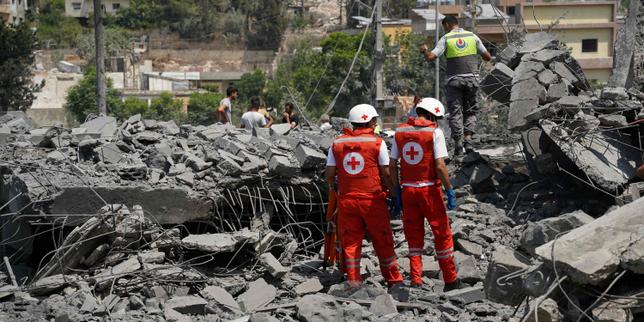
Human survivability past the standard seventy-two-hour post-disaster window relies upon rare environmental anomalies rather than standard physiological endurance. When a three-year-old child was extracted alive one hundred hours following the Colombia earthquake, the event challenged typical search-and-rescue actuarial tables. Standard disaster response models predict a sharp exponential decay in extraction viability past seventy-two hours, driven primarily by dehydration, thermal dysregulation, and crush syndrome complications. Breaking this threshold requires examining the physiological mechanics, micro-environmental variables, and structural physics that converge to extend biological viability in catastrophic structural collapses.
The Structural Mechanics of Void Formation
The primary determinant of survivability in structural collapses is not the sheer mass of the debris field, but the geometry of the void space generated during failure. Progressive collapse mechanisms dictate how concrete slabs, framing, and interior walls interact under seismic loading. When brittle materials fracture, they rarely compress into a uniform solid mass. Instead, they form interlocking arches, triangular pockets beneath fallen furniture, or protected cavities adjacent to rigid vertical load-bearing columns.
In the case of small-load subjects, the physical footprint required to sustain respiration is minimal. A three-year-old child requires a fraction of the cubic volume of oxygen demanded by an adult. The micro-environment within a debris pocket acts as a localized atmospheric chamber. If the cavity maintains structural integrity against secondary settling or aftershocks, the rate of oxygen consumption remains low enough to prevent immediate hypoxia, provided the space is not hermetically sealed to the point of complete gas exchange failure, nor completely open to toxic dust inhalation.
Thermal insulation within the void space heavily dictates metabolic preservation. Concrete and masonry act as thermal masses, stabilizing ambient temperatures against wide diurnal swings. If the collapse debris buffers the internal micro-climate within the thermoneutral zone for the subject, metabolic demand plummets. Hypothermia accelerates cellular death in trauma patients, but mild, stable hypometabolic states can conserve core energy reserves, slowing down the catabolic consumption of vital organs during prolonged entrapment.
Physiological Tolerance and Metabolic Conservation in Pediatric Subjects
The human body under acute environmental stress shifts into survival mechanisms governed by autonomic nervous system responses and metabolic down-regulation. Pediatric physiology introduces distinct variables into this equation compared to adult profiles.
Children possess higher surface-area-to-mass ratios, making them acutely vulnerable to environmental temperature extremes, yet their basal metabolic rate per unit of mass behaves differently under severe systemic stress. When fluid intake ceases, metabolic rate adapts to minimize water loss through respiration and insensible perspiration.
Dehydration represents the primary physiological bottleneck in extended entrapment scenarios. The human body can survive weeks without caloric intake, but cellular integrity collapses rapidly without water—typically within three to four days under normal conditions. Surpassing the one-hundred-hour mark without exogenous hydration indicates one of two physiological conditions: either intermittent, highly localized moisture ingestion via condensation dripping onto exposed surfaces within the micro-void, or a profound, pathological reduction in metabolic water loss driven by endocrine adaptations.
Crush syndrome, resulting from prolonged skeletal muscle compression, poses a lethal threat upon extraction. When pressure is released from large muscle groups, accumulated toxins such as myoglobin, potassium, and lactic acid flood the systemic circulation, precipitating acute renal failure and lethal cardiac arrhythmias. In smaller pediatric subjects, the absolute volume of sequestered toxins is lower than in adults, potentially reducing the immediate systemic shock upon decompression, although the underlying cellular ischemia remains a severe risk factor.
Information Asymmetry and Resource Allocation in Disaster Response
Disaster response operations operate under severe information asymmetries. Incident commanders must allocate finite search-and-rescue resources—such as acoustic sensors, thermal imaging drones, and canine units—across exponentially expanding search grids.
The standard allocation model prioritizes high-probability extraction zones within the initial operational window. As the timeline shifts past the seventy-two-hour mark, triage protocols often transition from active rescue to recovery operations due to diminishing statistical returns and escalating risks to rescue personnel from unstable structures.
The anomaly of a one-hundred-hour survival event exposes the limitations of rigid temporal triage models. Standardized protocols treat time as a linear degradation function of biological viability. However, micro-environmental heterogeneity means that localized pockets can defy macroscopic averages. Integrating dynamic feedback loops into rescue algorithms—such as prioritizing acoustic listening sweeps in areas with high-density interior partitions—can capture outliers that standard probability matrices discard.
Operational Protocol for Extended-Window Urban Search and Rescue
Optimizing rescue performance in prolonged structural collapse scenarios requires shifting from probabilistic triage to multi-vector anomaly detection.
First, acoustic monitoring arrays must remain active across secondary sweep zones long after thermal signatures degrade. Human vocalization, even sub-audible shifts or tapping, generates distinct frequency signatures that distinguish biological presence from environmental settling.
Second, micro-meteorological sensors deployed via boreholes can measure localized humidity, carbon dioxide concentrations, and oxygen partial pressure within suspected voids. A high carbon dioxide concentration coupled with sustained oxygen levels indicates an isolated, living subject consuming air within a sealed cavity, directly overriding temporal cutoffs for intensive search efforts.
Third, structural stabilization must be decoupled from rapid extraction methods in pediatric cases. Rushing debris removal without stabilizing shear loads risks catastrophic secondary collapse that obliterates the protective void. Engineering teams must prioritize shoring and hydraulic lifting frames to maintain cavity geometry during the extraction phase, ensuring that the structural envelope remains intact until the subject is fully cleared from the compression zone.
Deploy continuous passive acoustic sensing arrays across all stabilized sectors for a minimum of one hundred and twenty hours post-event, mandate borehole atmospheric gas sampling prior to transitioning any sector from rescue to recovery, and deploy hydraulic micro-shoring modules immediately upon void identification to neutralize secondary collapse vectors.