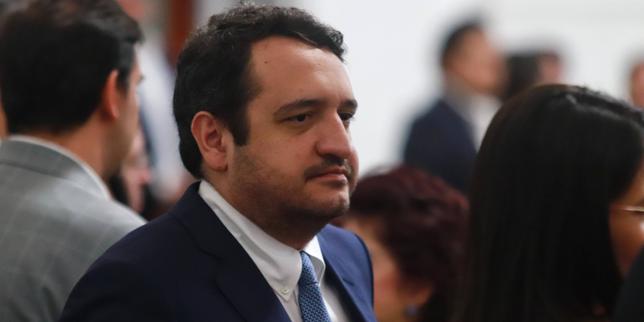
Foreign policy rarely hits home quite like this. When Washington pulled the entry visa of Andrés Manuel López Beltrán—the high-profile son of former Mexican President Andrés Manuel López Obrador—it signaled a sharp escalation in diplomatic friction between the U.S. and Mexico.
You aren't just looking at a routine bureaucratic squabble. This move, engineered under the watchful eyes of U.S. Secretary of State Marco Rubio and Under Secretary Christopher Landau, tears open old political scars and forces current President Claudia Sheinbaum to walk a tightrope. Let's break down what actually happened, why it matters, and how it impacts cross-border relations moving forward. Meanwhile, you can explore related stories here: Why General Dhiraj Seth Visiting Nepal Will Change Nothing About How Border Politics Actually Work.
The Fallout From Washington and the Direct Appeal to Trump
The announcement dropped when López Beltrán—widely known as "Andy"—took to social media to blast the decision. He didn't hold back. In an aggressively worded public letter directed right at U.S. President Donald Trump, he labeled the revocation a politically motivated stunt.
U.S. officials haven't publicly detailed specific criminal charges or justifications, citing standard confidentiality laws regarding visa records. But the timing speaks volumes. This blow lands just months after federal prosecutors in New York targeted several prominent figures linked to Mexico's ruling Morena party over alleged drug trafficking ties. To explore the full picture, we recommend the recent analysis by The New York Times.
Andy pointed his finger squarely at Under Secretary Christopher Landau, a figure well-known in Mexico from his time as ambassador during Trump's first term. Landau's aggressive stance on vetting political figures who cross diplomatic lines has earned him a stark reputation among Mexican elites. By stripping entry permissions from dozens of politicians connected to Morena, Washington is using visa revocations as a quiet instrument of pressure.
How Mexico Reacted
President Claudia Sheinbaum faced an immediate test of her administration's autonomy. During her morning press briefing, she didn't shy away from the friction, labeling the U.S. action as essentially political.
She kept her composure, though. Sheinbaum demanded transparency and proof if Washington intends to level serious accusations against Mexican public figures, while simultaneously stressing that her government won't let the dispute blow up bilateral ties. "All we ask for is respect," she noted.
That balance is tricky. Morena's base views these foreign actions as heavy-handed interference designed to undermine the legacy of López Obrador. To his supporters, targeting Andy is a proxy attack on the entire political movement that dominated Mexican governance for six years.
What This Means for the Future of Bilateral Ties
You have to look at the bigger picture. Cross-border enforcement and diplomatic cooperation rely heavily on mutual trust. When Washington targets the inner circle of Mexico's political royalty without public evidence, it triggers nationalist backlashes south of the border.
At the same time, the White House is signaling that accountability and scrutiny won't stop at the border. If you're tracking how international pressure shapes domestic power dynamics, this incident proves that foreign policy is local. Expect more tactical maneuvers from Washington and a stiffer defense from Mexico City as both governments jockey for leverage on security, trade, and sovereignty. Watch how Sheinbaum handles the next legal or diplomatic provocation—it will set the tone for the entire presidential term.


