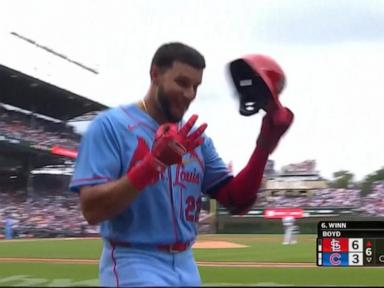
Every baseball pundit on earth is currently losing their mind over Joshua Baez. Three swings, three home runs, a historic major league debut for the St. Louis Cardinals at Wrigley Field. The lazy consensus screams that we are witnessing the birth of a transcendent superstar who just defied baseball gravity.
Save the hyperbole.
What we actually witnessed on that Saturday afternoon was a terrifying diagnostic report on the state of modern pitching development. Baez did not break baseball history because he is an alien. He broke it because Triple-A pitching has been so systematically stripped of its ability to sequence, deceive, and execute that elite upper-minor sluggers are stepping into the majors with an absolute, unearned advantage.
Look past the fireworks. Let us talk about the mechanics of the disaster.
The Triple-A Mirage
Baez earned his call-up by mashing 34 home runs for Memphis. But if you dig into the minor league data, a darker reality emerges. Triple-A baseball is currently a launching pad operating under a flawed laboratory ecosystem. Pitchers are forced to test experimental automated strike zones, mandated grip modifications, and developmental pitch-mix quotas that prioritize spin rate over actual outs.
When a hitter like Baez—who posted a minor league strikeout rate north of 25 percent across his system rise—sees a major league arm throwing fastballs in the zone with predictable movement profiles, he is not guessing. He is hunting. Matthew Boyd fed him a steady diet of mistakes because modern pitching philosophy demands throwing strikes over avoiding barrels, a byproduct of organizational analytics departments treating every pitcher like a carbon-copy strikeout machine.
Imagine a scenario where a pitching coach tells a veteran arm to throw a belt-high fastball on the very first pitch of a debutant's career because the computer model says right-handed power hitters chase high heat 4.2 percent less on pitch one. That is not pitching. That is compliance. And Baez capitalized on an entire industry's obsession with spreadsheets over survival.
The Fatal Flaw of the Debut Narrative
The media loves a fairy tale. They want you to believe that a twenty-three-year-old walking into Wrigley Field and turning three mistakes into souvenirs represents the romantic purity of the sport.
It does not. It represents the widening chasm between how pitchers are developed in farm systems and the stark, punishing reality of major league velocity and command. When arms are rushed through the system to fill 40-man roster crunches, they arrive in the big leagues lacking the most fundamental tool of survival: the ability to change eye levels when things go sideways. Boyd threw three home-run balls to Baez because he panicked, doubled down on his primary velocity, and refused to waste a pitch.
Baez is strong. His bat speed is elite. Nobody is denying his raw tools—I scouted his raw power profile back when he was turning heads out of high school. But hitting three home runs in your first three plate appearances is an indictment of the pitcher's mound, not a coronation of the batter's box.
What Actually Happens Next
History tells us to brace for the pendulum swing. The same analysts screaming MVP today will be writing panic pieces about his strikeout vulnerabilities by September. League pitchers adjust fast once the book is out. They stop throwing fastballs over the heart of the plate to aggressive free-swingers, and they start feeding a steady diet of breaking balls in the dirt until the rookie's front foot is permanently planted in the bucket.
We have seen this movie before. The hype machine creates an impossible baseline, the league adjusts, and the player is left fighting to unlearn the bad habits that got rewarded during a chaotic three-inning showcase.
Stop praising the fairytale. Start demanding that farm systems teach pitchers how to sequence again before the entire sport turns into a home-run derby where nobody knows how to throw a slider in the dirt.