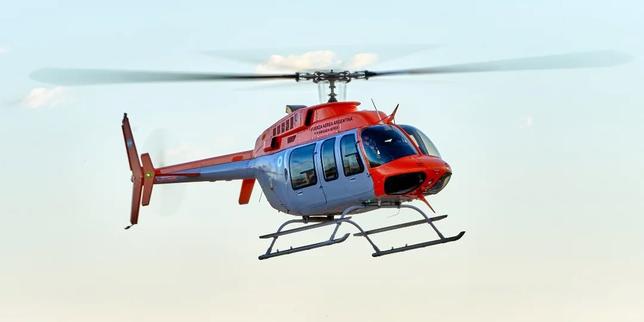
Every time a wildfire makes international headlines, the media machine rolls out the same tired script. A tragic crash happens, seven people die in a fireball over foreign terrain, and the public demands more aerial assets. More helicopters. More water drops. More shiny iron in the sky to battle nature.
It is a comforting narrative. It is also a deadly delusion.
When a helicopter goes down during wildfire suppression operations—whether in Argentina or the rugged timberlands of the American West—the knee-jerk reaction is to mourn the heroes and double down on the hardware. We treat these disasters as tragic flukes of aviation. We look at smoke-filled valleys and think the missing ingredient is simply another rotor blade.
I have spent two decades watching aviation agencies and municipal budgets bleed capital into aerial firefighting assets that statistically fail to solve the root problem. I have sat in incident command trailers where administrators authorize millions of dollars for hourly aircraft rates while ground crews starve for basic logistical support.
The lazy consensus is that helicopters save forests. The empirical reality is that rotorcraft firefighting is often an expensive, high-risk theater that burns money, risks lives, and distracts from actual land management.
The Physics of Failure
Let us look at the raw mechanics of dropping water from the sky. The popular imagination pictures a helicopter scooping water from a lake and dumping a tidal wave directly onto a roaring inferno.
Physics tells a very different story.
At ambient temperatures associated with active wildfires, air density drops. High heat equals thin air. Thin air equals severely degraded lift and engine performance. A helicopter operating at maximum gross weight in a high-density-altitude environment is flying on the razor's edge of aerodynamic failure.
Now, add turbulence caused by thermal updrafts, erratic wind shears generated by the fire itself, and thick plumes of particulate matter that reduce pilot visibility to zero. You are asking a crew to fly a complex mechanical assembly into the most volatile microclimate on Earth.
When a bucket drops thousands of pounds of water, much of it evaporates before it ever hits the canopy. What does survive to reach the ground often turns into high-velocity steam or simply scatters harmlessly across the upper branches, leaving the ground fire untouched. The actual suppression capability of a tactical water drop is vastly overstated. It buys time in very narrow tactical windows. It rarely extinguishes a major head fire.
Yet, we keep sending them up. Why? Because doing something visible feels better than doing something effective.
The Economic Trap of Aerial Assets
Governments love buying helicopters because hardware is photogenic. A politician can stand on a tarmac next to a multi-million-dollar turbine rotorcraft, look stern, and announce a major funding package for emergency response. It plays well on the evening news.
Preventative forestry, controlled burns, fuel load reduction, and defensible space zoning do not make good B-roll. You cannot fly a helicopter over a cleared underbrush zone and film dramatic footage for a press release.
As a result, municipal and federal budgets are fundamentally inverted. Billions flow toward suppression while prevention starves. We spend astronomical sums reacting to disasters instead of funding the tedious, unglamorous work of thinning forests and managing watersheds during the off-season.
When an incident commander requests air support, they are often paying hundreds or thousands of dollars per flight hour. Multiply that across fleets operating for weeks across remote regions, and the financial drain is staggering. That money could fund entire seasonal crews of hand-cutters, prescribed fire technicians, and infrastructure hardening programs that permanently alter fire behavior.
Instead, we buy another helicopter. And eventually, we write another obituary.
The Heroism Fallacy
We must talk about the human cost, and we must do it without hiding behind sentimentality.
When a crash claims the lives of pilots and crew members, the official statements always praise their extraordinary bravery. And make no mistake, the men and women flying these missions possess immense skill and courage. They are masters of stick and rudder, pushing machinery to its absolute limits under impossible conditions.
Praise without systemic critique is just complicity.
When we romanticize the danger, we institutionalize the risk. We create an environment where pushing past safety margins is expected because the alternative is letting a forest burn while the public watches. We normalize flying heavy lift aircraft into smoke conditions that would ground commercial aviation instantly.
If an airline operated under the meteorological and operational constraints we routinely demand of wildfire aircrews, the Federal Aviation Administration would shut them down within the hour. But because it is firefighting, we look the other way. We accept the body count as part of the job.
That is not bravery. That is a systemic failure of risk management.
Dismantling the Myth of Total Control
The foundational error of modern wildfire management is the belief that human intervention can completely control natural disturbance regimes.
Decades of total fire suppression policies have created unprecedented fuel loads. By treating every small fire as an emergency to be stamped out immediately, we have engineered massive, catastrophic tinderboxes. When a fire finally breaks through our defenses, it is fueled by decades of accumulated debris.
No amount of helicopters can overcome a landscape that has been artificially choked with fuel. Throwing water at a firestorm is like trying to put out a burning house with a garden hose while someone keeps throwing gasoline through the window.
The hard truth is that some fires cannot be stopped from the air. They must be allowed to burn where it is safe, or met with ground-based containment lines anchored to natural barriers. Aerial assets should serve a strictly supportive, secondary role—cooling flanks, protecting high-value structures, and guiding ground crews. They should never be the primary weapon of choice.
What Real Reform Looks Like
If we want to stop writing obituaries for aircrews in South America, North America, and Europe, we have to change the incentives.
First, tie disaster relief funding directly to proactive prevention metrics. Jurisdictions that refuse to invest in controlled burns, zoning laws, and fuel reduction should bear a higher financial burden when suppression costs spike.
Second, reallocate aviation budgets toward technological redundancy and ground infrastructure. Invest in automated tracking, better predictive modeling, and remote sensing that keeps humans out of the cockpit when conditions cross into the suicidal. If a fire is too dangerous for safe visual flight rules, ground the aircraft. Let the fire hit the ridge line and meet it where the physics favor survival.
Third, stop measuring success by the number of drops made or the volume of water dumped. Measure success by acres treated before wildfire season begins, and by the zero-fatality rate of the personnel deployed.
The next time a wildfire dominates the news cycle and the calls for more air support echo through the halls of power, remember what is actually happening behind the smoke. We are watching a high-stakes distraction play out on the taxpayer's dime, powered by a narrative that values theatrical response over hard, unsexy logic.
Every crash is a warning. We can keep funding the illusion from the cockpit, or we can fix the ground we stand on.