When Kevin Keegan passed away at age 75 after fighting cancer, football media instantly defaulted to running that 1996 television clip on repeat. You know the one. Headphones on, eyes wide, pointing at the camera, voice cracking with pure emotion as he declared he would "love it" if Newcastle beat Manchester United to the Premier League title.
For nearly three decades, lazy narratives framed that moment as a mental breakdown engineered by Sir Alex Ferguson. People claimed the master of mind games had broken his rival. But if you talk to anyone who actually played under Keegan or listened to Alex Ferguson speak about him on Track Radio following his passing, you get a completely different picture.
Ferguson didn't see a broken man. He saw a peer who built one of the most thrilling football teams England ever produced.
Understanding the relationship between Ferguson and Keegan isn't just a trip down memory lane. It shows us how elite competition used to work before corporate scripts, sanitized post-match press conferences, and manufactured touchline drama took over the game.
The Reality Behind British Football's Greatest Rivalry
When Kevin Keegan walked back into St James' Park as manager in February 1992, Newcastle United wasn't a powerhouse. They were drifting toward the third tier of English football. The club was broke, the stadium was crumbling, and morale was in the gutter.
Within four years, Keegan didn't just save Newcastle from relegation. He dragged them into the Premier League, brought in world-class flair, and had them twelve points clear at the top of the table.
Ferguson saw what was happening in the North East, and he knew it was real. While other managers tried to copy Manchester United's pragmatic grit, Keegan went full attack. He signed David Ginola, Faustino Asprilla, and Philippe Albert. He played football with zero fear and zero interest in sitting back on a 1-0 lead.
Speaking after Keegan's death, Ferguson was remarkably clear about what Newcastle achieved during that mid-90s stretch. He explicitly stated that Keegan built what he considers the greatest team in Newcastle's history. That isn't cheap nostalgia from a retired manager giving a polite eulogy. It's an admission from the most competitive human being in British sports history that Newcastle had Manchester United on the ropes.
The rivalry was intense because the contrast was absolute. You had Ferguson, the master builder who calculated every psychological edge, going head-to-head with Keegan, a man who ran purely on passion, charisma, and belief.
What Alex Ferguson Understood About Newcastle's Entertainers
It's easy to look back at the 1995-96 season and claim Newcastle "choked" away a 12-point lead. That narrative completely ignores how hard Manchester United had to work to catch them. Ferguson's team had to put together a relentless run of form, anchored by Eric Cantona's clinical efficiency, just to stay in the race.
Ferguson understood something about Keegan's style that many modern tacticians miss. Keegan didn't care about balanced transition stats or defensive shape. He wanted his players to express themselves. He wore his love for the game on his sleeve, and that emotion traveled straight from the dugout to the pitch and into the Gallowgate End.
When Newcastle brought in Asprilla in January 1996, critics argued it disrupted the team's existing rhythm. Ferguson, however, recognised the sheer ambition behind the move. Keegan was trying to add genuine world-class flair to a squad that was already blowing teams away.
United eventually overhauled Newcastle to win the title on the final day of the season. But Ferguson never made the mistake of looking down on Newcastle's achievement. He knew that pushing a prime Manchester United side to the absolute limit required something extraordinary.
That Infamous Rant and What Happened Next
We have to talk about April 29, 1996. Newcastle had just beaten Leeds United 1-0 at Elland Road. Manchester United was breathing down their necks, and Ferguson had dropped subtle hints in the media suggesting Leeds wouldn't play as hard against Newcastle as they did against his team.
Keegan took the bait. Or did he?
When Richard Keys asked him about Ferguson's comments live on Sky Sports, Keegan didn't give a media-trained response. He exploded with raw, unfiltered honesty.
"I'll tell you, honestly, I will love it if we beat them, love it!"
For twenty-six years, pundits labeled that moment a psychological victory for Ferguson. They claimed it proved Ferguson was living rent-free in Keegan's head. But Newcastle players who were in the dressing room that night tell a different story. They didn't see a manager losing his mind. They saw a boss fiercely defending his club, his players, and their integrity against accusations that opponents were throwing games.
Ferguson himself never weaponized that rant after the fact. He understood why Keegan snapped. It was born out of loyalty to his players, particularly Stuart Pearce and the squad at Leeds who had their professionalism questioned.
Behind Closed Doors at Wentworth Golf Club
The media loves a permanent feud. TV networks want you to believe managers hate each other off the pitch, nursing grudges in dark rooms.
The truth about Ferguson and Keegan is far more human.
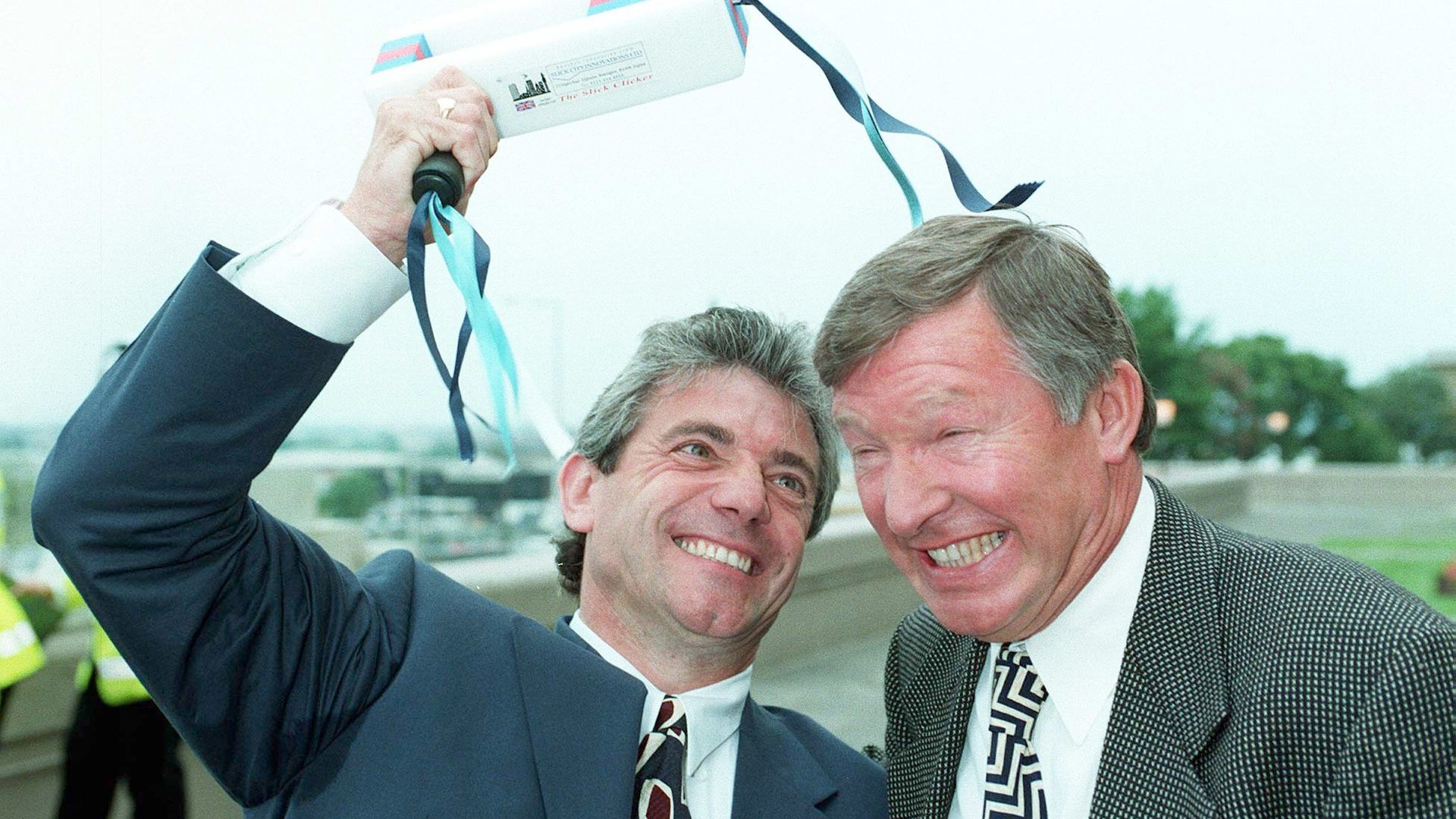
A few weeks after the 1995-96 season ended with Manchester United lifting the trophy, Ferguson walked into a pub near Wentworth Golf Club in Surrey. Sitting inside was Kevin Keegan.
If you believed the headlines, you would expect icy stares, tense silence, or a swift exit. Instead, the two men spent the entire night gathering around a piano, drinking, singing, and laughing until the early hours.
Ferguson shared this memory shortly after Keegan's death, highlighting it as the defining trait of Keegan's character. Keegan held zero grudges. The title race was over, the whistle had blown, and whatever was said in the heat of a high-stakes campaign stayed in the past.
They weren't mortal enemies. They were two elite competitors who understood the immense pressure the other was under. That night at Wentworth says far more about the mutual respect between the two men than any post-match press conference ever could.
How to Remember Kevin Keegan Beyond the Soundbites
If you only remember Kevin Keegan for a 30-second TV interview in 1996, you're missing one of the most remarkable careers in European football.
Before he was a manager, Keegan was a two-time Ballon d'Or winner. He won the European Cup with Liverpool, dominated the Bundesliga with Hamburger SV, and proved that a kid who was initially told he was too small to make it in professional football could become the biggest star on the continent.
When he retired as a player, he didn't need to take the Newcastle job in 1992. It was a high-risk, low-reward nightmare. Yet he took it because he loved the raw energy of the club and its supporters.
Here is how you should evaluate that legendary 1990s era, guided by the facts rather than recycled internet memes.
- Look at where Newcastle started: Keegan took over a team facing relegation to the third tier and turned them into title contenders in four years.
- Examine the footballing footprint: The "Entertainers" tag wasn't marketing spin. Newcastle scored goals for fun and forced every team in the league to raise their offensive standards.
- Listen to his peers: Managers who actually competed against Keegan, starting with Sir Alex Ferguson, never viewed him as a pushover or a joke. They viewed him as a dangerous, charismatic force who made English football thrilling to watch.
- Separate media drama from real life: The 1996 title race was decided by tiny tactical margins on the pitch, not by a single interview in a TV studio.
Next time someone brings up Keegan's famous emotional outburst, don't just laugh at the clip. Remember the context, the high stakes, and the sheer joy he brought to a game that often takes itself far too seriously. Go back and watch highlights of Newcastle's 4-3 matches against Liverpool or their clinical performances against European giants. That is the real legacy Kevin Keegan left behind, and it's precisely why even his fiercest rival held him in the highest possible regard.