The dust on the windowsill does not settle all at once. It drifts, grain by fine grain, settling into the grooves of an oak frame that has watched the same two miles of pasture for forty years.
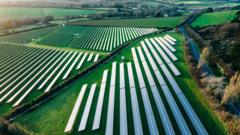
Arthur remembers when those fields grew wheat so thick the wind looked like water rushing over a green floor. Later, they held cows—slow, heavy-eyed Holsteins that breathed mist into the autumn dawns. Now, the cows are gone. The wheat is gone. In their place, a council chamber voted late on a Tuesday night to approve forty acres of dark glass.
Progress.
They call it progress with the flat, dead-eyed certainty of men reading train schedules in an empty station.
Public objection rolled in like a slow tide over the last six months. Petitions printed on cheap copy paper, dog-eared and stained with coffee, passed from kitchen table to kitchen table across the county. Neighbors who had not spoken in a decade because of a disputed fence line found themselves standing shoulder to shoulder on gravel driveways, pointing calloused fingers toward the western ridge. They did not want the noise of the trucks. They did not want the glare of the morning sun hitting miles of silicon instead of dewy grass. They did not want the quiet of their evenings punctured by the low, industrial hum of inverters converting sunlight into voltage for cities four hundred miles away.
The council listened. They nodded. They looked at architectural renderings showing neat rows of silver-trimmed panels blending harmoniously into the topography, as if any machine could ever disguise itself as a hill. Then, they voted yes.
Unanimous.
Consider what happens next: the heavy timber of the old south pasture comes down to make way for a gravel access road. The fence posts, cedar hand-split by Arthur’s grandfather during the Eisenhower administration, are pulled out by a backhoe with the indifferent yank of a dentist extracting a molar.
Power. We need it. Everyone agrees on that simple, brutal truth. The lights must stay on. The servers must hum. The electric cars must charge in suburban garages while their owners sleep. But electricity, like water, has to come from somewhere. For a century, it came from smokestacks three counties over, invisible and distant enough to pretend it was magic. Now, it comes from the backyard. That is the uncomfortable pivot of our modern century. We want our green futures built right over someone else's green past.
Arthur went to the final hearing. He sat in the third row, smelling faintly of engine grease and pipe tobacco. When the mayor banged the gavel to signal the end of the debate, nobody cheered. There was only the sound of chairs scraping against linoleum and the heavy, wet thud of boots walking out into the rain.
Outside, under the sodium glare of the municipal parking lot, a young woman from the energy corporation handed him a laminated flyer. It featured a smiling family standing in front of a field of wildflowers growing beneath an elevated solar array. Bees buzzed in the margins of the glossy paper.
Arthur looked at the woman. She looked tired. Her coat was wet at the shoulders.
"It's clean energy," she said, almost apologetically, as if reading a script she had memorized against her better judgment.
"Clean," Arthur said, turning the flyer over in his rough hands. "I suppose that depends on what you're sweeping under the rug."
The county will change now. Property values will shift, dipping first from the construction dust, then climbing as the tax revenue hits the municipal ledger—money earmarked for the consolidated school district and the volunteer fire department's new tanker truck. That is the trade. You lose the horizon, and you get a paved parking lot for the fire trucks. You lose the silence, and you get new laptops for the eighth-grade science class.
Nothing is ever pure. That is the lesson the fields are trying to teach us if we would only stop long enough to listen.
By next spring, the first trucks will arrive at dawn. The metal posts will go into the earth, deep and unyielding, driven by hydraulic hammers that will shake the foundation stones of houses a mile away. The glass will go up, turning the afternoon sun into a blinding sheet of silver glare that will force hawks to alter their hunting lines.
Arthur walked back to his truck, climbed into the cab, and sat in the dark for a long time before turning the key. Through the windshield, the ridge looked dark against the bruised purple of the evening sky. For a few more months, it was still just grass and shadow. Then the lights would come on, and the world would be brighter, colder, and forever changed.