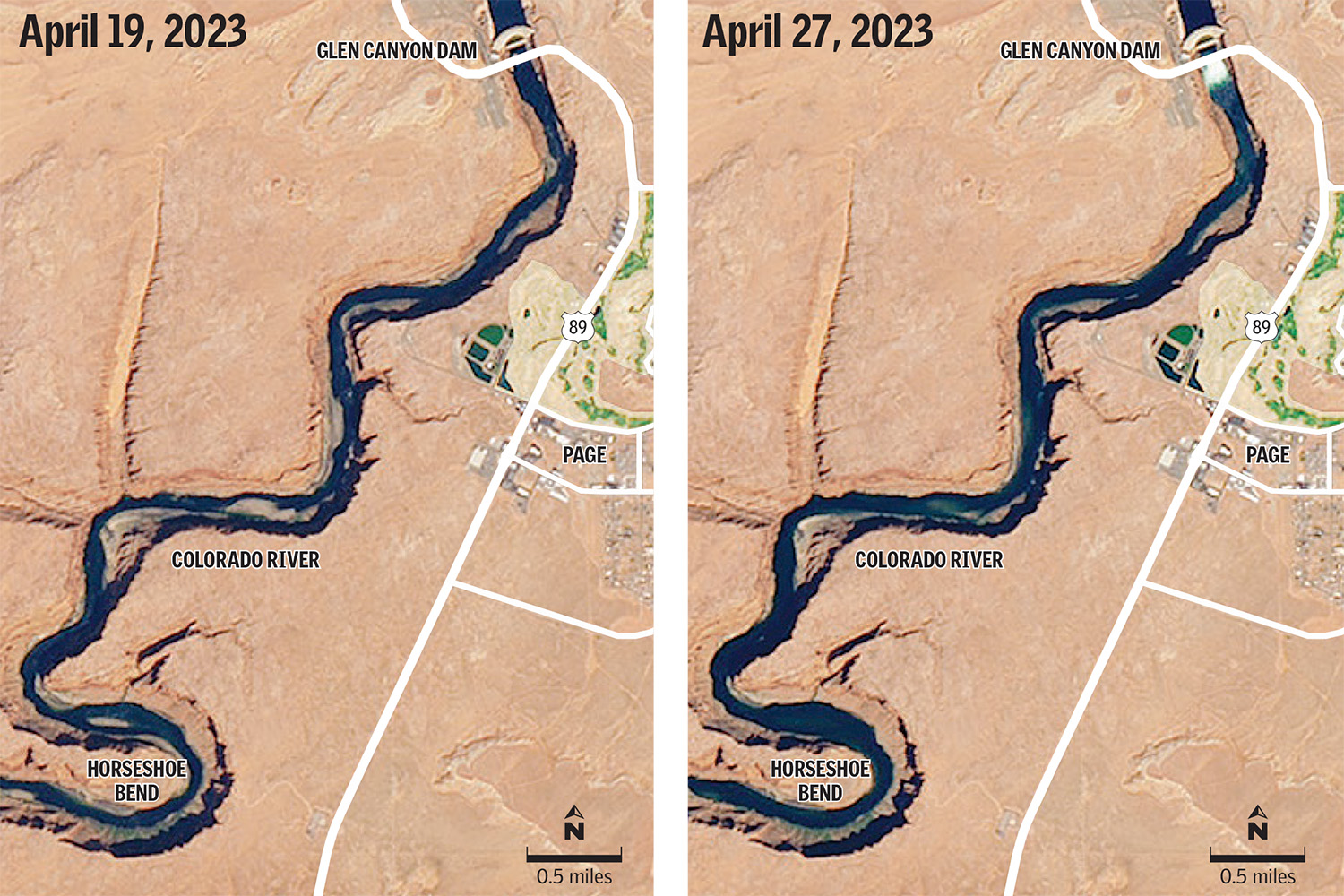
Lake Powell and Lake Mead are draining faster than anyone wants to admit, and the federal government just ran out of patience. After years of missed deadlines and locked-horn negotiations among the seven states sharing the Colorado River, the Trump administration stepped in with a hard-nosed federal management framework.
If you live in the American Southwest, you care about this because forty million people depend on this plumbing system for drinking water and crop irrigation. Let's be honest about what just happened. The Department of the Interior finalized a short-term operational blueprint that forces Lower Basin states to slash their consumption immediately. Meanwhile, Upper Basin states escape mandatory reductions.
The Downstream Bruising
Under the new federal directives, Hoover Dam releases will drop significantly. Arizona, California, and Nevada have to absorb over a million acre-feet in collective cuts over the next two years.
The distribution of these cuts exposes raw historical fractures. Arizona takes the heaviest blow, losing 760,000 acre-feet. California trims 440,000 acre-feet. Nevada cuts 50,000 acre-feet.
State officials in Phoenix and Tucson aren't hiding their fury. They call the federal quotas deeply unfair. They argue that Arizona has already absorbed painful reductions under previous tiers. California manages to cushion the impact because of its seniority under decades-old legal precedents. When water gets scarce, century-old priority rights matter more than modern population growth.
Why the Upper Basin Escapes Mandates
People in Arizona and Nevada look north with immense frustration. Why do Colorado, Utah, New Mexico, and Wyoming get off scot-free?
The Bureau of Reclamation lacks the same direct regulatory authority to enforce mandatory cuts on Upper Basin state consumption under the current compact framework. Instead, upstream states rely on voluntary conservation and coordinated releases from federal facilities like Blue Mesa Dam to keep Lake Powell above critical danger thresholds.
Upper Basin leaders insist they already consume far below their total legal allocation. They argue that forcing arbitrary cuts on their farmers ignores the reality of geography and hydrology. The river starts in their mountains, but the biggest cities sit downstream.
What Happens Next for Residents and Farmers
These federal mandates are not abstract numbers on a spreadsheet. They translate directly into higher utility bills, stricter municipal ordinances, and millions of acres of fallowed farmland.
Farmers across Pinal County and the Imperial Valley face tough choices. They must either pump more groundwater—which accelerates aquifer depletion—or leave fertile fields completely dry. Cities are ramping up turf removal programs and recycling wastewater faster than ever before.
The federal framework is technically a short-term fix designed to bridge the gap through 2028. Negotiators still have time to forge a permanent, multi-state consensus. Until state leaders agree on a sustainable long-term model, Washington will keep holding the pen.
Check out this video breakdown on Colorado River water rights for a closer look at the historical legal battles shaping these current shortages.
http://googleusercontent.com/youtube_content/1