The desert air outside Isfahan doesn't just shimmer; it vibrates with a low, mechanical hum that the locals have learned to ignore. In the sterile, fluorescent-lit corridors of a nondescript facility buried beneath layers of reinforced concrete, a technician named "Farhad" (a composite of those who have defected or whispered to the West) stares at a logic board. It is a piece of precision engineering that shouldn't be there. The markings are in Mandarin. The silicon is high-grade. The purpose is lethal. Farhad isn't thinking about geopolitics or the shifting sands of the Middle East. He is thinking about how a single solder point, backed by Beijing’s industrial might, can make a missile travel five hundred miles further than the Americans thought possible.
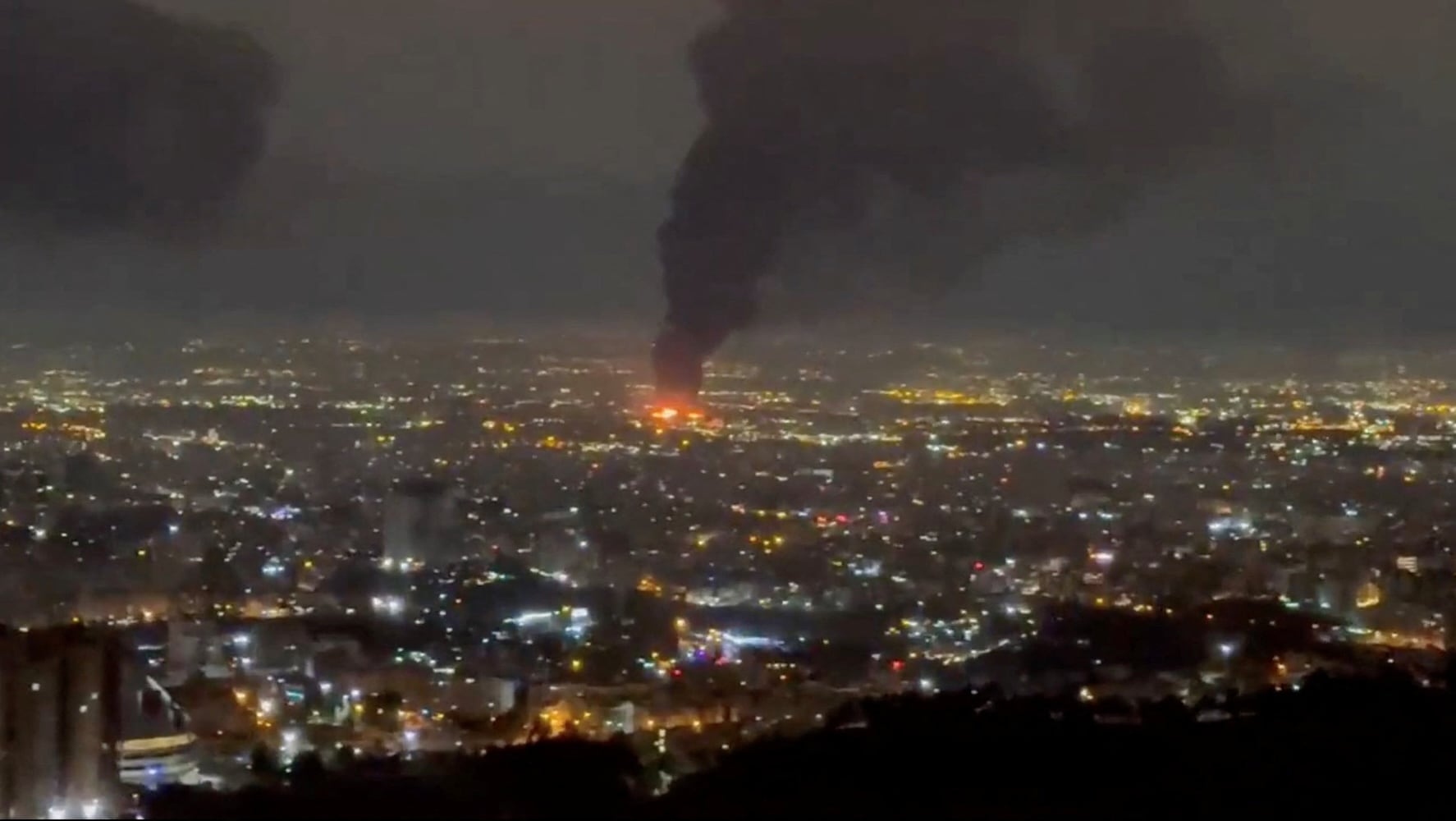
For months, the sky over Iran has been a canvas of fire and steel. US and Israeli strikes have systematically picked apart the Iranian military infrastructure, seeking to blunt the reach of a regime that has long projected power through its proxies. The world watched the satellite feeds, seeing charred hangars and cratered runways. The consensus was simple: the Iranian missile program was in retreat. It was a comfortable narrative. It was also wrong.
While the explosions grabbed the headlines, a silent reconstruction was already underway. This is not a story about raw materials or simple crates of ammunition. It is a story about a digital and industrial umbilical cord stretching thousands of miles to the East. China is not just selling parts to Iran; it is rebuilding the very nervous system of its long-range strike capabilities.
The Silent Partner
Imagine trying to fix a shattered watch while someone is hitting your hands with a hammer. That is the Iranian reality under Western sanctions and direct kinetic strikes. To survive, you need more than a friend; you need a supplier who doesn't care about the hammer.
The relationship between Beijing and Tehran has evolved from a marriage of convenience into a sophisticated industrial alliance. Recent intelligence reports suggest that Chinese firms are bypassing international restrictions with an elegance that borders on the theatrical. They aren't just sending finished missiles. That would be too easy to track. Instead, they are shipping "dual-use" components: high-performance gyroscopes, specialized carbon fibers, and micro-controllers that could, in a different life, run a high-speed train or a medical scanner.
In the hands of Iranian engineers, these parts become the brains and bones of the Fattah and Kheibar-17 systems. The logistics are a ghost dance. Small front companies in Hong Kong or the UAE act as waypoints. The paperwork describes the cargo as industrial machinery or telecommunications equipment. By the time the crates reach the port at Bandar Abbas, the trail is cold, and the technology is already being integrated into the next generation of solid-fuel boosters.
The Mathematics of Survival
Strategy is often just a polite word for math. If Israel can destroy ten launchers a week, but China can provide the components to build twelve, the math favors the defender. This is the "attrition trap."
China's involvement provides a level of redundancy that the West hasn't fully reckoned with. When an Israeli F-35 drops a precision-guided bomb on a manufacturing plant, the loss is no longer catastrophic. The blueprints are Chinese. The specialized tooling is Chinese. The replacement parts are already on a slow boat through the South China Sea.
Consider the technical leap required for precision. Ten years ago, Iranian missiles were "area weapons"—they might hit a city, but they couldn't reliably hit a specific building. Today, thanks to integrated Chinese GPS-jamming-resistant modules and advanced guidance algorithms, that margin of error has shrunk from kilometers to meters. This isn't just an incremental update. It is a fundamental shift in the balance of terror. A missile that can hit a specific hangar is a vastly different threat than one that merely hits the general vicinity of an airbase.
The Invisible Stakes
Why would Beijing risk the ire of the global community to prop up a regional power under fire? The answer isn't found in ideology, but in the cold logic of the "Great Game."
For China, Iran is a laboratory and a lightning rod. Every time an Iranian missile faces off against an American-made Patriot battery or an Israeli Iron Dome interceptor, Beijing gets data. They see how Western sensors react. They see the flight paths that work and the ones that don't. Iran is effectively a proxy testing ground for Chinese technology in a high-intensity conflict environment.
But there is a more visceral human element at play. For the Iranian leadership, this Chinese lifeline is the difference between relevance and erasure. Without it, they are a regional power with a hollowed-out spear. With it, they remain a player at the table, capable of holding global oil markets hostage with the mere threat of a launch.
The technician, Farhad, knows this. He feels the weight of the hardware. He understands that the component in his hand is more than just metal and electricity; it is a promise of continuity. It is a sign that, despite the sanctions and the strikes, the regime is not alone.
The Ghost in the Machine
The real danger isn't a sudden, massive shipment of weapons. It is the steady, rhythmic drip of expertise and specialized parts. It is the "knowledge transfer" that happens when Chinese engineers consult on solid-fuel stability or warhead separation.
This cooperation has created a "resilient supply chain" that is almost impossible to dismantle through traditional warfare. You can bomb a factory, but you can't bomb a relationship or a digital schematic stored on a secure server in Shanghai.
The US and its allies find themselves playing a game of Whac-A-Mole where the hammer is expensive and the moles are being reinforced with Chinese steel. Every strike that fails to achieve a "permanent" degradation of Iranian power is a psychological victory for Tehran. It proves that the "Dragon" has their back.
The Shadow of the Dragon
As the sun sets over the Iranian plateau, the work doesn't stop. In hidden valleys and hollowed-out mountains, the assembly lines continue to move. The hum of the machinery is the sound of a geopolitical shift that is moving faster than the policy papers can keep up with.
We often talk about "global instability" as if it were a weather pattern, something that just happens. But instability is manufactured. It is built in clean rooms and shipped in containers. It is the result of a thousand small decisions to prioritize a strategic foothold over a global norm.
The strikes will likely continue. The smoke will rise over Isfahan and Tehran again. The headlines will declare victories and count the number of targets destroyed. But deep underground, the glow of the computer screens remains steady. The Chinese components are being unboxed. The wires are being connected. The "Dragon's Thread" is being woven back into the fabric of a wounded power, making it stronger, more precise, and far more dangerous than it was before the first bomb ever fell.
Farhad closes the casing of the guidance unit. He hears a faint click—the sound of two worlds locking together. Outside, the desert is dark, but the horizon is lit by the flickering ghost of a future that the West thought it could prevent. The silence is the most frightening part. It is the silence of a rebuild that doesn't need to shout to be heard.
The missile stands ready. It is an Iranian weapon with a Chinese soul, waiting for the moment when the hum of the facility turns into the roar of a launch.