The air over central Iran is rarely truly still. Even when the winds across the Zagros Mountains settle into a low hum, the atmosphere carries a heavy, electric weight—the friction of a nation constantly bracing for a shadow that never quite arrives. In the ancient city of Isfahan, where turquoise domes mirror the sky, people have grown accustomed to the rhythmic thrum of military hardware. It is the soundtrack of their reality.
But on a Tuesday that felt like any other, that rhythm shattered.
A C-130 Hercules, a lumbering beast of a cargo plane that has been the workhorse of the skies for decades, vanished from the sequence. Along with it, two Black Hawk helicopters—the jagged, predatory silhouettes usually synonymous with surgical precision—plunged into the dirt. In a matter of minutes, the Iranian military lost three pillars of its aerial transport in the shadow of a city that serves as the nation's nuclear and industrial heartbeat.
The official reports are sterile. They speak of "missions" and "technical malfunctions" and "incidents near Isfahan." They offer a skeleton of facts without the soul of the event. To understand what happened, you have to look past the steel and the fuel and look at the hands on the sticks.
The Ghost of the Hercules
Imagine standing on the tarmac as a C-130 prepares for departure. It isn't a sleek, modern jet. It is a vibrating cathedral of rivets and oil. For the Iranian Air Force, these planes are more than just vehicles; they are survivors. Many of these airframes date back to an era before the 1979 Revolution, kept alive by a mix of ingenious local engineering and a desperate, cannibalistic cycle of spare parts.
When a pilot climbs into a cockpit that has seen forty years of tension, they aren't just flying a plane. They are piloting a miracle of persistence. The C-130 is designed to take a beating, to land on dirt strips, and to carry the weight of a nation’s logistics. But every machine has a breaking point where metal fatigue meets the relentless laws of physics.
In the skies near Isfahan, that breaking point was met.
The report of a C-130 going down isn't just a loss of equipment. It is a hole in the sky. For the crew inside, the final moments weren't a series of data points. They were a frantic struggle against a darkening instrument panel, the smell of hydraulic fluid turning into a toxic mist, and the sudden, sickening realization that the ground was rising faster than the wings could fight.
The Black Hawk’s Descent
If the C-130 is the lumbering giant, the Black Hawk is the agile hunter. Seeing two of them go down simultaneously suggests something far more complex than a simple mechanical failure. In the world of aviation, "simultaneous" is a word that keeps investigators awake at night.
Consider the physics of a helicopter. It is, as many pilots will tell you, a collection of thousands of parts all trying to fly in different directions at once, held together by a single "Jesus nut." When you put two of these machines in close proximity for a mission—perhaps a training exercise, perhaps a transport of sensitive personnel—you are dancing on a razor's edge.
The terrain around Isfahan is beautiful and treacherous. The mountains create thermal drafts that can snatch a rotor-wing aircraft and slam it into a ridge before the pilot can even process the change in altitude. If these helicopters were flying in formation, a single mistake or a sudden shift in wind could lead to a catastrophic chain reaction.
But there is a human cost to these technical puzzles. A Black Hawk carries a crew and, often, a squad of specialized individuals. These are people with families in Tehran, in Shiraz, in the small villages of the interior. When the news broke, the silence in those homes wasn't about "geopolitical stability" or "military readiness." It was about a chair at the dinner table that would stay empty.
The Isfahan Enigma
Why Isfahan?
The location isn't a coincidence. It is the nerve center. It houses the Khatam al-Anbiya Air Base, a sprawling complex that acts as a shield for the country's most sensitive assets. Flying over this region is high-stakes. The air defense systems are perpetually on a hair-trigger. The electronic environment is thick with interference, both intentional and accidental.
The official narrative suggests a mission gone wrong. But "mission" is a broad cloak. In this part of the world, a mission could be anything from a routine supply run to a high-stakes movement of defensive technology. When three aircraft fall out of the sky in the same vicinity, the world doesn't see an accident. It sees a symptom.
The problem with aging fleets and high-pressure environments is that they create a "normalization of deviance." You get used to the warning lights. You get used to the engine that runs a little hot. You start to believe that because you survived yesterday’s flight, today’s will be no different. Then, the luck runs out.
The Invisible Stakes of the Embargo
Behind every crash in the Iranian theater lies the invisible hand of international sanctions. It is easy to discuss policy in a boardroom in Washington or Brussels, but on the flight line in Isfahan, policy looks like a mechanic trying to 3D-print a gasket that hasn't been legally sold to his country in four decades.
The ingenuity required to keep a Black Hawk or a C-130 flying under these conditions is staggering. It is a testament to the skill of the engineers. Yet, ingenuity cannot rewrite the laws of metallurgy. If a turbine blade has reached its limit, it doesn't matter how much national pride you pour into the fuel tank. It will fail.
This is the hidden cost of the stalemate. It isn't just about oil prices or nuclear centrifuges. It is about the slow, grinding erosion of safety for the people caught in the middle. When these planes go down, they take with them the institutional knowledge of a generation of pilots who have learned to fly "blind" because the modern sensors they need are sitting in a warehouse halfway across the world, blocked by a signature on a piece of paper.
The Ripple Through the Ranks
The loss of three aircraft in a single day is a psychological blow that ripples through the entire military apparatus. For the young pilot graduating from the academy, the sight of smoke rising from the hills of Isfahan is a sobering reminder of the career they’ve chosen. It creates a culture of hesitation.
When you lose a C-130, you lose the ability to move an entire company of soldiers or tons of medical supplies. When you lose two Black Hawks, you lose your "reach." Your world shrinks. You become more defensive, more paranoid, and more prone to the kind of hair-trigger responses that lead to even greater tragedies.
The tragedy near Isfahan is a microcosm of a much larger struggle. It is the story of a nation trying to maintain the facade of a modern superpower while its foundational hardware is held together by sheer will and salvaged scrap.
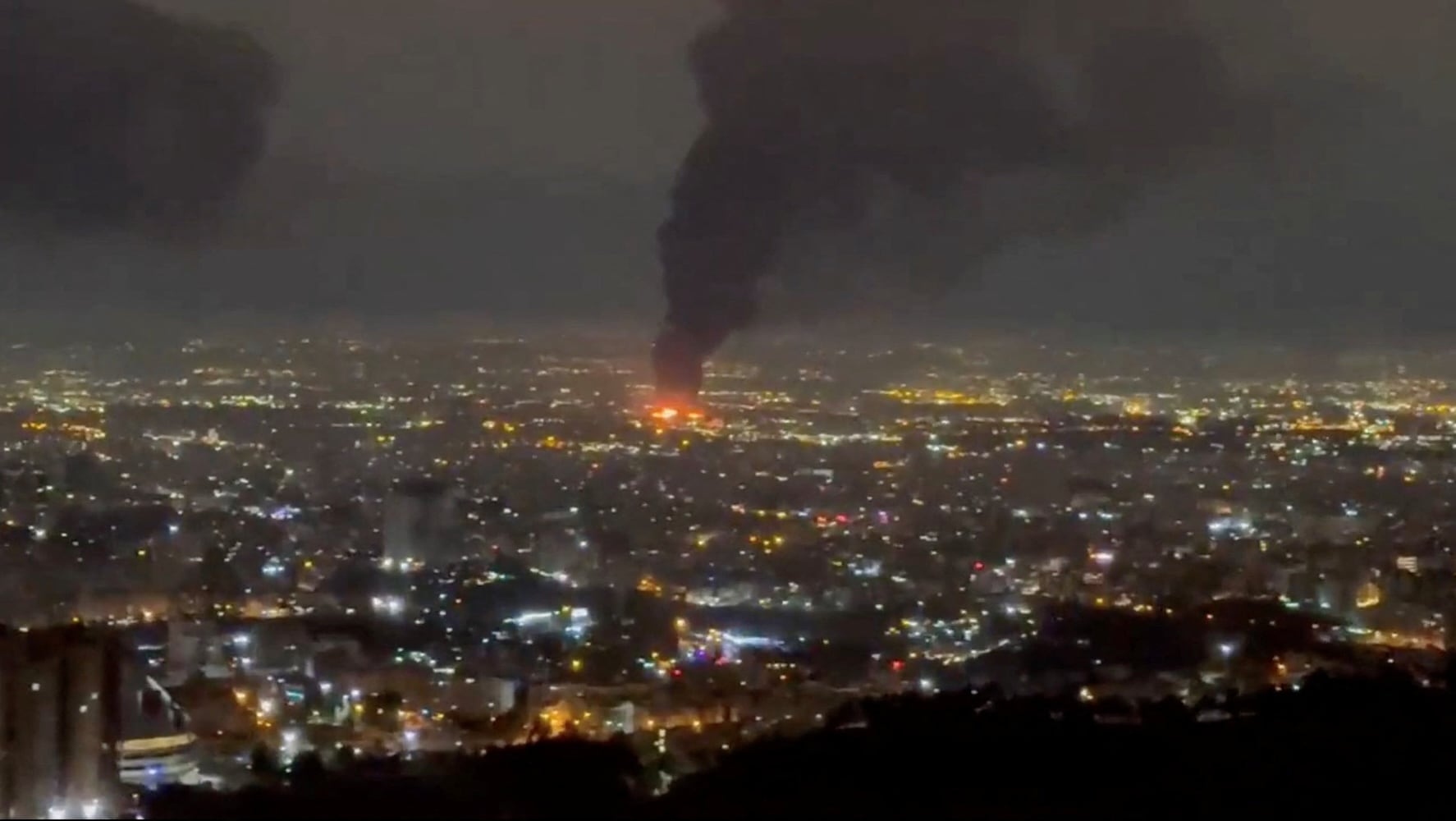
The smoke has cleared now. The wreckage has likely been hauled away to a secure hangar where men in uniform will pore over charred logs and twisted metal, trying to find a reason that doesn't sound like "systemic collapse." They will find a bolt that sheared or a fuel line that clogged. They will blame the heat or the wind or the pilot’s reaction time.
They will miss the point.
The point isn't the bolt. The point is the pressure. The relentless, crushing pressure of operating at the limit of what is possible, day after day, in a world that has decided to let your machines die a slow death.
Tonight, the domes of Isfahan will still glow under the moon. The mountains will still cast their long, jagged shadows over the city. But there is a new silence in the air—the kind of silence that follows a scream. It is the sound of a gap that cannot be filled, a reminder that even the most hardened iron eventually tires of the fight.
Somewhere in a barracks near the airfield, a mechanic is looking at a ledger, crossing out three tail numbers that will never fly again. He picks up a wrench. He moves to the next plane in the hangar. He begins the process of trying to hold the sky together for one more day.
The cycle continues, but the weight is getting heavier.
Gravity never sleeps, and it doesn't care about politics. It only cares about the moment the lift stops. Near Isfahan, the lift stopped three times in a single afternoon, leaving nothing behind but the smell of burnt kerosene and the haunting realization that eventually, everything comes back down to earth.