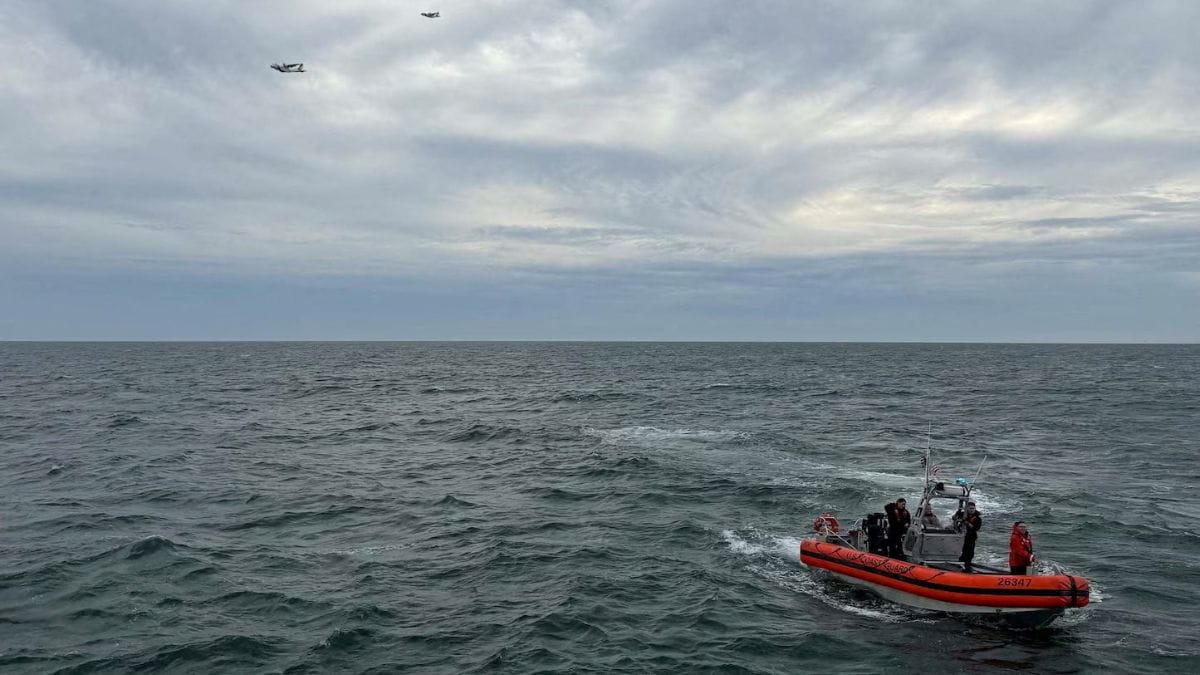
Maritime search and rescue operations depend on the absolute synchronization of hydrodynamic forecasting, acoustic telemetry, and asset allocation under severe time constraints. When an aviation incident occurs over open ocean waters such as the Nantucket soundings, the operational window to locate survivors or critical wreckage diminishes exponentially as drift vectors alter debris fields.
The Drift Vector Mechanics
The physics of oceanic search protocols are dictated by leeway calculations, surface current vectors, and windage forces. Debris dispersal is not random; it follows a predictable aerodynamic and hydrodynamic trajectory defined by the object's surface area to mass ratio.
When medical transport aircraft experience catastrophic structural failure or controlled impact with water, lightweight fuselage components and interior padding exhibit high windage, drifting faster than denser metallic engine assemblies or submerged structural spars.
Rescue coordinators utilize complex drift modeling software that ingests real-time meteorological data, bathymetric contours, and tidal currents. The primary constraint in these models is error propagation. Every hour an object remains unlocated, the search polygon expands radically, turning a localized recovery into a sprawling spatial probability grid.
Acoustic and Visual Detection Limitations
Locating sub-surface or floating fragments requires reconciling two distinct surveillance modalities: active remote sensing and visual scanning.
Visual spotters operating from fixed-wing aircraft or rotary assets face severe visual fatigue, glare, and wave crest interference. Whitecaps frequently mimic the optical signature of life rafts or foam core debris.
Simultaneously, side-scan sonar and acoustic pingers deployed by surface vessels operate under the constraints of thermoclines and bottom topography. If debris sinks below the mixed layer into colder, denser water masses, acoustic propagation changes, complicating localization.
The human element within command structures must continuously evaluate false-positive signals against fuel burn rates and fatigue thresholds for flight crews.
Operational Resource Allocation
The allocation of search assets follows a strict cost-benefit hierarchy. Surface vessels provide prolonged endurance and heavy lifting capacity for recovery but lack velocity. Airborne assets provide rapid deployment across expansive search boxes but suffer from severe fuel limitations and weather dependency.
Effective management requires dynamic tasking:
- High-speed assets saturate high-probability drift lines immediately following the incident.
- Sub-surface sensors deploy once the debris field boundaries are statistically bounded by surface finds.
- Logistics hubs rotate crews to maintain cognitive acuity during extended night-search rotations.
Strategic Deployment Protocols
Future advancements in offshore recovery hinge on autonomous marine drones capable of prolonged station-keeping within dynamic current systems. By shifting the burden of perimeter monitoring from manned aircraft to networked autonomous surface vehicles, command entities can reduce personnel exposure while maintaining continuous acoustic and visual telemetry over the target zone.