The humidity in South Florida doesn't just sit on your skin; it breathes with you. It carries the scent of damp mulch, salt air, and something increasingly prehistoric.
If you walk through a suburban neighborhood in Broward or Miami-Dade, you will hear a rustle in the hibiscus. It isn't a squirrel. It isn't a bird. It is a three-foot-long lizard with serrated spines and eyes like polished amber, watching you from a branch that shouldn't be able to support its weight. These are green iguanas. They are beautiful, they are invasive, and according to the Florida Fish and Wildlife Conservation Commission (FWC), they are a biological wrecking ball.
Most people see a nuisance. They see a lizard that poops in their pool or devours their prized bougainvillea. But then there is the man with the waffle iron.
The Lizard in the Garden
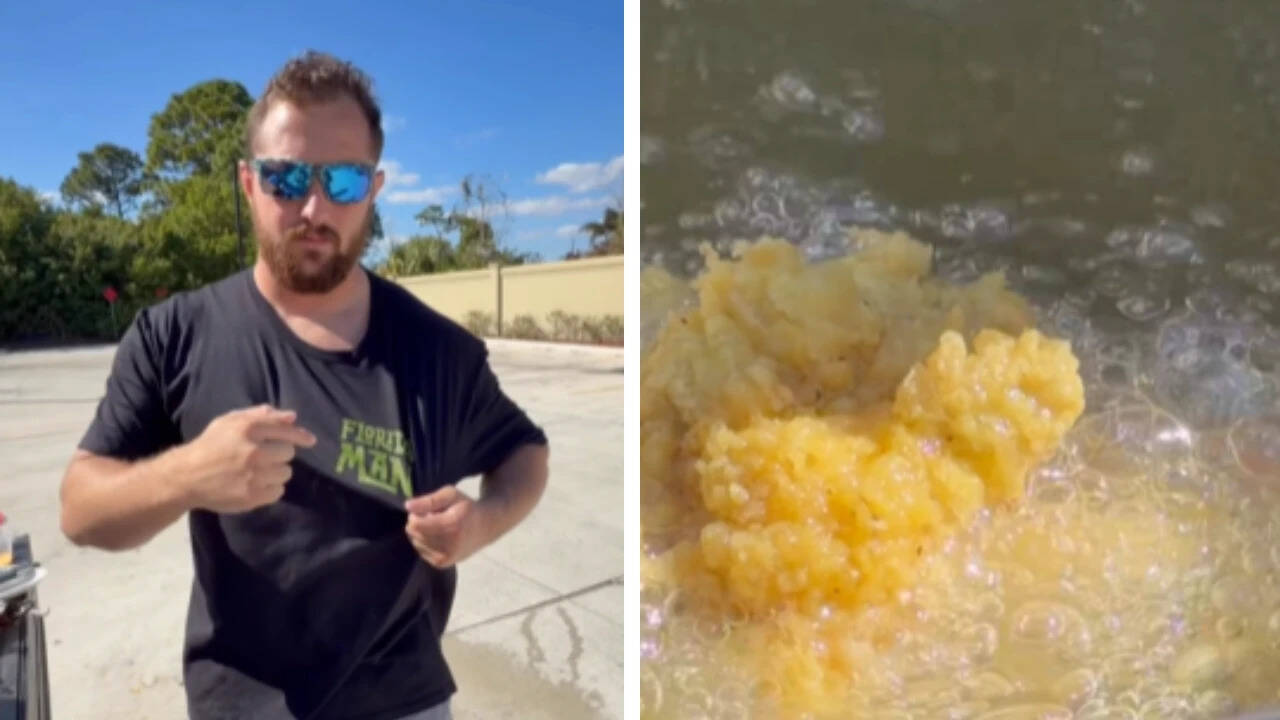
When a video surfaced of a Florida resident prepping a plate of "chicken of the trees" alongside golden-brown waffles, the internet did what it does best: it recoiled in a mixture of horror and fascination. We are conditioned to see certain animals as pets and others as pests, but rarely do we see them as breakfast.
Yet, there is a profound, almost primal logic to what this man did.
To understand the plate, you have to understand the plague. Green iguanas are not native to Florida. They are escapees and cast-offs from the exotic pet trade, originally hailing from Central and South America. In the lush, predator-free buffet of the Sunshine State, they did what any successful colonizer does. They multiplied. They burrowed under seawalls, causing millions of dollars in infrastructure damage. They outcompeted native species. They became a green tide that no amount of trapping seemed to stem.
The state’s official stance is remarkably blunt: homeowners don't need a permit to kill iguanas on their own property. In fact, they are encouraged to do so. But what happens to the carcass? Usually, it ends up in a heavy-duty trash bag, a waste of protein and a grim end to a complex creature.
The man in the video decided on a different path. He looked at the invasive crisis and saw a culinary opportunity.
The Sizzle of Necessity
Cooking an iguana isn't like searing a ribeye. You aren't dealing with marbleized fat or a predictable texture. This is lean, muscular meat. It requires respect.
In the viral footage, the process is stripped of its suburban banality. The meat is cleaned, seasoned, and fried. When it hits the plate next to a stack of waffles—dripping in syrup, perhaps a nod to the classic soul food pairing of chicken and waffles—the narrative shifts. It stops being a "gross" video and starts being a conversation about our place in the ecosystem.
We live in a world where we are increasingly disconnected from the source of our calories. We buy plastic-wrapped breasts of chicken from birds that never saw the sun, yet we find the idea of eating a wild-caught, invasive lizard "revolting." There is a staggering irony there. The iguana lived a free, sun-drenched life eating hibiscus flowers until it met its end. From a sustainability standpoint, it is the ultimate "farm-to-table" meal, minus the farm and plus a significant benefit to the local environment.
The flavor is often described as a cross between chicken and crab. It's firm. It's white meat. It's a staple in many Caribbean and Central American cultures, where it is often stewed with lime and peppers. By bringing it to a Florida kitchen and pairing it with a quintessential American breakfast staple, the man in the video bridged a cultural gap. He humanized a cold-blooded problem.
The Invisible Stakes
It is easy to laugh at a "Florida Man" headline. We’ve been conditioned to expect the absurd from the peninsula. But beneath the surface of the waffle-iron wit lies a very real, very desperate struggle for ecological balance.
Imagine a seawall. It's a massive, expensive slab of concrete designed to keep the rising tides of the Atlantic from reclaiming a backyard. Now imagine a colony of iguanas burrowing deep beneath that concrete. Their tunnels are extensive, weakening the structural integrity of the land itself. When the next hurricane hits or a king tide rolls in, that wall doesn't just crack; it collapses.
This isn't a hypothetical fear. It's an ongoing fiscal nightmare for Florida municipalities. Millions of tax dollars are funneled into "iguana remediation." This involves professional trappers who spend their nights patrolling parks with air rifles, a grim and never-ending cycle of removal.
When an individual takes that cycle into their own hands—and their own kitchen—they are performing a small act of reclamation. They are taking a creature that represents the "brokenness" of an ecosystem and turning it into sustenance. It is a transformation of the "pest" into a "resource."
The Psychology of the Plate
Why did this go viral? It wasn't just the shock value. It was the cognitive dissonance.
We struggle to reconcile the image of a "scary" reptile with the comfort of a waffle. One represents the wild, the untamed, and the invasive. The other represents home, Sunday mornings, and safety. By putting them on the same fork, the man in the video forced us to look at the iguana differently.
He moved it from the category of "monster" to the category of "meat."
This shift is essential if Florida is ever going to manage its invasive species problem. We have seen similar movements with lionfish in the Gulf of Mexico. For years, the venomous, beautiful lionfish decimated reef populations. The solution wasn't just government culling; it was a marketing campaign. "If you can't beat 'em, eat 'em." Today, lionfish is a delicacy in high-end Miami restaurants. It is expensive. It is sought after. And every fillet served is a win for the reef.
The green iguana hasn't quite made the jump to the white-tablecloth menu yet. There are still hurdles—mostly psychological ones involving the lizard’s appearance and the general American taboo against eating "reptiles." But the man with the waffles is a pioneer of the palate. He is showing that the solution to an environmental disaster might just be found in the kitchen.
A New Narrative for the Sun-Drenched State
The story of the iguana hunter isn't a story about a weird guy with a strange appetite. It’s a story about adaptation.
Florida is a place of constant flux. It is a land of transplants—both human and animal. Sometimes those transplants don't play well together. When the balance is lost, when the "natural" order is upended by a scaly invader that doesn't belong, we have two choices. We can complain about the poop on the pool deck, or we can change our relationship with the invader.
The man in the video chose the latter. He didn't see a "Florida Man" meme; he saw a dinner.
There is something deeply honest about that. It’s an admission that the world is changing, and our traditional ways of managing "nature" are no longer sufficient. We can’t just spray a chemical or build a fence to keep the wild out. The wild is already in the backyard. It’s in the trees. It’s on the roof.
So, you pick up a tool. You harvest. You clean. You cook.
The next time you see a green iguana bobbing its head on a fence line in the heat of a July afternoon, you might still see a pest. You might still worry about your seawall or your garden. But perhaps, for a fleeting second, you’ll see the shadow of a waffle iron. You'll realize that the line between a crisis and a meal is often just a matter of perspective—and a little bit of syrup.
The lizard doesn't care about the waffles. It only cares about the sun. And as long as the sun keeps shining on Florida, the iguanas will keep coming. The question isn't how we stop them. The question is how many of us are ready to start eating.
The fork is in your hand.