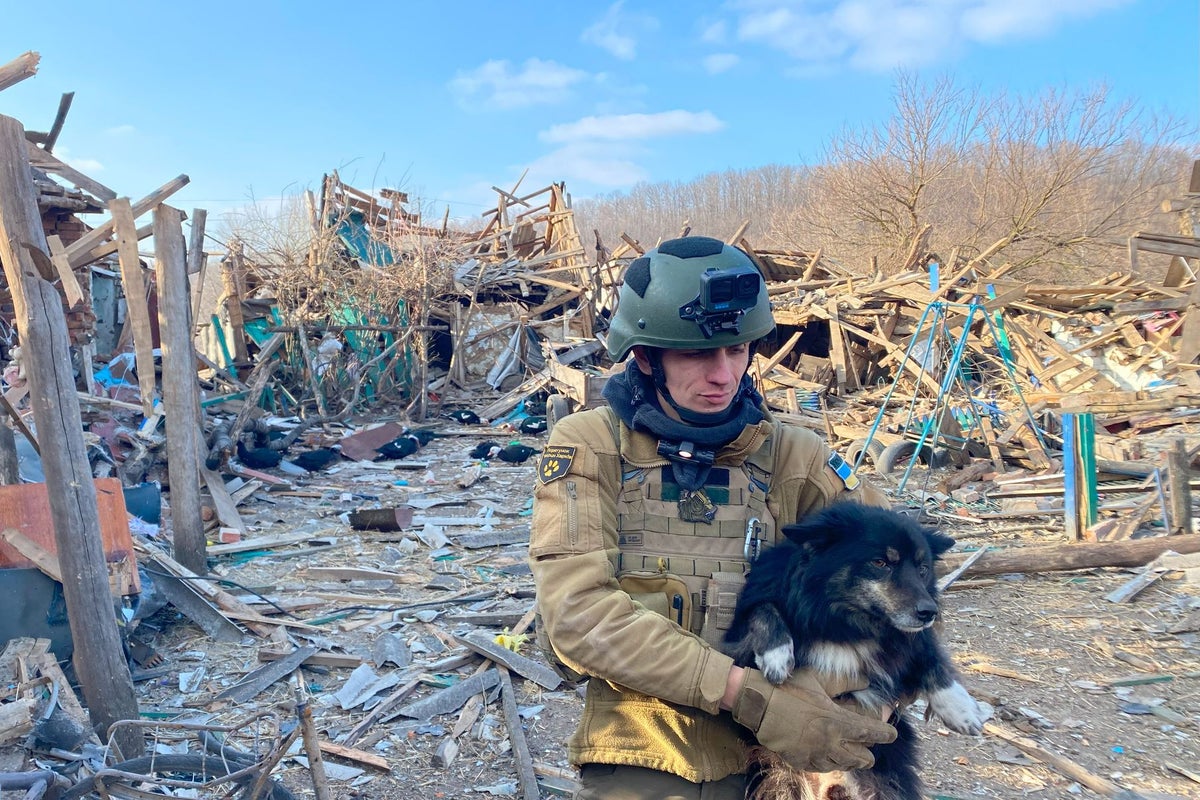
Every modern conflict produces a specific brand of moral exhibitionism. A drone drops ordnance on a freezing trench, a civilian shelter takes shrapnel, or a relief convoy is clipped by artillery, and the digital ecosystem immediately bifurcates into predictable camps. When media outlets broadcast headlines about animal rescuers taking hits from Russian drones while extracting abandoned dogs from front-line settlements in Ukraine, the emotional trigger is instantaneous. The narrative writes itself. Brave humanitarians risking everything for helpless creatures against a backdrop of mechanical cruelty.
It is a deeply moving picture. It is also a strategic and logical catastrophe.
Let us strip away the defensive outrage and look at the actual mechanics of what happens when emotional empathy overrides operational reality in an active theater of operations. I have spent enough time tracking front-line logistics and military aid distribution to know that sentimentality kills more people than bad luck. When volunteers treat a combat zone like a suburban animal shelter, they are not just endangering their own lives; they are actively warping the operational bandwidth of forces fighting for survival.
The lazy consensus says that compassion has no boundaries and that every life, human or canine, demands an equal expenditure of risk. That sounds noble on a podcast or a fundraising page. On the ground, where electronic warfare units track every cellular ping and thermal signature, driving a marked or unmarked van into a gray zone to pick up stray hounds is a beacon for artillery batteries.
The Calculus of Risk in a Contested Airspace
Modern warfare is no longer governed by the Hague Conventions or random chance. It is governed by the thermal lens, the Mavic drone feed, and automated counter-battery radar. When an extraction team enters a contested settlement—a place where the front line is shifting by hundreds of meters a day—they are introducing erratic thermal signatures and radio frequencies into a zone where local commanders are trying to manage defensive lines.
A Russian FPV drone operator does not check humanitarian credentials. To a thermal scope, a van moving down an unmapped rural road is a target vector. The operator sitting in a basement five kilometers away sees movement, launches a kinetic payload, and scores a hit.
The media focuses on the tragedy of the volunteers being wounded. They miss the systemic failure that allowed them to be there in the first place. Military authorities establish evacuation zones and red lines for a reason. When civilian auxiliary groups bypass these restrictions because of viral social media campaigns, they create tactical liabilities. Every time a rescue crew has to be pulled out of a hot zone by actual territorial defense units, combat assets are diverted from holding positions to extract people who should not have been there.
Compassion without boundaries is just a liability disguised as virtue.
The Economics of Misallocated Sympathy
Let us look at the resource pipeline. Operating an animal rescue mission in a combat zone requires fuel, vehicles, medical supplies, permits, and secure communications. In a resource-constrained environment like wartime Ukraine, every liter of fuel diverted to transport rescued pets out of Bakhmut or Pokrovsk is a liter of fuel not moving ammunition, tourniquets, or food to human defenders and trapped civilians who cannot leave.
We are looking at a zero-sum game of logistics. By romanticizing the rescue of domestic animals in active artillery ranges, donors thousands of miles away are subsidizing high-risk vanity projects that drain tactical resources.
The harsh truth is that an abandoned dog in a combat zone is a casualty of war, just like a destroyed tractor, a shattered house, or a polluted well. You cannot save everything. Attempting to do so multiplies the body count. When human volunteers take shrapnel to the abdomen while loading terrified German Shepherds into a van, they have not struck a blow for humanity; they have succumbed to an emotional trap that values a viral video over operational survival.
The Professional Distortion
NGO workers and independent rescuers often operate under a savior complex that brooks no contradiction. They believe that their moral purity protects them. Physics and explosives do not care about moral purity.
When you operate in a sector dominated by glide bombs and artillery duels, your primary responsibility is not to become a statistic. A dead or wounded rescuer does not help the dogs. It only creates a secondary rescue requirement, forcing actual combat medics to risk their lives extracting people who chose to drive into a kill box for a photo opportunity.
This is where the E-E-A-T of crisis management comes into play. I have watched organizations blow millions on high-profile, low-efficiency rescue stunts while critical civilian infrastructure went unfunded because it lacked the visual punch of a shivering puppy. The media rewards the visceral image. The reality on the ground demands cold, hard triage.
Triage means abandoning what cannot be saved to preserve what can. It means accepting that war is destructive down to the cellular and ecological level, and that trying to sanitize it by rescuing pets under fire is an exercise in lethal narcissism.
What Real Relief Looks Like
If you actually care about animals in war zones, stop funding reckless front-line extraction stunts that get people killed. Real animal welfare in a crisis looks unglamorous. It looks like prepositioning bulk feed at safe logistics hubs far behind the contact line. It looks like funding local veterinarians in stable oblasts to handle the influx of displaced fauna. It looks like staying out of the way of military logistics.
The next time you see a headline about brave rescuers taking hits while saving dogs under artillery fire, do not applaud the recklessness. Ask why they were operating inside a live fire zone without military coordination. Ask who authorized a civilian vehicle to draw drone fire in a sector where infantrymen are rationing water.
War is not a sanctuary. It is an industrial meat grinder. If you step into it to save a dog, do not be surprised when the machinery treats you like meat. Stop romanticizing tactical suicide. Save the operational capacity for the people actually fighting to end the war.