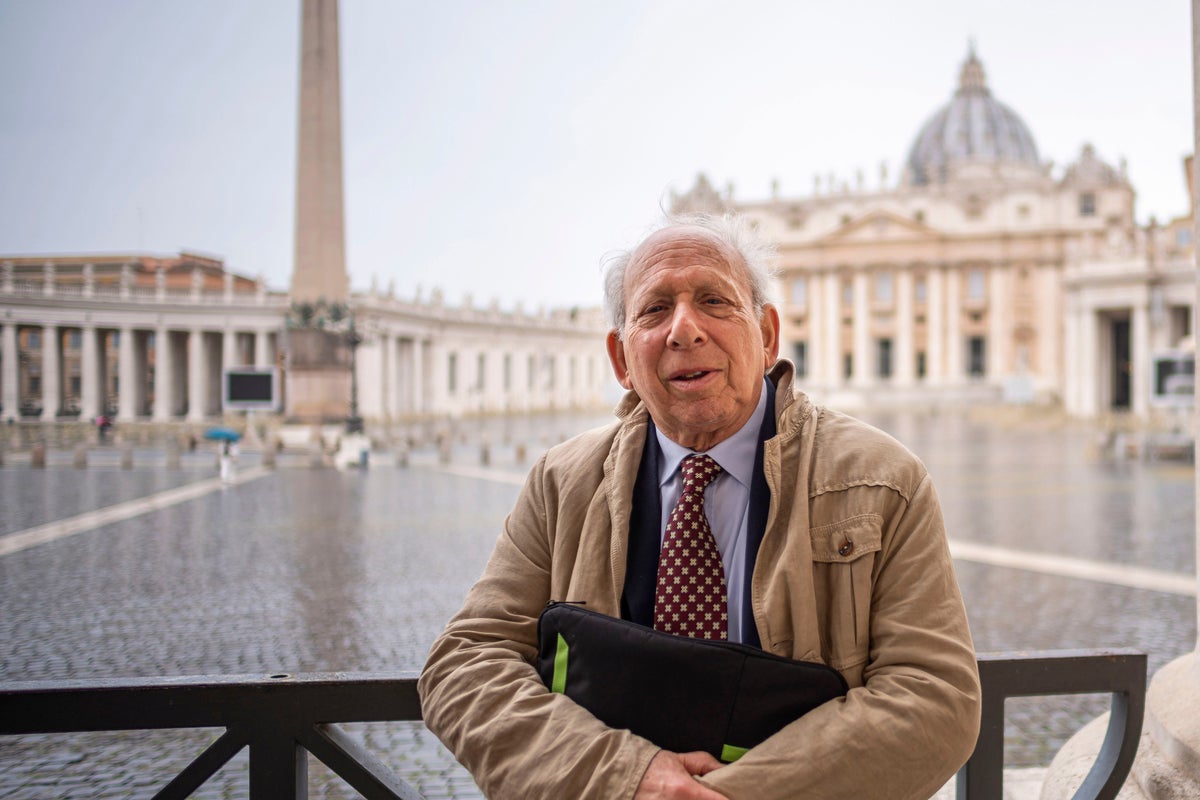
When retired Associated Press Rome bureau chief Victor Simpson passed away at the age of 84, the global journalism community lost one of its last genuine titans. Spanning a remarkable 46-year career with the AP, Simpson did not just report on history from a distance. He stood inside the cabin of the papal plane, walked the tense streets of a politically fractured Rome, and bore witness to five distinct papacies. Yet reducing his legacy to a mere tally of popes and plane rides misses the core of who he was. Simpson's life was a masterclass in grit, deep empathy, and an unyielding commitment to the truth, forged through professional triumphs and unimaginable personal heartbreak.
Newark Roots and the Crucible of Hard News
Long before he became the unofficial dean of the Rome press corps, Simpson was a kid from New York cutting his teeth in the gritty local news trenches. He joined the AP in Newark in 1967, a time and place defined by racial tension and urban volatility. Fresh on the job, he tackled an award-winning series on organized crime, proving early on that he possessed the relentless curiosity required of top-tier reporters.
Those early years on the Newark beat taught him how to look past official press releases and find the human pulse of a story. When he transferred to the general desk in New York in 1968 and later to the foreign desk in 1970, he brought that same street-smart urgency with him. Journalism back then was loud, chaotic, and heavily reliant on shoe-leather reporting. Simpson thrived in that environment because he understood that news wasn't something you waited for; it was something you chased down block by block.
Finding Love and Lifelong Purpose in Rome
When Simpson arrived in Rome as a news editor in 1972, he walked into a city wrapped in political turmoil. The 1970s in Italy were marked by extremist violence, high-profile kidnappings, and enduring national mysteries like the 1980 Ustica plane disaster. Navigating this environment required more than just fluency in Italian; it demanded nerves of steel and an absolute refusal to be intimidated.
Rome also gave him a lifelong partner. Shortly after landing in the city, he met Daniela Petroff, a brilliant and distinguished AP fashion and Vatican correspondent. Together, they formed a formidable journalistic power couple, navigating the demanding rhythms of foreign correspondence while raising a family. Daniela remained a steady, gentle presence in the Roman press corps until her passing earlier in the year at age 80. Their shared life was deeply intertwined with the heartbeat of the Eternal City.
The Heavy Toll of Private Sorrow
It is easy to romanticize the life of a foreign correspondent. People picture cocktail parties at embassies, front-row seats to world-shaping events, and travel to exotic locales. But journalism often extracts a brutal tax from those who practice it. Simpson's life was fractured by tragedies that would have broken a less resolute person.
When he was just 22 years old, his father, Leonard P. Simpson, a prominent New York lawyer, was shot and killed in the elevator of their family apartment building. Decades later, on December 27, 1985, a routine family trip turned into a nightmare. As Simpson prepared to fly back to the United States from Rome's Leonardo da Vinci airport with his children, Palestinian militants stormed the terminal, opening fire and throwing grenades.
His 11-year-old daughter, Natasha, was killed in the attack. Simpson and his nine-year-old son, Michael, were both wounded.
The grief of that day never truly left him. Friends and colleagues noted that a profound, unutterable sorrow settled over him afterward. Yet, with the birth of their daughter Debbie two years later—an event famously acknowledged by a congratulatory phone call from the Pope—and through his enduring devotion to his craft, Simpson carried forward. That personal crucible fundamentally changed his reporting. He learned an intimate, painful lesson about the fragility of human life, making him infinitely more sensitive and considerate when dealing with other victims of tragedy. He knew what real suffering looked like, and that awareness prevented him from ever treating human misery as mere copy.
Reporting from Inside the Papal Plane
Simpson's tenure covering the Vatican spanned five popes, starting with the final months of Paul VI and stretching through the historic 2013 conclave that brought Pope Francis to power. Along the way, he witnessed the brief 33-day papacy of John Paul I, the global footprint of St. John Paul II, and the intellectual rigor of Benedict XVI.
As one of the longest-serving Vatican correspondents of his generation, Simpson boarded 92 international papal flights. He interviewed John Paul II mid-flight, shared private conversations in the aisles of aircraft, and earned the respect of church officials who were accustomed to viewing the secular press with deep suspicion.
One of his most vivid memories occurred in September 2012, flying back from Beirut alongside an aging and visibly weary Pope Benedict XVI. When Simpson mentioned that he had covered the Vatican for over three decades, the pontiff looked wistful and remarked that retirement was "much deserved". Months later, Benedict announced his historic resignation—effective on the exact date Simpson had already chosen for his own departure from the AP. It was a fitting parallel for two men who had spent their lives at the intersection of history and duty.
The Shifting Sands of Modern Media
The industry that Victor Simpson entered in the 1960s no longer exists. Today's news landscape is dominated by viral clips, instantaneous social media hot takes, and hollow corporate downsizing that has hollowed out foreign bureaus across the globe. Newsrooms increasingly rely on aggregated feeds rather than stationing seasoned reporters on the ground for decades to understand the nuances of a foreign culture.
Simpson's career stands as a direct rebuke to modern media shortcuts. He did not break news by refreshing a smartphone feed. He built sources over decades, learned languages fluently, walked dusty streets, and showed up when stories turned dangerous. He was the first person new correspondents called when they landed in Rome because he knew where the bodies were buried—both literally and politically.
When former AP President Louis Boccardi called Simpson "one of a kind," he wasn't just praising a friend. He was lamenting the slow extinction of a specific breed of foreign correspondent. Victor Simpson lived through the worst of human violence and the highest corridors of global power, and he left behind a standard of reporting that few will ever match.