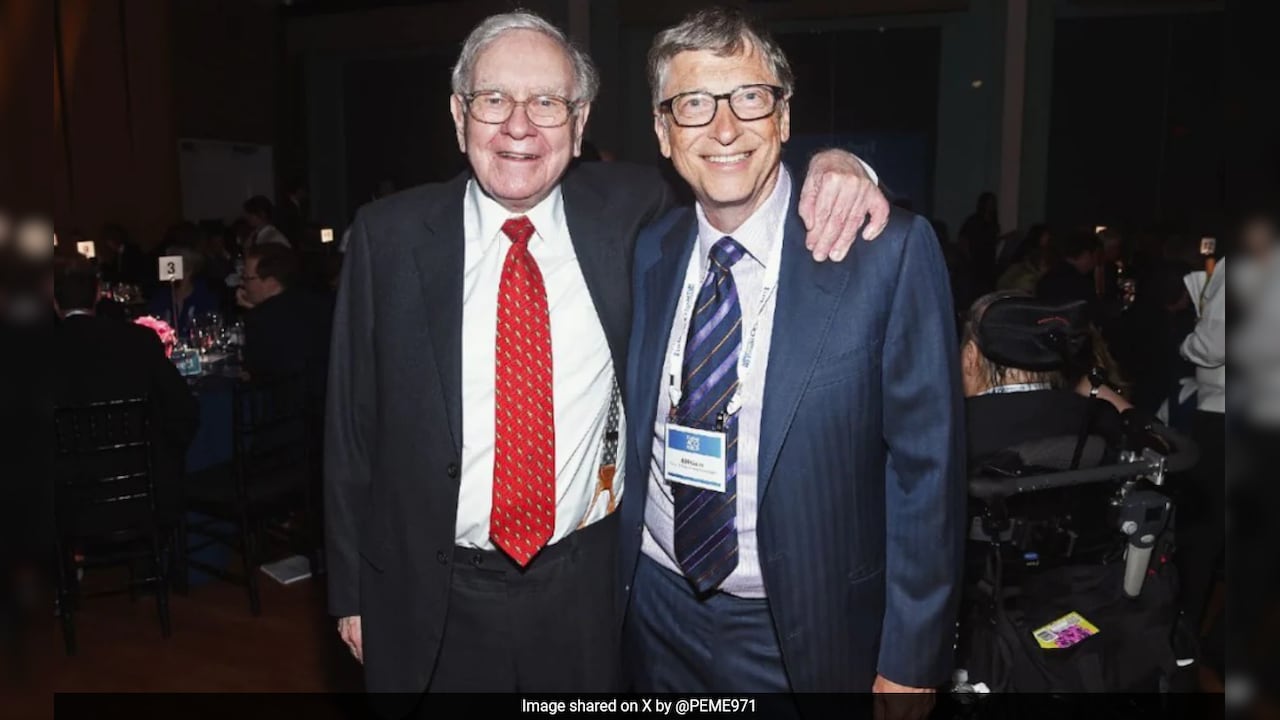
Capital allocation is not merely about maximizing financial yields; it is equally about mitigating tail-risk liabilities. When Warren Buffett suspended his annual multi-billion-dollar distribution of Berkshire Hathaway stock to the Bill & Melinda Gates Foundation in July 2026, mainstream commentary framed the decision as a personal fallout. The structural reality is far more clinical. The move represents a calculated exercise in risk management, protecting the reputational equity of Berkshire Hathaway and re-engineering the governance of a $140 billion estate.
To analyze this shift, one must bypass the sensationalism of interpersonal conflict and evaluate the hard mechanics of corporate governance, asset protection, and systemic capital deployment. Expanding on this theme, you can also read: Why Canada is Betting Big on Brazil Right Now.
The Reputational Cost Function of Philanthropic Capital
In institutional investing, reputation behaves like an asset with asymmetric downside. A pristine reputation yields marginal incremental gains, but its degradation can inflict catastrophic losses on valuation and access to deal flow. For Berkshire Hathaway, a conglomerate built on the premise of high-trust, decentralized operations, maintaining absolute distance from legal and ethical controversy is a core business defense mechanism.
The disclosure of Bill Gates' historical ties to Jeffrey Epstein created an unquantifiable reputational liability. The Department of Justice's files, containing detailed correspondence, calendar entries, and photographic evidence, forced the Gates Foundation to commission an independent, external legal review by an outside law firm. For Buffett, the decision to pause donations is a classic risk-containment strategy, modeled on three distinct pillars of institutional protection. Observers at CNBC have provided expertise on this situation.
1. The Isolation of Subpoena Risk
By pausing communication and financial integration with Gates and his foundation, Buffett minimizes the probability of being drawn into judicial proceedings. In his own words, avoiding the necessity of testifying under oath or becoming a party to collateral discovery is a primary operational objective.
2. Capital Preservation Under Investigation
In wealth management, distributing assets to an entity undergoing active external investigation violates basic compliance protocols. If the independent review reveals systemic governance failures at the Gates Foundation, any capital transferred during that window becomes retroactively associated with those failures.
3. Separation of the Berkshire Brand from Private Conduct
Berkshire Hathaway’s stock price carries a premium tied to Buffett's personal integrity. Decoupling his capital from the Gates Foundation before the external investigation concludes prevents any spillover effect that could depress Berkshire's market value or complicate its regulatory relationships.
The Redistribution of the Six Billion Dollar Run Rate
The suspension of the Gates Foundation contribution did not reduce Buffett's annual philanthropic output. Instead, it triggered a rapid redirection of capital, shifting the flow from a centralized, third-party global entity to controlled, family-governed channels.
The July 2026 distribution involved converting 8,000 Berkshire Hathaway Class A shares into approximately 12 million Class B shares, yielding a capital pool of roughly $6 billion. The allocation of this pool reveals the new hierarchy of Buffett’s philanthropic architecture.
- The Susan Thompson Buffett Foundation: Received approximately $4.5 billion. This entity, named after Buffett’s late first wife, historically focuses on reproductive health and educational scholarships.
- The Sherwood Foundation: Received approximately $500 million. Managed by Susie Buffett, this organization operates primarily in regional development and early childhood education.
- The Howard G. Buffett Foundation: Received approximately $500 million. Focused on global food security, agricultural infrastructure, and conflict mitigation.
- The NoVo Foundation: Received approximately $500 million. Managed by Peter Buffett, with a mandate centered on supporting marginalized communities and girls' education.
This reallocation demonstrates that the primary objective was not to hoard wealth, but to relocate it to low-risk, closely monitored vehicles. By funding his children's foundations, Buffett retains indirect oversight through bloodline alignment, effectively eliminating the agency costs and governance risks associated with external boards.
The Capital Absorption Paradox of Family Foundations
While the redirection of $6 billion resolves the immediate reputational threat, it exposes a structural bottleneck: the capital absorption limit of family-run foundations.
The Gates Foundation is an industrial-scale philanthropic machine. It possesses the global infrastructure, compliance networks, and scientific advisory boards required to deploy billions of dollars annually into complex global health initiatives. Family foundations, by contrast, are typically designed for regional or highly specialized interventions. They lack the administrative capacity to efficiently deploy capital of this magnitude without experiencing significant friction.
[Buffett Estate: ~$140B in Berkshire Stock]
       │
       ├─► Old Plan (Pre-2026): Centralized deployment via Gates Foundation (High absorption capacity)
       │
       └─► New Plan (Post-2026): Decentralized deployment via Family Foundations (Low absorption capacity)
             │
             ├── Susan Thompson Buffett Foundation ($4.5B/yr) ──► Scaling Bottleneck (Admin limits)
             ├── Sherwood Foundation ($500M/yr) ────────────────► Regional Saturation Risk
             ├── Howard G. Buffett Foundation ($500M/yr) ────────► Geopolitical Security Risks
             └── NoVo Foundation ($500M/yr) ─────────────────────► Programmatic Saturation Risk
This structural mismatch introduces three distinct operational challenges:
Administrative Diseconomies of Scale
The sudden influx of billions of dollars requires these family foundations to scale their staff, compliance departments, and due diligence protocols almost overnight. Attempting to deploy capital too quickly without this infrastructure leads to adverse selection, where foundations fund lower-quality projects simply to meet distribution quotas.
Regional Saturation
Foundations like Sherwood operate with a regional focus. Injecting hundreds of millions of dollars annually into localized education or community initiatives risks saturating the market, driving up costs without yielding proportional social returns.
The 2034 Hard Deadline Liquidation Pressure
The friction is compounded by Buffett’s accelerated estate timeline. His updated directive mandates that all remaining Berkshire Hathaway stock—currently valued at over $140 billion—must be completely transferred to these four family foundations by December 31, 2034. This 2034 hard stop removes the flexibility of a prolonged, multi-decade wind-down.
To prevent this sudden influx of capital from disrupting the market price of Berkshire Hathaway shares, the trustees will be forced to execute highly structured, programmatic stock sales over the next eight years.
The Strategic Path Forward for Private Wealth Estates
The restructuring of the Buffett estate provides a definitive case study in modern wealth preservation. It illustrates that the traditional model of delegating estate distribution to massive, third-party global foundations introduces severe principal-agent risks.
For ultra-high-net-worth individuals, the strategic play is clear:
- Build modular, family-controlled distribution channels early. Relying on a single external institution for estate execution creates a single point of failure.
- Establish programmatic liquidation schedules. A hard deadline, such as the December 31, 2034 mandate, prevents administrative foot-dragging but requires highly predictable, automated block sales of equity to avoid triggering market panic.
- Prioritize governance over scale. The transition of $140 billion to three siblings requires unanimous agreement on capital allocation. This design choice values absolute trust and shared values over the pure administrative efficiency of a professionalized, corporate board.
Ultimately, Buffett’s move signals the end of the mega-foundation era as the default exit strategy for historic American fortunes. By transferring his legacy back to his family, he has bet that the inefficiency of smaller, localized operations is a price worth paying to guarantee absolute governance control and reputational safety.