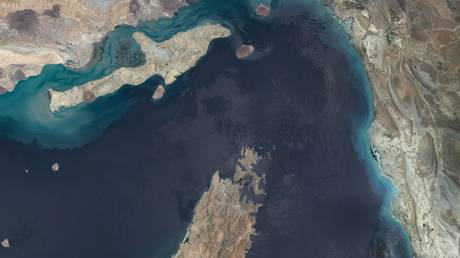
The lazy consensus of global energy experts, military strategists, and financial columnists has officially failed. For months, they have wrung their hands over the "unmitigated disaster" of the Strait of Hormuz. When the crisis exploded on February 28, 2026, and vessel crossings plummeted from their healthy pre-war average of 140 down to a pathetic 17, the global elite panicked. The immediate reaction of the United States and its allies was entirely predictable: launch airstrikes, deploy Project Freedom, sink Iranian patrol boats, and try to force the water open at all costs.
But trying to "fix" the Strait of Hormuz is a fool's errand.
The mainstream narrative is obsessed with physical security, naval corridors, and restoring maritime status quo. It is a completely outdated perspective that ignores how energy markets actually function under pressure. The obsession with keeping this 21-mile-wide geographic bottleneck open is a massive strategic distraction. We do not need to open the Strait of Hormuz. We need to let it remain broken and force the global supply chain to finally adapt.
The Illusion of the Chokepoint
I have spent years watching energy desks react to geopolitical flare-ups. Every time an oil tanker is boarded or a drone skims over a deck, the immediate response is a localized spike in risk premiums, followed by a flurry of hand-wringing from analysts claiming the world economy is on the brink of collapse.
When the 2026 conflict flared up, Brent crude surged past $126 per barrel. The "chicken littles" predicted a permanent, systemic shock. Yet, look at what happened: by the time the June 17 Memorandum of Understanding was signed, global markets had already begun quietly routed around the problem. Even during the peak of the Iranian blockade and the subsequent American counter-blockade, clandestine shipping lanes, shadow fleets, and alternative pipelines kept millions of barrels flowing.
The industry’s dirty secret is that the "20 million barrels per day at risk" figure is a paper tiger. Market analysts like Tamas Varga at PVM Oil Associates proved that the real, net loss to the global crude market during the worst of the 2026 blockade was not 20 million barrels. It was roughly 3.1 million. The difference was absorbed by alternative routes, strategic reserves, and sanctions waivers on floating storage.
If a nation can lose its primary maritime corridor and still route 85% of its intended volume through backdoors, the corridor isn't as indispensable as the naval brass wants you to believe.
Why Escorts and Air Campaigns are Failing
The United States military, under direct orders to clear the waterway, deployed its typical heavy-handed playbook: Project Freedom, mine-sweeping operations, and threats to decimate domestic civilian infrastructure in Tehran.
Here is the mechanical reality they missed: the shipping industry does not run on naval dominance; it runs on insurance.
- The Insurance Trap: You can paint as many gray hulls as you want and sail them up and down the Gulf, but if war risk premiums remain four to six times higher than baseline, commercial operators will not transiting. No rational CEO is going to risk an uninsured $100 million hull and a $80 million cargo of LNG to prove a point about "freedom of navigation."
- The Routing Shift: S&P Global maritime data from mid-July shows that out of the mere handful of vessels still crossing the Strait daily, almost all are ignoring Omani and international corridors. Instead, they are sticking close to Iranian waters or using dark routes. Why? Because shippers have realized that negotiating with the local actor holding the gun is cheaper than relying on a distant superpower's promise of protection.
- The Technology Deficit: Modern naval escorts are designed to intercept conventional anti-ship missiles and large submarines. They are structurally ill-equipped to police a narrow, shallow strip of water infested with hundreds of fast-attack boats, GPS spoofing, and low-tech sea mines that cost a fraction of a Standard Missile-2 interceptor to deploy.
Attempting to clear the Strait of Hormuz militarily is like trying to vacuum a dirty carpet while people are still walking on it with muddy boots. It is an endless sinkhole of capital and military assets.
The Hard Truth About Asian Energy Dependence
Whenever the Strait of Hormuz is discussed, the standard geopolitical lamentation is that "Asian energy importers are structurally exposed." China, India, South Korea, and Japan are painted as helpless victims of Gulf instability.
Let's dismantle this myth. This vulnerability is not a structural tragedy; it is a choice.
These nations have spent decades building massive, state-subsidized shipping companies and securing long-term contracts in the Middle East because it was the cheapest, easiest option. By continually stepping in to police the Persian Gulf, Western nations have effectively subsidized Asia's energy transport costs.
+-------------------------------------------------------------------+
|               THE REAL COST OF HORMUZ SUBSIDIZATION               |
+--------------------------+----------------------------------------+
| Traditional Approach     | Western navies spend billions policing |
|                          | the Gulf to keep cheap oil flowing     |
|                          | to foreign competitors.                |
+--------------------------+----------------------------------------+
| The Contrarian Reality   | Allowing the Strait to close forces   |
|                          | Asian buyers to finance their own      |
|                          | security or pay for domestic pipelines. |
+--------------------------+----------------------------------------+
When India had to ration gas supplies to domestic industries in early 2026, it wasn't because of a lack of global oil. It was because they chose to rely on a cheap, highly volatile choke point instead of accelerating investments in deepwater port infrastructure on their southern coast or building out massive domestic strategic reserves.
If we stop trying to fix the Strait, these importing giants will be forced to do one of two things: deploy their own military assets to secure their own supply lines, or accelerate their decoupling from Middle Eastern crude. Either outcome is a net win for Western strategic interests.
The Blueprint for a Post-Hormuz World
Instead of pouring billions into military patrols and risk-mitigation subsidies, global energy policy should actively embrace the obsolescence of the Strait of Hormuz. The solution is not to fight the geography of the Persian Gulf, but to bypass it entirely.
1. Build Land-Based Redundancy
The East-West Pipeline in Saudi Arabia and the Abu Dhabi Crude Oil Pipeline to Fujairah already exist. They are chronically underutilized because shipping through the Strait is slightly cheaper during peacetime. If the Strait is allowed to remain functionally closed to Western-aligned commercial shipping, these inland pipelines will quickly scale to maximum capacity, permanently shifting the center of gravity of Middle Eastern logistics away from the shorelines of Iran.
2. Force Insurers to Play the Market
Governments must stop using tools like the Terrorism Risk Insurance Act to underwrite commercial shipping in active warzones. If a private insurer wants to cover a tanker sailing through a rain of drones and sea mines, let them take the hit. Removing the artificial safety net of government-backed insurance will force shipping companies to find alternative ports, ending the dangerous reliance on a single narrow channel.
3. Starve the Chokepoint of Capital
Stop treating the Persian Gulf as the undisputed heart of global energy. The continuous rise of Western hemisphere production, combined with the development of alternative transit corridors, has already weakened the strategic leverage of Middle Eastern producers. The more we fight to "save" the Strait, the more we validate the idea that our economies cannot survive without it.
The 2026 crisis has shown us that the global economy is far more resilient than the alarmists realize. The transition will be painful, insurance rates will stay high, and energy prices will fluctuate. But trying to hold open a geographic bottleneck in the middle of an active conflict zone is a losing game. It is time to let the Strait of Hormuz go, let the market adapt, and force the players who actually rely on it to pay the price for their own security.