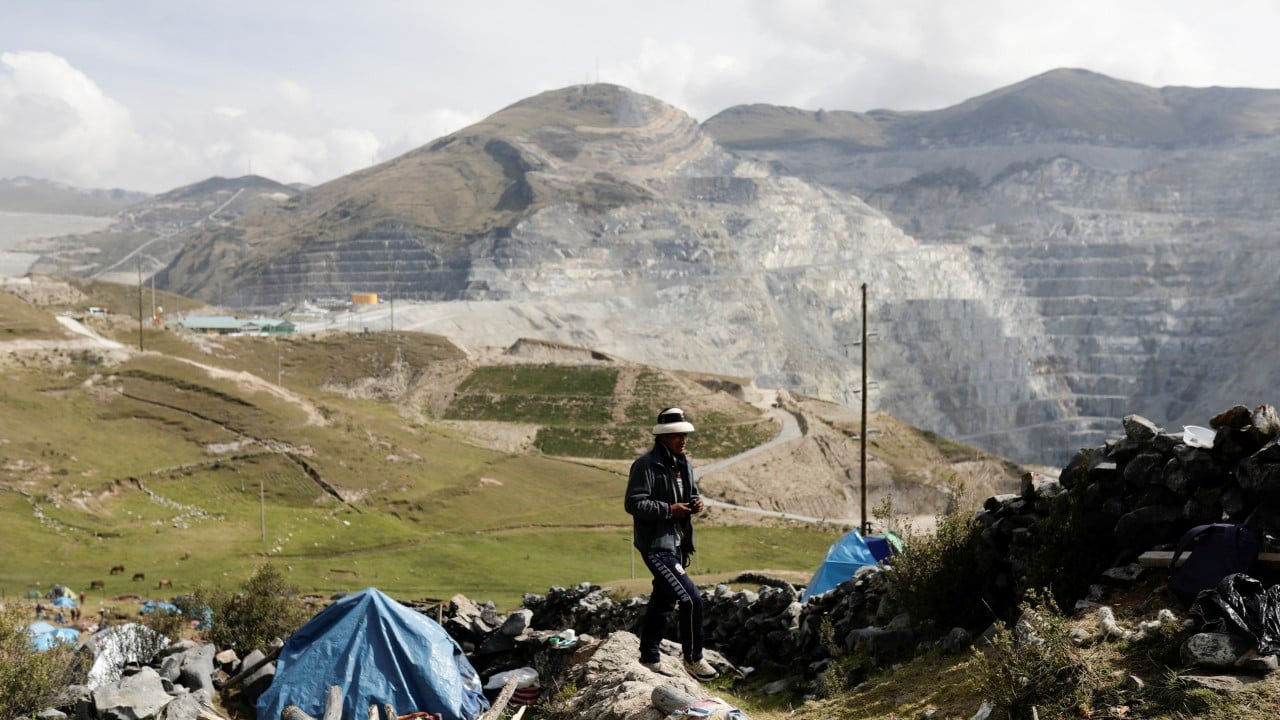
Deep in the Peruvian Andes, the earth is the color of bruised copper.
For decades, the heavy trucks have rumbled down the dirt highways of Apurímac, their beds weighed down with raw mineral wealth. If you stand by the roadside, the dust settles in your teeth, metallic and dry. This is copper country. For a long time, the equation was simple: Peru dug the red metal out of the mountains, loaded it onto massive bulk carriers at the coast, and sent it across the Pacific. China bought it, refined it, and turned it into the wiring for the modern world.
It was a lucrative arrangement, but it was an exhausting one. It left Peru with holes in its mountains, wealth concentrated in distant boardrooms, and an economy entirely at the mercy of global commodity swings.
But look closer at the coastline today, just north of Lima. A shadow has fallen over the old way of doing things.
In the coastal town of Chancay, a colossal, multi-billion-dollar deepwater port now commands the Pacific shoreline. Built largely with Chinese capital, it is a marvel of concrete and automated cranes. Yet, for Peru, this port represents a crossroads that stretches far beyond shipping lanes. It is the catalyst for an quiet economic rebellion.
Peru no longer wants to be just the world’s pit mine.
Consider a hypothetical citizen named Carlos. For twenty years, Carlos might have worked near a mine like Las Bambas, watching wealth pass by his doorstep on its way to a boat. He understands a fundamental truth that economists often obscure with jargon: when you only sell raw materials, you are selling your future at a discount.
When Peru exports raw copper concentrate, it exports jobs. It exports the technological know-how that comes with processing that copper. It exports the manufacturing profits. China takes that raw Peruvian dirt, refines it, transforms it into electric vehicle batteries or high-voltage cables, and sells it back to the world at a massive premium.
Peru gets the dust. China gets the industrial dominance.
This dynamic created an uncomfortable dependency. When China’s real estate market boomed, Peru prospered. When China’s construction sector stuttered, Peru felt the chokehold. It is a vulnerable position for any sovereign nation, let alone one trying to lift millions into a stable middle class.
The strategy in Lima has fundamentally shifted. The goal is no longer to sell more dirt. The goal is to build something out of it before it leaves the harbor.
The massive port complex at Chancay changes the geometry of global trade. By cutting transit times across the Pacific by a staggering ten to fifteen days, it transforms Peru into the central gateway between South America and Asia.
But a faster highway is useless if you are only using it to haul rocks.
Peruvian policymakers are looking at the vast industrial zones planned around the Chancay megaport and asking a different question: Why shouldn't those electric vehicles be assembled right here?
Peru sits on the world's second-largest copper reserves and shares borders with the lithium-rich salt flats of Bolivia and Chile. The regional ingredients for the green energy transition are entirely localized. By leveraging the new port, Peru is attempting to lure Chinese industrial giants to establish manufacturing plants on Peruvian soil. Instead of shipping raw copper and importing finished tech, the country wants to export completed components, electronics, and green energy infrastructure.
It is a gamble on value-added economics. Moving up the supply chain is notoriously difficult for developing nations. It requires massive infrastructure, a newly skilled workforce, and regulatory stability that can withstand political turbulence.
The confusion for many observers lies in the geopolitics. Western analysts often look at Chancay and see a terrifying expansion of Chinese influence in Washington’s backyard. They worry about dual-use naval capabilities and economic traps.
The reality on the ground in Lima is far more pragmatic, and perhaps a bit more desperate. Peru isn't looking to become a pawn in a new Cold War. It is looking for a way out of a centuries-old colonial economic model. If the United States or Europe aren't offering billions to build deepwater ports and industrial parks, Peru will take the capital from the entity that is offering it—while quietly fighting to ensure it retains its own sovereignty.
The real test of this transformation won't be measured in the volume of shipping containers moving through Chancay. It will be measured in the valleys of Apurímac and the classrooms of Lima.
If Peru succeeds in forcing a shift from raw mineral extraction to industrial partnership, the economic benefits must trickle back to the communities that have borne the environmental brunt of the mining boom for generations. If the wealth remains locked inside the new coastal industrial zones, the old social conflicts that have plagued Peruvian mining will simply migrate to the ports.
The trucks still roll down from the Andes, kicking up that familiar copper dust. But the destination is changing. Peru is betting everything that it can stop being the world's supply room, and finally become its workshop.