Stutter.
That is the first thing your eyes register when you step off a neon-drenched Vice City sidewalk and swing a virtual camera across a crowded intersection at thirty frames per second. It is not a glitch, and it is not a broken television, yet your brain—trained over half a decade of modern console hardware to expect fluid, liquid motion—feels a subtle, physical jolt, like stepping onto an escalator that has quietly stopped moving.
For years, console players were promised a clean break from the past. When the current generation of living-room hardware arrived in late 2020, the marketing pitch rested on a simple, intoxicating guarantee: the era of sluggish, cinematic compromises was dead, replaced by crisp sixty-frames-per-second gameplay as the baseline standard. Players bought high-refresh-rate televisions, upgraded HDMI cables, and reorganized their living rooms around the promise of responsiveness.
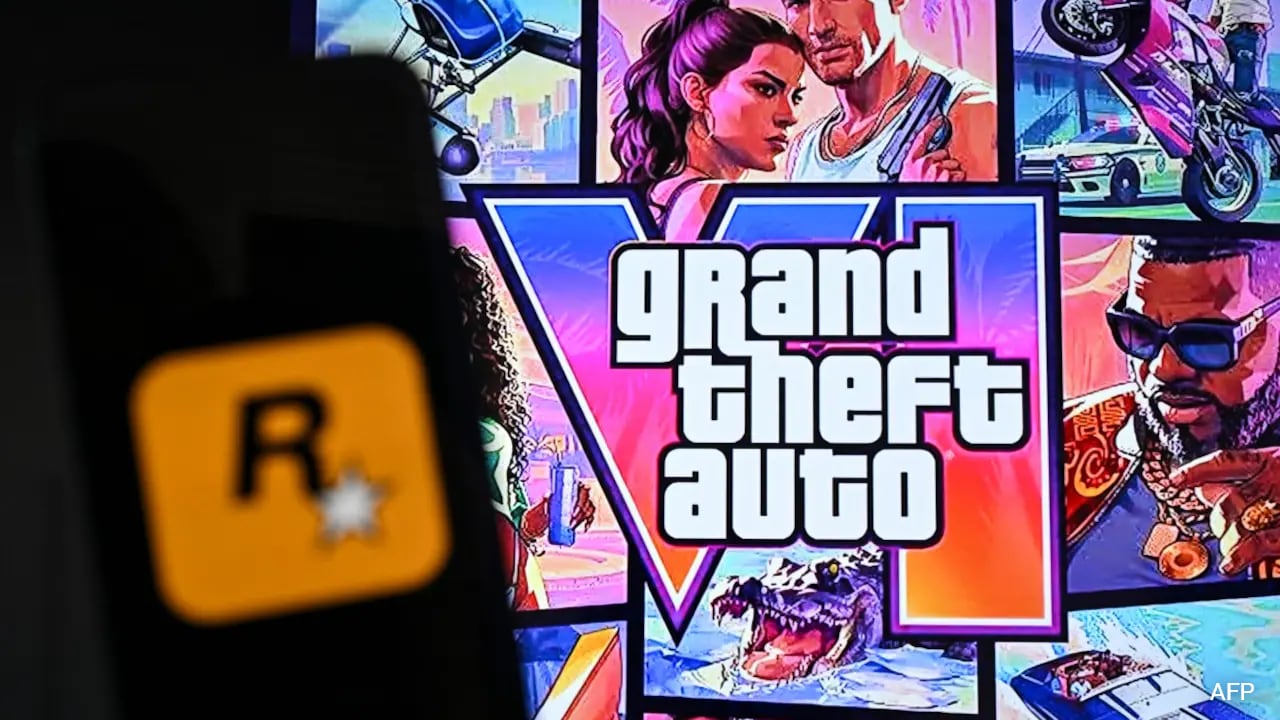
Then came the reality check surrounding Grand Theft Auto VI, and with it, a viral moment of internet mockery that struck a nerve far deeper than a simple joke ought to have. When popular content creator TheBurntPeanut publicly ridiculed the prospect of GTA VI locking console players into a 30 FPS ceiling without a 60 FPS performance mode, the clip ricocheted across social feeds within hours. On the surface, it looked like standard-issue gamer banter—a streamer poking fun at console limitations while PC enthusiasts chuckled from the sidelines.
Beneath the laughter, however, sat a quiet, unmistakable dread. Millions of people who had waited over a decade for Rockstar Games to return to Leonida were suddenly confronting an uncomfortable truth: the most anticipated entertainment release in modern history might feel noticeably heavier, slower, and less responsive than almost every other major game sitting on their hard drives.
The Anatomy of a Frame
To understand why a single number can spark an existential crisis in a living room, you have to strip away the spec-sheet jargon and look at what a frame rate actually does to human perception.
Think of a video game not as a continuous movie, but as a stack of flipbook drawings being thumbed through by an invisible hand. At 60 FPS, that hand flips sixty pages every single second; each drawing stays on screen for just 16.6 milliseconds before the next one replaces it. At 30 FPS, the hand slows down by half, holding every drawing in front of your eyes for 33.3 milliseconds.
Sixteen milliseconds sounds trivial. You cannot snap your fingers that fast, nor can you consciously measure a hundredth of a second on a stopwatch. Yet the human visual cortex and motor system operate on razor-thin timing loops. When you push an analog stick to aim a weapon or feather the brakes on a sports car hurtling toward a hairpin turn, your fingers expect the screen to answer immediately. At 60 FPS, the conversation between your thumb and the television feels instantaneous, almost telepathic. At 30 FPS, an invisible rubber band stretches between your intention and the character's movement. You push left; the world hesitates for a fraction of an eyeblink; the camera lurches forward.
I remember the exact afternoon this reality stopped being theoretical for me. Years ago, after spending months playing fast-paced shooters and action titles at a locked sixty frames, I booted up a critically acclaimed open-world release that offered no performance mode on console. Within ten minutes, my eyes felt strangely fatigued. Every time I rotated the camera to scan a skyline, buildings smeared into a rhythmic, juddering blur. My thumbs overcorrected on every turn because the visual feedback arrived a heartbeat late. Nothing about the game's writing, art direction, or music had changed, yet the physical joy of inhabiting that world had been dulled, as if someone had smeared a thin layer of vaseline over a master painting and asked me to admire the brushwork.
A Hypothetical Living Room in November
Consider a hypothetical player—let's call him Marcus—who represents millions of ordinary console owners. Marcus is not a hardware engineer, nor does he spend his evenings debating teraflops on internet forums. He works a forty-five-hour week, saves money carefully, and bought his console specifically because he wanted a plug-and-play box that would carry him seamlessly through the biggest cultural events of the decade.
For the past four years, Marcus has played Call of Duty, Spider-Man, Fortnite, and Gran Turismo at sixty frames per second or higher. His muscle memory has quietly recalibrated. He no longer thinks about frame rates any more than a driver thinks about power steering; he simply expects the car to turn the instant he moves his hands.
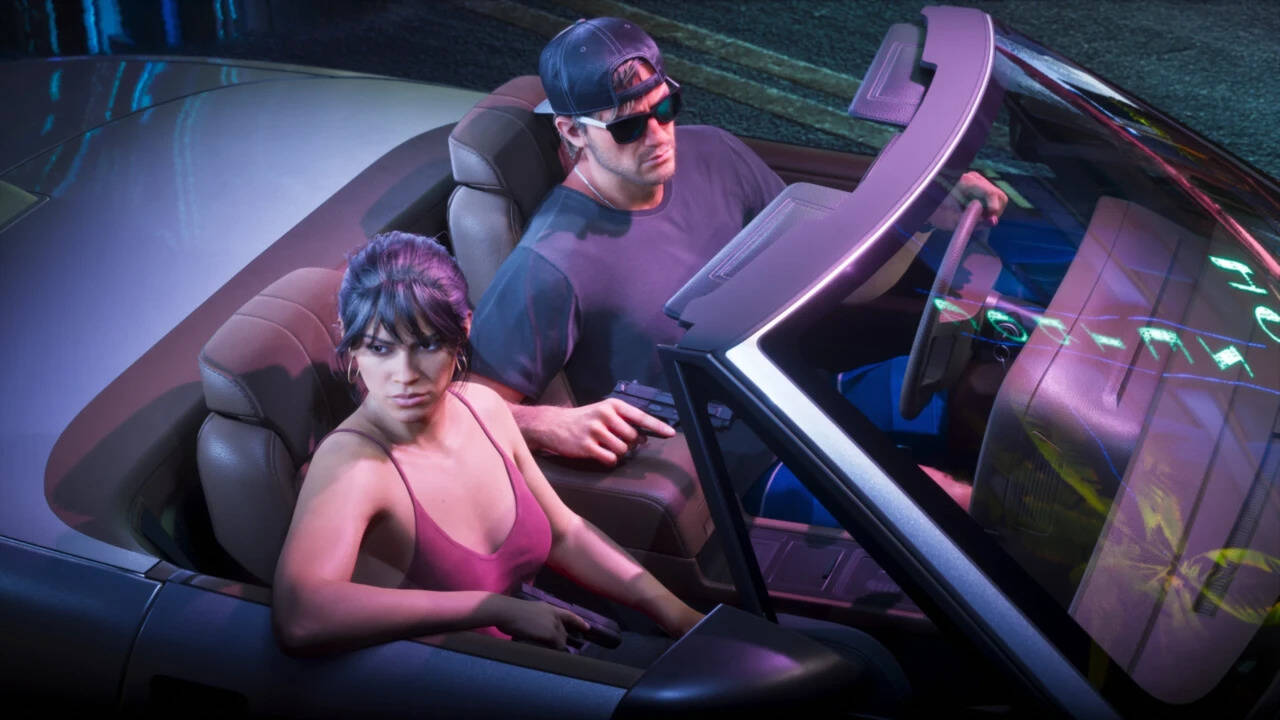
Now picture Marcus on launch night for GTA VI. He has cleared his weekend, ordered food, and watched the opening credits roll across a breathtaking, sun-bleached vista of Vice City. The lighting is extraordinary—sunbeams refract through humid coastal air, hundreds of pedestrians react dynamically to passing traffic, and distant palm trees sway in individual wind currents.
Then Marcus takes control of the stick.
The camera pans across the boulevard, and the judder hits him immediately. He pauses the game, navigates to the display settings, and searches for the toggle he has come to rely on in nearly every modern release: Performance Mode. It is not there. There is no option to lower the resolution to 1080p in exchange for smoother motion, no toggle to dial back ray-traced reflections to free up headroom. There is only one setting, locked firmly at thirty frames per second.
Marcus does not immediately turn off his console in a rage. Instead, he sits back into his couch with a faint, sinking feeling of betrayal. TheBurntPeanut's mockery suddenly plays back in his head, no longer sounding like mean-spirited trolling, but like an uncomfortable prophecy. Marcus spent five hundred dollars on next-generation hardware, yet he is staring at the exact same frame-pacing cadence he experienced on a PlayStation 3 in 2013.
Why Rockstar Always Chooses Gravity Over Speed
If the frustration of players like Marcus is real, the engineering reality inside Rockstar Games is equally unforgiving—and far more complicated than "developers being lazy."
To understand why a studio with virtually unlimited resources would ship its flagship title at 30 FPS on consoles, you have to understand how a game engine budgets its time. Every frame a console renders is a race against a strict deadline. If a game targets 60 FPS, the console's processor and graphics chip have just 16.6 milliseconds to calculate physics, run artificial intelligence for hundreds of nearby citizens, simulate traffic patterns, stream textures off the solid-state drive, bounce virtual light rays off puddles, and draw the final image on your screen. Miss that 16.6-millisecond deadline by even a hair, and the frame stutters.
Most modern games hit 60 FPS by keeping their worlds relatively static beneath the surface. Buildings are hollow shells; crowds follow simple, predictable loops; objects rarely interact with one another in complex chain reactions. When a player toggles on a "Performance Mode" in those titles, the console simply lowers the pixel count or turns down shadow quality, freeing the graphics card to draw frames twice as fast.
Rockstar builds games according to an entirely different philosophy, one rooted in simulation density rather than visual minimalism. In a Grand Theft Auto world, the bottleneck is rarely just the graphics card drawing pretty pixels; it is the central processor—the CPU—juggling thousands of simultaneous cause-and-effect calculations every fraction of a second.
Imagine trying to cook a twelve-course banquet in a tiny kitchen. Lowering the resolution of a game is like serving the food on smaller plates; it saves a little counter space, so you can plate dishes faster. In GTA VI, however, the bottleneck is the stove itself. The CPU is simultaneously simulating police dispatch logic, vehicle deformation physics, dynamic weather systems, wildlife ecosystems, crowd conversations, and persistent world states stretching miles into the horizon. You cannot turn down the resolution of artificial intelligence, and you cannot easily toggle off physics without breaking the very sandbox that makes Grand Theft Auto feel alive.
Historically, Rockstar has never prioritized sixty frames per second on launch hardware. Grand Theft Auto IV struggled to hold thirty frames on the Xbox 360 and PlayStation 3. Grand Theft Auto V launched at 30 FPS in 2013, stayed at 30 FPS when it was remastered for the PlayStation 4 and Xbox One in 2014, and did not offer a native 60 FPS console mode until 2022—nearly nine years after its original debut. Red Dead Redemption 2, widely hailed as one of the greatest technical achievements in console history, remains locked to 30 FPS on consoles even today.
Rockstar's calculus has always been ruthless and consistent: push the current generation's CPU to its absolute breaking point to create a living world nobody else can match, accept 30 FPS as the price of admission, and let future hardware generations—and the eventual PC release—unlock higher frame rates years later.
The Split-Screen Divide in Gaming Culture
This history explains the technical decision, yet it does little to soothe the emotional friction tearing through the gaming community. That friction is fueled by a widening cultural divide between two fundamentally different ways of experiencing games.
On one side sits the PC ecosystem, championed by creators like TheBurntPeanut, where frame rates of 120, 144, or even 240 FPS have become routine. For players accustomed to high-refresh-rate monitors and mouse-and-keyboard precision, dropping back to 30 FPS feels akin to watching a slideshow. Their mockery, while often theatrical for clicks and engagement, stems from a genuine sensory shock: once your eyes adapt to ultra-smooth motion, going backward feels broken.
On the other side sits the massive, mainstream console audience—tens of millions of people who simply want to experience the story, explore the map, and share cultural moments with friends without spending two thousand dollars on a graphics card. Many of these players will adapt to a locked 30 FPS within an hour or two, especially if Rockstar implements rock-solid frame pacing and subtle motion blur to mask the judder. Human perception is remarkably elastic; given enough time without a side-by-side comparison, the brain stops noticing the gap between frames and sinks back into the illusion of the world.
Yet a third group is caught squarely in the middle: the console enthusiasts who tasted 60 FPS over the past five years and genuinely cannot unsee the difference. For them, GTA VI represents an agonizing trade-off. They do not want to wait an extra year or two—while spoilers flood every corner of the internet—for a delayed PC version. Neither do they want to buy a mid-generation console refresh like a PlayStation 5 Pro only to discover that even upgraded hardware cannot overcome a CPU bottleneck to hit sixty frames.
What Actually Matters When the Lights Go Down
There is an uncomfortable vulnerability in admitting that a technical metric can threaten your excitement for a piece of art. Nobody wants to sound like a pedantic snob complaining about milliseconds while staring at a digital sunset that took thousands of artists years to craft. Yet dismissing frame rate as mere nerd trivia ignores how deeply physical feel shapes emotional immersion.
Think about the difference between reading a gripping novel on crisp paper versus squinting at blurry, smudged ink under a flickering fluorescent bulb. The story printed on the page is identical, and the author's genius remains intact, yet the friction of the medium constantly interrupts your surrender to the narrative. Frame rate is the paper and ink of interactive storytelling. When it flows effortlessly, the controller disappears in your hands, and you stop pressing buttons; you simply inhabit the character. When it stutters, the plastic controller reminds you, thirty times every second, that you are merely operating a machine.
Can a masterpiece survive at thirty frames per second? History says yes. The Legend of Zelda: Tears of the Kingdom, Bloodborne, and Red Dead Redemption 2 all captivated millions despite strict 30 FPS ceilings, proving that world-building, atmosphere, and mechanical depth can outweigh raw fluidity. If Rockstar delivers an unbroken, perfectly paced thirty frames without erratic dips during chaotic police chases or crowded nightclub scenes, most players will eventually settle into the rhythm and lose themselves in Vice City's neon sprawl.
Still, the sting of TheBurntPeanut's joke lingers because it exposes a quiet broken promise at the heart of modern console marketing. Players were told that compromises were behind them, that power and fluidity had finally merged into a single, effortless standard. Instead, as games grow more ambitious, the old tension between beauty and responsiveness has returned, sharper than ever.
When GTA VI finally arrives, millions of controllers will click to life in darkened living rooms across the globe, and for the first thirty seconds, eyes will narrow at the familiar, rhythmic judder of thirty frames per second—a reminder that even in the richest, most realistic virtual city ever built, the future still moves at half speed.