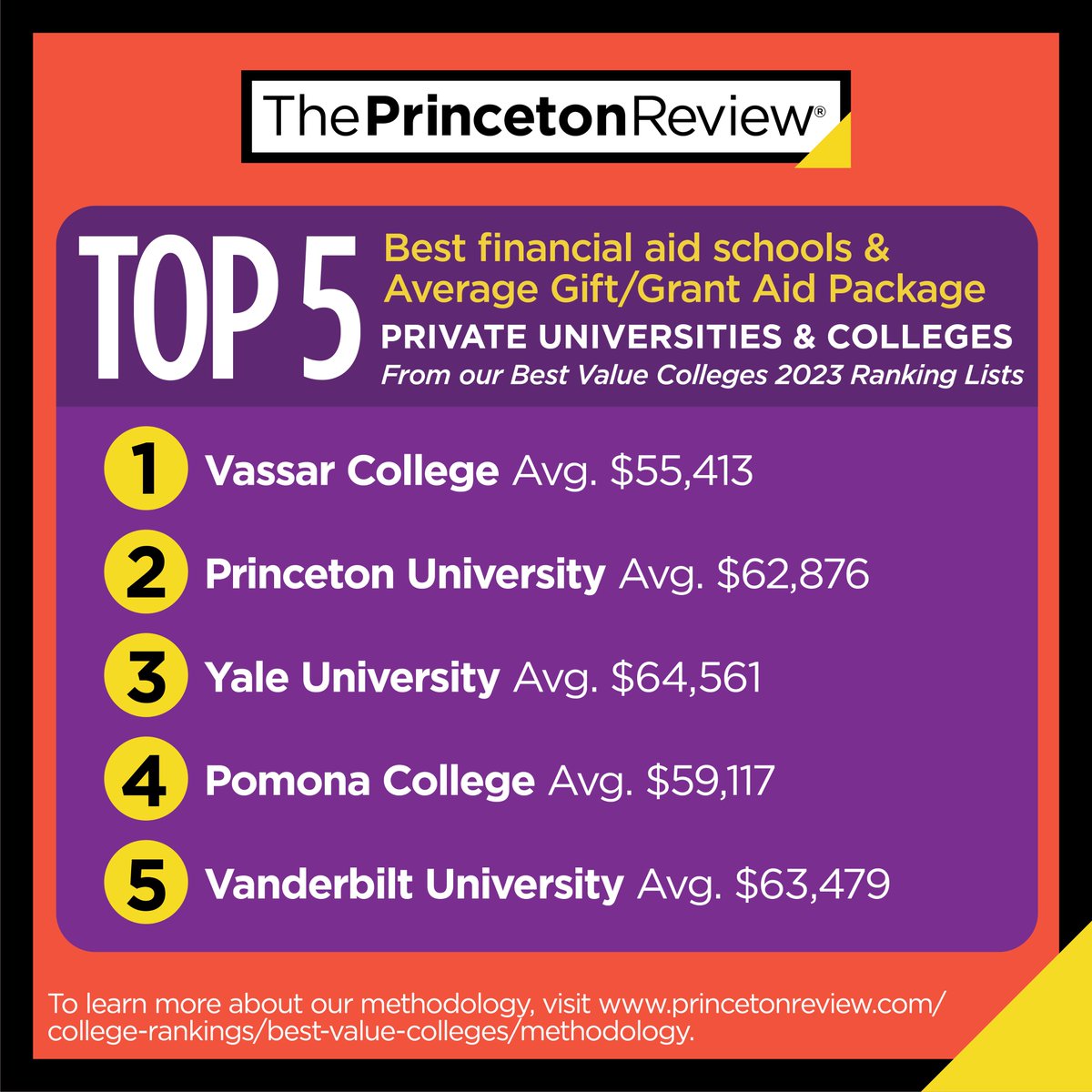
Every single year, publications regurgitate the Princeton Review financial aid list like clockwork. They point to institutions like Princeton, Harvard, and Washington and Lee, gushing over ninety-thousand-dollar sticker prices slashed down to manageable net costs for low-income families. Parents weep tears of gratitude. High school counselors tape the charts to their office walls.
It is a complete mirage.
I have watched middle-class families blow thousands on college consultants, chase these exact rankings, and end up staring down crushing twenty-thousand-dollar annual bills they never saw coming. The lazy consensus tells you that a high ranking on a financial aid honor roll means the school is a charity worker handing out golden tickets.
The reality is far more clinical. The Princeton Review does not measure objective affordability. They measure student satisfaction with the aid they received, filtered through a subjective survey. If you admit an elite pool of students whose families are thrilled to pay thirty grand instead of ninety, your satisfaction scores go through the roof. That is not philanthropy. That is marketing.
Let us dismantle the core mechanics of how elite higher education prices its product, why these lists distort reality, and how you should actually evaluate the true cost of a degree.
The Flawed Metric of Student Satisfaction
Let us define what these lists actually track. The Princeton Review surveys undergraduates and asks how happy they are with their financial aid packages.
Imagine a scenario where a family makes two hundred thousand dollars a year. They apply to a top-tier liberal arts college with a ninety-thousand-dollar sticker price. The financial aid office looks at their assets, runs an institutional methodology formula, and hands down a merit-free, need-based grant of ten thousand dollars. The family feels a momentary wave of relief because the school "helped." Their kid fills out the survey saying the financial aid is great.
Multiply that illusion by thousands of students.
That is how a school with a sub-six percent acceptance rate lands on a financial aid honor roll. They are not making college universally affordable for the working class. They are throwing small bones to upper-middle-class families to keep enrollment yields high and institutional prestige intact.
When you look at the raw data, the schools topping these lists—Amherst, Princeton, Washington and Lee—are elite fortresses with multi-billion-dollar endowments. They can afford to meet 100% of demonstrated need, but "demonstrated need" is a calculation controlled entirely by the institution. They decide what you can afford to pay, not you. And their algorithms are ruthlessly efficient at extracting every last disposable dollar from your household savings account before they ever hand over a single institutional dime.
The Net Price Illusion and the Middle-Class Trap
The biggest misconception in higher education is that sticker price matters. It does not. Almost nobody pays the sticker price except full-pay families who treat an elite tuition bill like a luxury car purchase.
Yet, families earning between one hundred thousand and two hundred fifty thousand dollars fall straight into the middle-class trap. You make too much money to qualify for meaningful need-based aid at these elite institutions, but you make far too little to casually drop thirty or forty thousand dollars a year out of pocket without completely annihilating your retirement plans.
Look at the actual average out-of-pocket costs published alongside these rankings. Schools touted for their generous packages still leave families holding a twenty to thirty-thousand-dollar annual bill. Over four years, with tuition inflation running hot, that bill balloons.
+------------------------+-------------------+----------------------+
| Institution            | Sticker Price     | Average Out-of-Pocket|
+------------------------+-------------------+----------------------+
| Washington and Lee     | $86,730           | $19,510|
| Washington University  | $92,932           | $22,325|
| Reed College           | $89,843           | $37,461|
| Lafayette College      | $87,318           | $37,715|
+------------------------+-------------------+----------------------+
Notice a pattern? Even on the best financial aid lists in the country, you are often paying the price of a brand-new economy car every single year just for the privilege of your kid sitting in a lecture hall.
The Merit Aid Factor They Refuse to Discuss
The Princeton Review rankings heavily favor institutional wealth and elite private universities that rely strictly on need-based aid. They actively look down upon—or entirely ignore—schools that use merit aid to buy top-tier talent.
This is where the mainstream financial aid narrative completely breaks down. If your household income disqualifies you from need-based aid, chasing a "top financial aid school" is a complete waste of time. You need to look at institutions that hand out aggressive merit scholarships.
Second-tier and regional universities routinely offer full-tuition or half-tuition merit discounts to students who land in the top ten percent of their applicant pool. A brilliant student who gets zero financial aid from an Ivy League institution might get a free ride plus a stipend at a reputable state flagship or a solid regional private university.
Which option is better for your net worth? Paying twenty grand a year to say your child goes to a Princeton Review darling, or paying zero dollars because your child leveraged their academic achievements at a less culturally obsessed institution?
The prestige economy relies on keeping families fixated on brand names rather than return on investment.
How to Calculate Your True Cost Before You Apply
Stop looking at honor rolls. They measure student happiness, not financial logic. If you want to cut through the marketing spin of higher education, run your own numbers using concrete strategies.
- Run the Net Price Calculator first: Federal law mandates that every college host a net price calculator on its website. Do not trust general rankings; plug your exact tax data into the specific school's tool before letting your child fall in love with the campus.
- Evaluate asset protection formulas: Institutional methodology calculators (used by CSS Profile schools) look deeply at home equity, non-custodial parent assets, and small business values. If you own a small business or a home, "generous" schools will often price you out using your illiquid assets.
- Target schools where your student is an outlier: If your student’s GPA and test scores place them in the top five percent of an incoming class, you stop chasing need-based aid lists and start hunting for institutional merit awards. Schools discount their price tags to attract students who elevate their average academic profile.
The game is rigged to protect the balance sheets of elite endowments while making families feel like they won a prize by receiving a discount on an inflated price. Stop playing by their rules. Look at the net cost, calculate the long-term debt, and remember that a college brand name has never once guaranteed a secure financial future.