The click of a plastic dial shouldn’t feel like a high-stakes gamble.
Yet, for months, millions of households across Tokyo approached their utility meters with the kind of quiet dread usually reserved for medical diagnoses. You step into a cramped kitchen after a ten-hour shift. The air is freezing. You want nothing more than to click the heater on, to feel that artificial wave of warmth thaw your fingers. But you hesitate. You calculate. Every minute the unit hums is a yen deducted from a shrinking grocery budget.
Then, the bills arrived, and they didn't crush you. Not quite.
To understand why Japan's economy currently looks so remarkably stable on paper, you have to look past the sterile spreadsheets of central bankers and sit, for a moment, at a kitchen table in the suburbs of Yokohama. The macroeconomic data tells a story of an island nation successfully taming a global beast. Inflation is holding steady. The terrifying spikes that ravaged European and American household budgets over the last few years have, miraculously, flattened out here.
But stability is rarely natural. It is manufactured.
Under Prime Minister Sanae Takaichi, the Japanese government has essentially erected a massive, invisible wall between its citizens and the brutal realities of the global energy market. It is an economic magic trick executed through heavy, aggressive government subsidies. By heavily intervening in the pricing of electricity and gas, the administration has managed to cushion the blow of rising resource costs.
For the average citizen, the result is a strange, suspended animation. The world outside is burning through cash, but inside the convenience stores and apartments of Japan, the air remains affordable.
Let us look at a hypothetical, yet entirely representative, household: the Sato family. Kenji works in logistics; his wife, Yumiko, teaches part-time. They are the bedrock of the Japanese middle class—frugal, hardworking, and deeply sensitive to price shifts. In a normal world, the skyrocketing cost of liquefied natural gas imports would have forced the Satos to make brutal choices. Yumiko would have skipped the fresh produce. Kenji would have walked extra stops to save on train fare.
Instead, their energy bill rose by only a fraction of its true market value.
+------------------------------------+
|   The Mechanics of the Cushion     |
+------------------------------------+
| Global Energy Costs:  [▲▲▲▲▲▲]      |
| Government Subsidies: [▼▼▼▼]        |
| Actual Consumer Bill: [▲▲]         |
+------------------------------------+
This is the tangible reality behind the latest economic reports. The stability everyone is praising isn’t the result of a sudden boom in domestic productivity or a miraculous strengthening of the yen. It is a artificial baseline. The Takaichi administration recognized that inflation in Japan is a psychological monster as much as a financial one. In a country that endured decades of deflation—where prices simply did not change for a generation—a sudden, unchecked surge in the cost of living could paralyze consumer spending entirely. If people get scared, they stop buying. If they stop buying, the economy collapses.
So, the government stepped in to pay the difference.
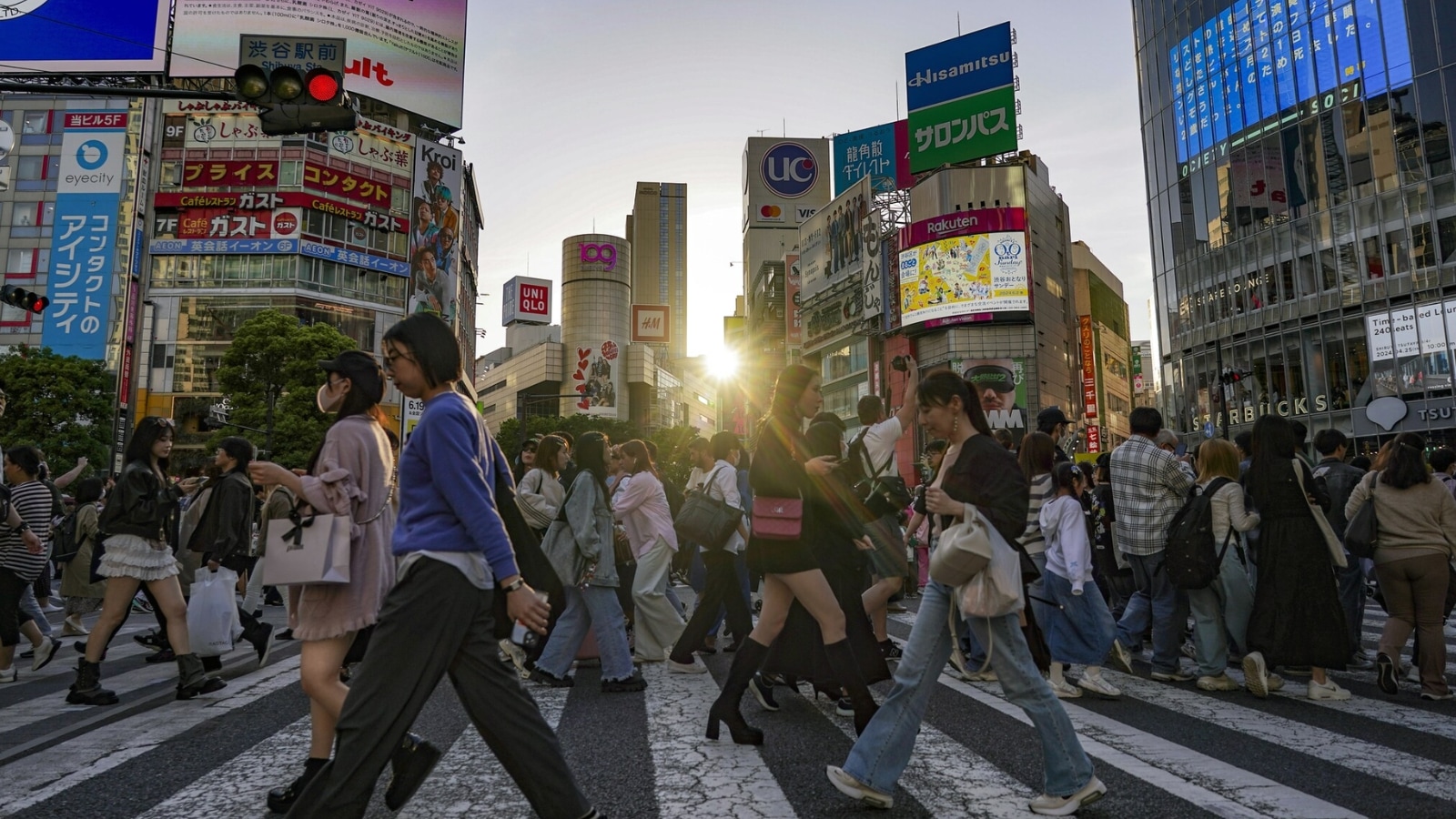
It feels like a victory. Walk down the neon-lit streets of Shinjuku or the quiet residential alleys of Kyoto, and you won’t see the overt signs of economic panic that have gripped other global capitals. The restaurants are reasonably full. The vending machines still hum on every corner. The subsidies have done exactly what they were designed to do: they bought peace of mind.
But any economist worth their salt will tell you that money does not simply vanish. The cost of that cushioned energy bill hasn't disappeared; it has merely been rerouted.
Consider what happens next. The government is absorbing billions of yen in energy costs to keep the public calm. That money is added to a national debt load that is already staggering. It is a massive bet against time. The underlying assumption is that global energy markets will eventually cool down, allowing the government to quietly withdraw the subsidies without anyone noticing the transition.
But what if the markets don't cool down?
What happens when the state can no longer afford to hold up the ceiling?
This is the anxiety that simmers just beneath the surface of Japan’s flat inflation numbers. It is the realization that the stability we are experiencing is a rented luxury, not an owned asset. Business owners are caught in the middle of this waiting game. A small bakery owner in Ota Ward might be relieved that his ovens aren't costing him double this month, but he remains hesitant to invest in new equipment or hire extra help. He knows the current prices are an illusion. He knows that the moment the political winds shift, or the budget stretches too thin, the real world will come knocking at his door.
We are living in an era of economic camouflage.
The numbers released by Tokyo’s bureaucrats aren't lying, but they aren't telling the whole truth either. They show a calm sea, ignoring the massive pumps working frantically beneath the surface to keep the ship from taking on water. For now, the pumps are holding. Takaichi’s policy has successfully insulated the public from a harsh global winter, proving that targeted government intervention can indeed master the immediate chaos of a market crisis.
Tonight, the lights will stay on across Tokyo. The heaters will run. Families will sit in warm rooms, eating dinners that cost roughly what they did last year. It is a beautiful, fragile comfort, bought on credit, waiting for the dawn.