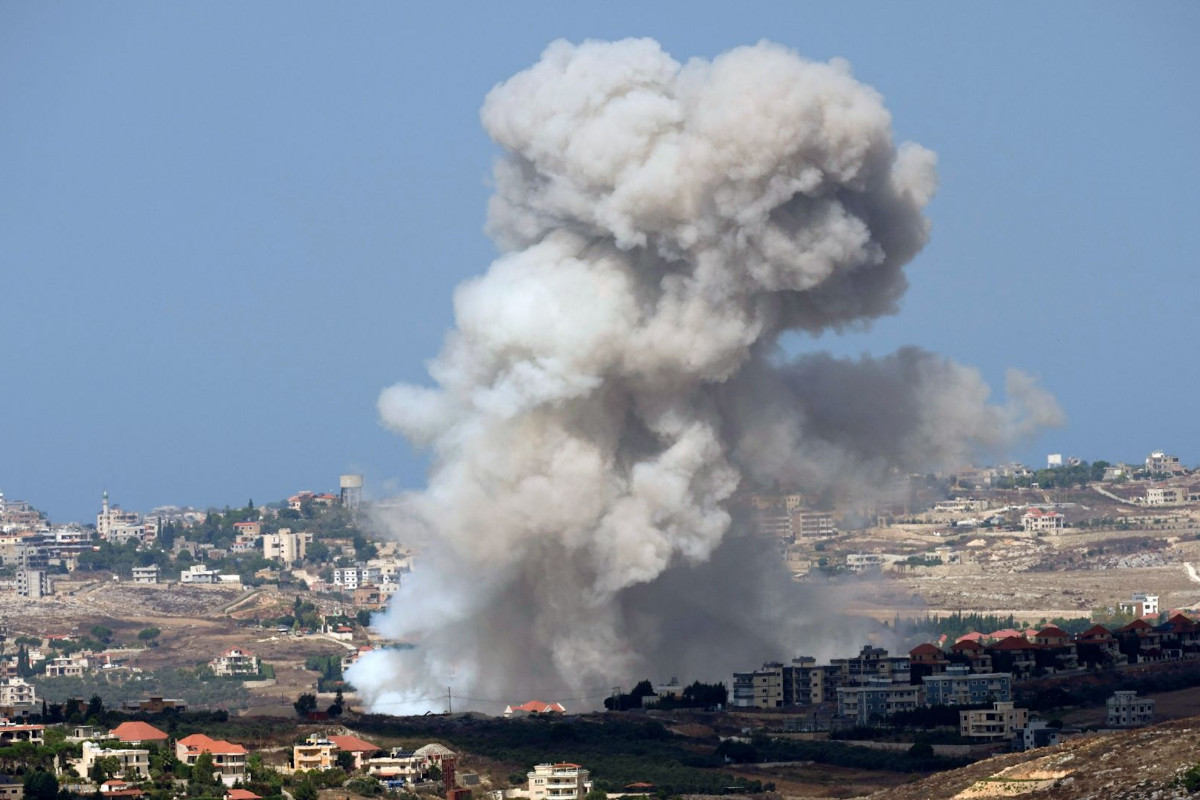
The assumption that a global superpower holds absolute veto power over its heavily dependent security partners breaks down when the partner views the conflict as existential. The recent diplomatic convergence between Washington and Tehran—marked by the signing of the Islamabad Memorandum of Understanding (MoU)—was structured to orchestrate an immediate cessation of hostilities across all regional fronts, specifically including Lebanon. Yet, the subsequent kinetic execution by the Israeli Air Force in the Nabatieh district, resulting in 16 documented civilian fatalities, exposes a fundamental structural mismatch between American diplomatic signaling and Israeli defensive architecture.
To analyze why a client state bypasses the explicit directives of its primary security guarantor, one must look past superficial political rhetoric and examine the structural divergence in their strategic utility functions.
The Divergence of Strategic Utility Functions
An alliance operates efficiently only when both parties share a unified threat assessment and a synchronized timeline. The signing of the Islamabad MoU reveals that the United States and Israel are maximizing entirely different variables.
- The American Variable (Global Balance and De-escalation): For the Trump administration, the primary objective is the mitigation of systemic risks. The 60-day negotiating framework established with Tehran seeks to freeze regional escalations to preserve global maritime trade through the Strait of Hormuz, manage domestic political exposure, and cap energy price volatility. Within this framework, Lebanon is treated as a secondary theater—a transactional variable that can be suppressed to secure a broader diplomatic architecture.
- The Israeli Variable (Tactical Attrition and Local Superiority): For the Israeli military command, the primary objective is the permanent disruption of the northern border's threat profile. The tactical calculation ignores diplomatic timelines in favor of operational security. From this perspective, a premature diplomatic freeze that leaves hostile infrastructure intact along the Litani River represents an unacceptable long-term defense liability.
This creates a structural bottleneck: Washington views the ceasefire as an instrument to prevent a wider multi-front war, while Jerusalem views the immediate continuation of airstrikes as a prerequisite for preventing future cross-border incursions.
The Mechanics of Kinetic Inertia
The strike sequence executed across Nabatieh city, Al-Sharqiyah, Harouf, and Kfar Sir demonstrates that tactical military planning possesses its own structural momentum, often insulated from high-level diplomatic signatures. This kinetic inertia is driven by three distinct operational calculations:
The Intelligence Expiration Window
Targeting cycles rely on real-time signal and human intelligence that degrade rapidly over time. When deep-theater reconnaissance identifies actionable nodes—such as the operational cell targeted on the motorcycle near the Doueir municipality—the military apparatus operates on a "use or lose" protocol. Diplomatic agreements signed in distant capitals do not alter the expiration rate of tactical battlefield data.
The Security Zone Pre-Condition
The Israeli political leadership has maintained that its forces will enforce a strict security zone within southern Lebanese territory. To render this zone operationally viable, the military must clear adjacent staging areas. The bombardment of Nabatieh and the Rayhan heights is designed to systematically denude the geographical approaches to this security buffer, ensuring that any subsequent monitoring mechanisms begin from a position of absolute geographic advantage.
Asymmetric Leverage and Attrition Capacity
While US administration officials publicly remind partners of the billions of dollars in defense aid reinforcing their security, the immediate tactical reality on the ground creates a counter-intuitive form of leverage. The client state recognizes that the patron's regional architecture is too deeply intertwined with its survival to allow for an abrupt termination of logistical support during an active campaign. Consequently, the threat of aid reduction loses its immediate deterrence value when contrasted with immediate territorial security objectives.
Operational Realities and Institutional Constraints
The limits of diplomatic enforcement are hardcoded into the text of international agreements. The Islamabad MoU functions as a bilateral framework between a superpower and a regional state actor, yet it attempts to regulate the behavior of third-party state militaries and non-state paramilitary groups. This introduces a structural defect: the agreement lacks a direct enforcement mechanism capable of penalizing local compliance failures without collapsing the core agreement itself.
The current escalation path carries specific structural liabilities. By continuing unilateral air operations in the face of direct executive resistance from Washington, Israel risks accelerating a institutional decoupling within the Pentagon's logistical pipeline. Modern high-intensity campaigns consume precision-guided munitions at a rate that requires continuous, real-time replenishment. While political support may remain steady due to deeply entrenched legislative mechanisms, bureaucratic delays in arms transfer authorizations can quickly constrain local kinetic freedom of action.
The immediate operational theater will be defined by this logistical reality. If the upcoming negotiations in Washington fail to synchronize Israel’s local buffer-zone requirements with the broader 60-day US-Iran framework, the regional architecture will fragment further. The strategic play will not be found in public declarations of alignment, but in the quiet negotiation of operational parameters: specifically, whether Washington will tolerate localized "active defense" operations under the umbrella of a nominal regional ceasefire, or if the friction of this asymmetric alliance will force a fundamental realignment of security dependencies in the Middle East.


