Central bankers don't move markets with interest rate cuts alone. They move them by changing what households and businesses expect tomorrow to look like.
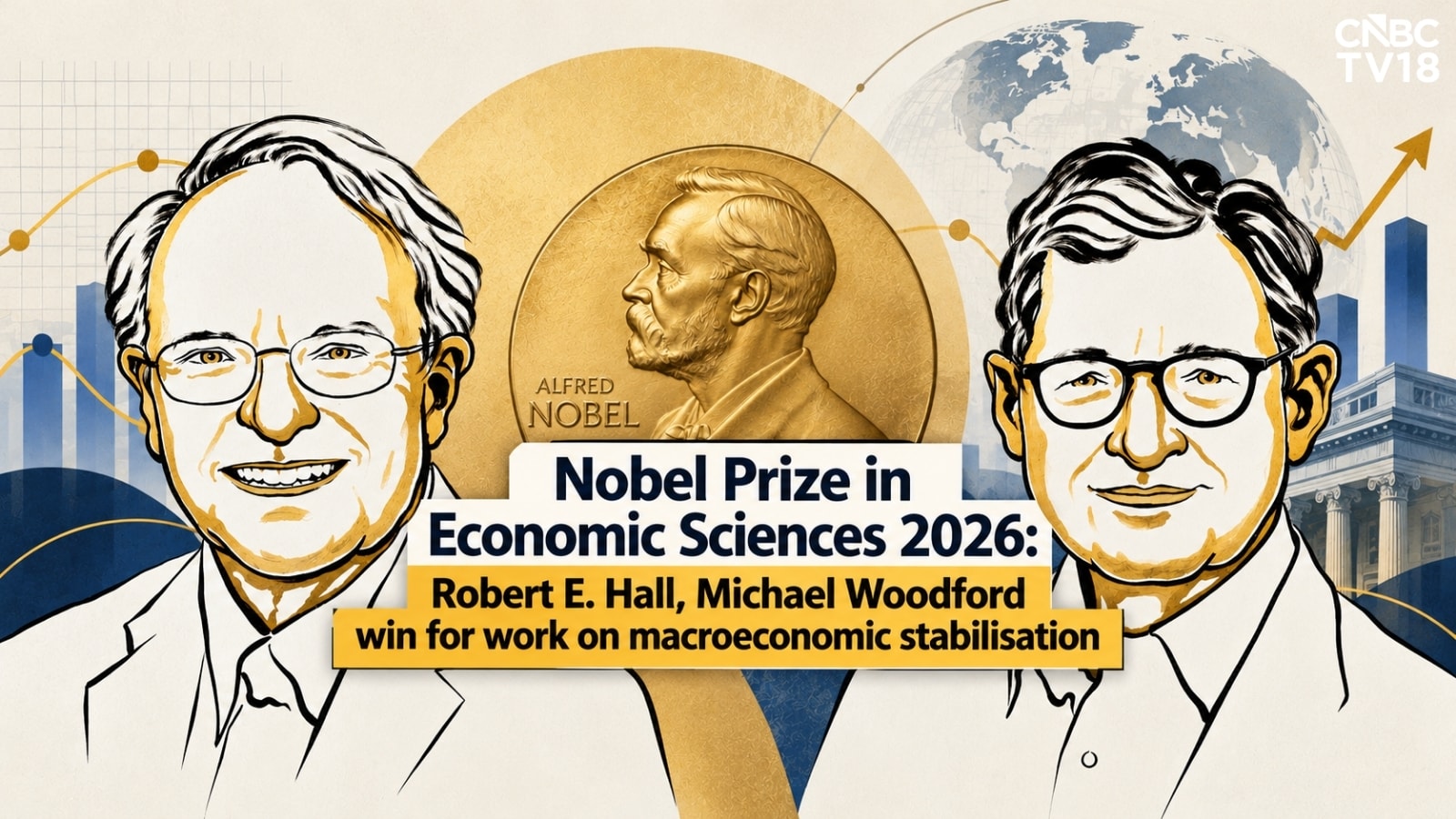
That insight sits right at the heart of the 2026 Sveriges Riksbank Prize in Economic Sciences in Memory of Alfred Nobel, awarded to Robert E. Hall of Stanford University and Michael Woodford of Columbia University for their work on the microeconomic foundations of macroeconomic stabilisation. When the Royal Swedish Academy of Sciences made the announcement on October 12, 2026, it recognized decades of research explaining why economies swing between booms and busts—and what policymakers can actually do to smooth those bumps without blowing up inflation. Read more on a connected subject: this related article.
If you read the headlines, it's easy to think Hall and Woodford simply gave finance ministers a magic playbook for preventing recessions. Not quite. Even committee chair John Hassler noted that their work didn't magically solve stabilization. What it did was rebuild macroeconomic modeling from the ground up, starting with how real people and real firms make messy, forward-looking decisions under uncertainty.
Why Old Stabilization Models Broke Down
Back in the mid-twentieth century, plenty of economists thought managing the business cycle was a matter of tuning aggregate demand. If unemployment crept up, boost spending or cut rates. If inflation heated up, cool things down. Additional journalism by Reuters Business highlights related perspectives on this issue.
Then came the 1970s. High inflation collided with sluggish growth and stubbornly high unemployment. Suddenly, old rules of thumb stopped working. Worse, people realized that when households and businesses anticipate what policymakers are going to do, they adjust their behavior in advance—which can blunt or distort the very policy meant to help them.
Hall and Woodford helped move macroeconomics away from top-down equations that treated "the economy" like a single mechanical dial. Instead, their work pushed the field toward microfoundations: modeling individual households deciding whether to spend or save, and individual firms deciding whether to hire, invest, or hold prices steady.
You see this every day in small ways. Say you hear rumors of layoffs at your company. You don't wait for a pink slip to change your habits. You hold off on buying a new car or booking a big trip. Multiply that caution across millions of households and businesses, and an economy can start slowing before unemployment even spikes.
What Robert Hall Brought to the Table
Born in 1943 and a 1967 MIT PhD, Robert Hall has spent his career at Stanford University digging into how consumption, labor markets, and financial frictions behave when shocks hit.
One of Hall's signature contributions is showing how forward-looking households smooth consumption—and why sudden shifts in consumer spending aren't easily predicted from past data alone. When people treat a pay change or a shock as temporary versus permanent, their spending reacts differently. If you get a one-time bonus, you probably don't double your monthly rent. If you think your long-term earning power just jumped, you might spend more freely.
Hall has also examined how financial crises leave deep scars and why credit conditions matter so much during downturns. Think about big, postponable purchases—cars, appliances, home upgrades. Those are often bought on credit, and families can delay them far more easily than groceries or utilities. When banks tighten lending standards during a downturn, borrowing gets harder right when households and small businesses need breathing room.
In my own experience reading market commentary during rate cycles, people often treat the central bank's policy rate as the whole story of credit. Hall's research reminds us that lending terms, borrower balance sheets, and default risks can squeeze real activity even when headline rates aren't doing all the work.
Michael Woodford and the Power of Expectations
Michael Woodford, born in 1955 with a 1983 MIT PhD and now on the faculty at Columbia University, became a central architect of modern New Keynesian macroeconomics.
Here's the twist that trips people up: in a world where prices and wages don't adjust instantaneously—because of contracts, menu costs, customer relationships, or simple inertia—changes in interest rates and policy expectations affect real output, not just prices.
Woodford showed just how crucial credible policy and expectations are. A central bank can't just say "trust us, everything will be fine" and expect markets to fall in line if its actions contradict its inflation commitment. Credibility has to be earned and backed by coherent rules. If people doubt whether a central bank will keep inflation anchored, uncertainty creeps into expectations and makes stabilization harder.
He has also pushed hard on the link between inflation targeting and financial stability. Keeping inflation expectations steady matters, yet financial excesses can build up even when consumer prices look calm. At the same time, Woodford has warned against treating higher interest rates as a cure-all for every financial risk. Jacking up rates across the board hurts innocent sectors and workers alongside frothy ones, which is why targeted regulation often has to carry part of the load.
Where the Nobel Prize Fits in Modern Economics
The 2026 prize—carrying 12 million Swedish kronor split equally between Hall and Woodford—doesn't sit in a vacuum. It builds directly on decades of macroeconomic debate and sits alongside recent prizes like the 2025 award to Joel Mokyr, Philippe Aghion, and Peter Howitt on innovation-driven growth.
Stabilization and long-run growth are two different beasts. Stabilization is about smoothing the bumps along the road—energy shocks, demand drops, credit crunches—so healthy businesses and workers don't get wiped out by temporary storms. Growth is about how the car gets faster over decades. You need both, and confusing the two leads to sloppy policy arguments.
Honestly, one of the biggest misconceptions about New Keynesian models is that they promise central bankers total control. They don't. Models are maps, not the terrain. They help policymakers weigh trade-offs—between supporting jobs, anchoring inflation, and guarding against financial fragility—when every choice comes with side effects.
Even experts debate how far central banks should stretch their mandates or how much weight to put on credit booms versus consumer inflation. That tension isn't a bug in the research; it's part of why the prize matters. It clarifies where policy can help and where it hits real limits.
Practical Ways to Use This Insight Right Now
You don't need a PhD from MIT to put Hall and Woodford's core lessons to work in your own finances or business planning.
- Watch credit conditions, not just headlines: When reading about rate cuts or hikes, look at bank lending standards, credit spreads, and borrowing costs for the specific loans you actually use.
- Separate temporary windfalls from permanent shifts: Base recurring commitments—like leases, payroll, or long-term subscriptions—on durable cash flow rather than one-off spikes.
- Test your plans against expectation shifts: Ask how your customers, clients, or household budget would behave if people expected a slowdown six months before the official data confirmed it.
- Read primary sources when you want nuance: Check out the Nobel Prize 2026 Economic Sciences press release and coverage from MIT News or Stanford Report to see how economists frame the actual mechanisms behind the headlines.