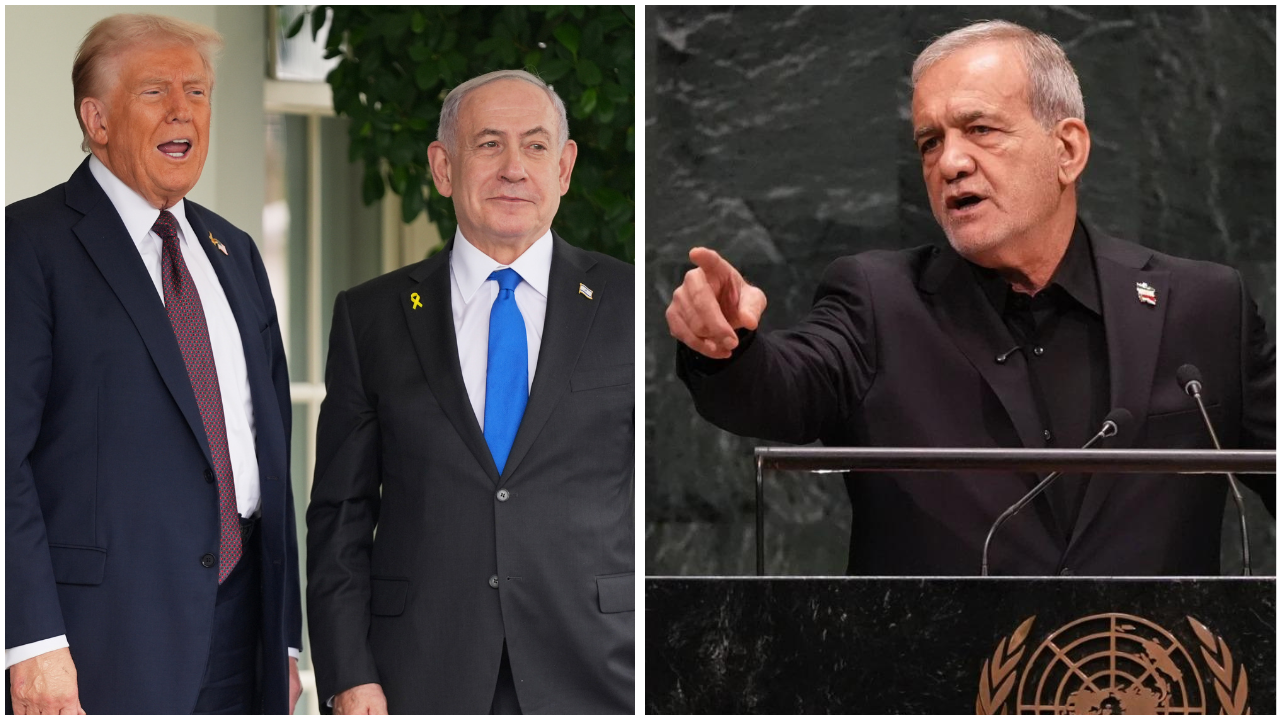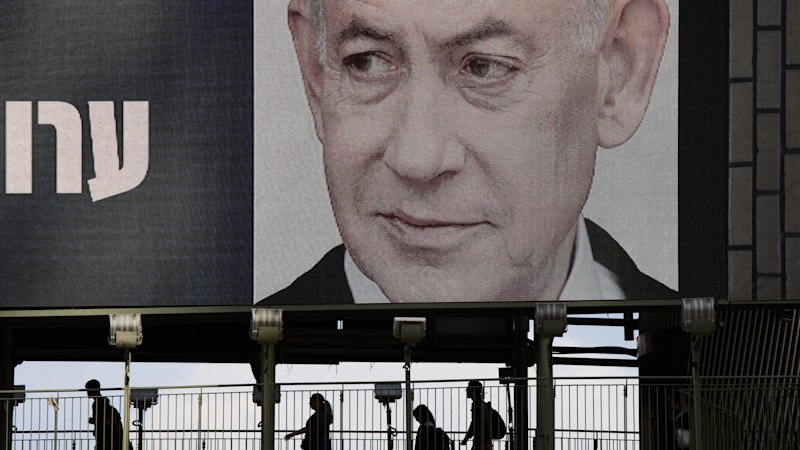
When a veteran politician realizes the exit door leads straight to a courtroom and a state inquiry, normal campaign rules go out the window. That's the core warning behind former Israeli Prime Minister Ehud Barak's blunt comparison of Benjamin Netanyahu to a "wounded animal" fighting desperately to hold onto power.
Let's be honest: headlines love a dramatic metaphor. Calling a prime minister a wounded animal grabs clicks fast. Yet if you only read that phrase as colorful name-calling, you miss the real mechanic driving Israeli politics in late 2026. For Netanyahu, losing the prime ministership isn't just losing a job or a title. It means losing the shield of executive authority while facing a sprawling criminal trial over corruption charges, intense scrutiny over the security failures of October 7, 2023, and mounting international legal pressure. For another view, see: this related article.
Look at where things stand after Israel's October 27, 2026 legislative election. Turnout hit 77.9%, the highest level in decades, and Netanyahu's Likud party dropped to 27 seats—down nine—leaving his governing coalition without a clear parliamentary majority. President Isaac Herzog moved to task opposition leader Gadi Eisenkot with trying to form a new government after a majority of incoming Knesset members recommended Eisenkot over Netanyahu. On paper, Netanyahu looks cornered. In practice, he's still dangerous because a political survivor with no soft landing rarely plays it safe.
http://googleusercontent.com/lmdx_content/BzNVTuIfsOmUfsdHhssblIPztRQKlNWxkioilGxqdWDjWeNSIOfWAjWbsZxTuTmOWnfaMxoWLmEhZWuvxhZatKewhNyxswtlBvMPOfloqCbdEwBwZzqHkKXPsAgHwUzRPvvnJOnYqSY159987 Related insight on this matter has been shared by TIME.
Why Ehud Barak Used That Warning
Barak isn't an outside observer guessing from afar. He served as Israel's prime minister and later as defense minister under Netanyahu, so he knows how high-stakes coalition brinkmanship works from the inside. When he warns that Netanyahu will do whatever it takes to stay in office, he's pointing to a pattern analysts have watched for years: when political survival collides with legal jeopardy, short-term survival instincts tend to crowd out long-term statecraft.
Some commentators argue that "wounded animal" actually undersells the moment. A wounded animal might still have room to retreat into the brush and heal. A leader facing blocked exits, a long-running bribery and fraud prosecution in Jerusalem District Court, and demands for a full state investigation into October 7 sees every political retreat as a personal trap.
That doesn't mean every move Netanyahu makes is purely cynical or divorced from ideology. Supporters of Netanyahu and his right-wing allies reject accusations from critics like Barak and Eisenkot, arguing that opponents exaggerate political motives and that strong leadership is essential during severe regional tensions, including friction with Iran. You can debate how much weight belongs to ideology versus self-preservation. Still, ignoring the legal and political stakes sitting on Netanyahu's desk makes his coalition maneuvers look far more mysterious than they actually are.
What Is Actually on the Line for Netanyahu
If you want to understand why Netanyahu fights so hard to keep a foot in the door, follow the legal calendar alongside the Knesset seat count.
First, there's his criminal case. Indicted in November 2019 on charges including fraud, breach of trust, and accepting bribes across Cases 1000, 2000, and 4000, Netanyahu spent months testifying in his own defense, with cross-examination wrapping up in June 2026 after dozens of hearings. He has consistently denied wrongdoing and called the proceedings politically motivated. Even so, a criminal trial at that scale carries heavy personal, financial, and political weight—especially once you're no longer sitting at the head of the cabinet.
Second, there's accountability for October 7, 2023. For years, critics and opposition figures have pressed for an independent state commission of inquiry into how those intelligence, military, and policy failures happened on Netanyahu's watch. Staying in power—or keeping enough leverage to shape coalition talks and delay unfavorable outcomes—helps a leader control the pace and framing of political reckonings.
Third, regional security and coalition math feed into one another. When security crises flare up—whether along northern borders, in Gaza and the West Bank, or in confrontations involving Iran—political dynamics shift fast. Critics warn that a cornered leader has strong incentives to keep tensions high or try to peel off individual lawmakers to build a blocking or alternative coalition. Supporters counter that security threats are real and external, not invented for domestic theater. Both things can be true at once: threats can be genuine, and a leader under pressure can still exploit them to stay relevant.
How Coalition Math Keeps Netanyahu in the Game
Anyone expecting a clean, immediate exit right after election night hasn't watched Israeli coalition politics closely. Parliamentary systems rarely produce neat endings, and the 2026 election results left a fractured map:
- Likud led all parties with about 20.51% of the vote and 27 seats, down from its pre-election strength.
- Yashar, led by Gadi Eisenkot, finished second with roughly 16.05% and 21 seats, positioning him as the main challenger to assemble a new government.
- Together (Naftali Bennett), the Joint List, The Democrats (Yair Golan), Ra'am, Yisrael Beiteinu, Otzma Yehudit, United Torah Judaism, Shas, and RZP–Zehut all cleared the electoral threshold, carving up the remaining seats.
Because 61 seats are needed for a Knesset majority, neither camp had a simple walk to power. Even when Eisenkot gets the first shot at forming a government, his path isn't automatic. Pulling together a stable majority requires navigating deep policy divides—including questions around ultra-Orthodox military draft exemptions, judicial and institutional disputes, and whether or how Arab parties factor into parliamentary backing.
That friction is oxygen for Netanyahu. As long as coalition negotiations drag or hit snags, Netanyahu remains an active player—courting defectors, pressuring religious or nationalist partners, or waiting to see if talks collapse and push the country toward another election cycle. In politics, survival often looks less like winning outright and more like refusing to disappear while everyone else argues over the terms.
Common Mistakes People Make Reading This Story
When people follow fast-moving Israeli political news from afar, three misreadings pop up all the time:
- Treating an election result as the final verdict. In a multi-party proportional system, election day sets the starting blocks rather than crossing the finish line. Coalition bargaining is where majorities actually get built—or fall apart.
- Assuming opposition unity equals a finished coalition. Parties that agree on removing Netanyahu don't automatically agree on domestic policy, religious-secular compromises, or parliamentary support arrangements.
- Viewing Netanyahu as a spent force too early. Plenty of observers have written Netanyahu's political obituary over the past decade, only to watch him outlast rivals through sheer tactical endurance. Underestimating a seasoned survivor is a classic mistake.
Practical Ways to Track What Happens Next
If you're following this story and want real signal instead of noise over the coming weeks, focus on concrete indicators:
- Watch mandate deadlines and defections: Pay attention to how many Knesset members actually back Eisenkot versus Netanyahu during coalition talks, and whether any individual lawmakers break ranks.
- Track religious and draft negotiations: Watch ultra-Orthodox factions like Shas and United Torah Judaism closely; their red lines on military conscription and state funding frequently make or break coalitions.
- Separate rhetoric from legal milestones: Keep an eye on court filings, inquiry developments, and official government transitions rather than relying solely on cable-TV metaphors or partisan attacks.
Power rarely leaves quietly when the stakes are personal as well as political. Watching how Netanyahu tests every crack in the coalition map tells you far more about the next chapter than any single headline ever could.
Netanyahu is like a wounded animal... Could he repeat the Yitzhak Rabin scenario?
This video clip is relevant because it captures post-election debate around Netanyahu's political cornering and warnings from Israeli political figures about the stakes of the coalition struggle.