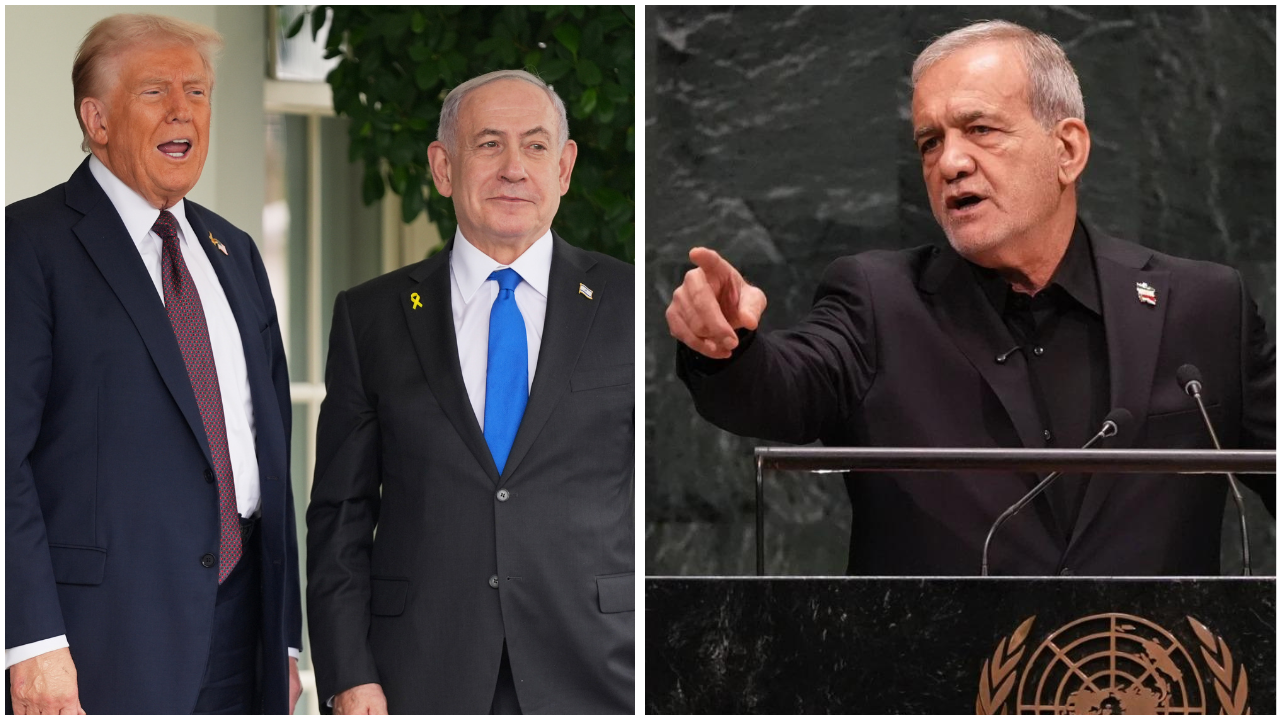
Washington and Jerusalem are weighing fresh strikes on Iran after nearly nine months of grinding war, while Tehran threatens to unveil a mysterious weapon dubbed the "Father of All Bombs". That headline sounds like a clean two-sided standoff. In reality, it is a collision of domestic political desperation, fragile ceasefires, and psychological posturing across the Persian Gulf.
I have covered Middle East security crises long enough to spot a distraction when one is waved in front of the cameras. When military spokesmen start talking about secret super-weapons while politicians argue over coalition survival and election postmortems, you have to look at who actually needs an escalation—and who cannot afford one.
Why Fresh Strikes Are Back on the Table
The war that began on February 28, 2026, when the United States and Israel launched joint strikes on Iran, has already reshaped regional security and global energy markets. Fighting has waxed and waned through fragile pauses, blockades in the Strait of Hormuz, and tit-for-tat exchanges across the Gulf.
Now, Israeli Prime Minister Benjamin Netanyahu is pressing Washington to join a renewed multi-day campaign of strikes against Iran. Reports point to intelligence assessments raising alarms over Iran's efforts to rebuild missile and drone capabilities, alongside potential work on chemical or biological programs.
Look closely at the timing, though. Netanyahu's government lost its governing majority in late October's legislative election, and political analysts in Israel have argued he is leaning on security threats to complicate coalition formation and push for a national emergency government. Politics and war planning rarely stay in separate rooms.
Meanwhile, Washington is hardly united on the merits of another big push. In early November, Republicans lost control of Congress in midterm elections widely viewed as a public backlash against the war's economic fallout and fuel-price shock. President Donald Trump has kept military options open and sent naval reinforcements back toward the region, yet he has also signaled he is in no rush to decide before a new Congress takes office in January.
Even inside Israel's own defense establishment, there is friction. Reports indicate Israeli Chief of Staff Eyal Zamir has urged caution, viewing the threat from Iran as real rather than immediate and warning of prolonged ballistic missile and drone fire on the Israeli home front.
The "Father of All Bombs" Threat Under a Magnifying Glass
Whenever a conflict stalls, information warfare speeds up. In late October, Islamic Revolutionary Guard Corps spokesman Hossein Mohebi announced that Iran was preparing to unveil a weapon described as the "Father of All Bombs," framing it as part of an offensive and asymmetrical shift alongside claims that Iran's missile stockpile had grown 1.5-fold since the June 2025 twelve-day war.
What does that phrase actually mean? In military history, "Father of All Bombs" is most famously associated with Russia's 2007 Aviation Thermobaric Bomb of Increased Power (FOAB), a massive fuel-air explosive claimed to exceed the blast yield of the U.S. MOAB—though independent analysts have long debated exact claims around its test.
Tehran's announcement offered no verified specifications on payload, delivery platform, or readiness. It did not even clarify whether the phrase pointed to a literal munition or a broader slogan of defiance.
That vagueness is the point. A bomb requires an aircraft or delivery system that can survive modern air defenses and reach its target. Threatening a mysterious super-weapon costs very little on a podium, forces adversaries to spend intelligence cycles chasing rumors, and projects strength to domestic audiences while the war drags on.
When an arsenal's headline is a nickname rather than a verified capability, deterrence theater is doing most of the heavy lifting.
What Air Defenses and Geography Really Change
A hypothetical example helps show why big bomb claims look different on a map than on television. Suppose an adversary builds an ultra-heavy unguided or gravity-dropped munition intended for massive blast effect. To drop it, a heavy bomber or transport aircraft has to get close enough to release it accurately—right into the teeth of layered radar, fighters, and surface-to-air interceptors.
Even if Iran has replenished and expanded ballistic missile inventories such as the Kheibar Shekan, missile volume and precision delivery are two different problems. Stockpiles matter most when paired with survivable launchers, intact command-and-control links, and targets that justify burning high-end munitions.
Iran's real leverage in any renewed escalation lies less in a single "super-bomb" and more in horizontal escalation. Iranian officials and IRGC figures have warned that a new round of attacks could widen beyond previous boundaries—threatening Gulf energy infrastructure, U.S. installations in Bahrain and Kuwait, bases in Europe, and undersea cables, alongside continued choke-point pressure around the Strait of Hormuz.
For Persian Gulf states, Turkey, and Pakistan, that prospect is a nightmare. Regional capitals have been working diplomatic channels to head off a full-scale resumption of hostilities because they sit directly inside the blast radius of economic and military spillover.
Overlooked Factors Driving the Standoff
Most coverage treats this crisis as a simple countdown to either a massive airstrike package or a dramatic new Iranian weapon. Three quieter pressures are shaping the outcome just as much.
- Energy and inflation fatigue: Disruptions tied to the Strait of Hormuz have already rattled global fuel supplies and household costs. Another major spike in oil prices carries immediate political punishment in Washington and economic strain across Asia and Europe.
- Negotiation deadlocks and blockades: Weeks of indirect diplomacy have struggled over core sticking points while maritime blockades and counter-strikes keep pressure high. Neither side has found a face-saving exit that satisfies hardliners at home.
- Internal strain inside Tehran: Beyond external strikes, Iran's leadership faces deep domestic fractures and economic isolation. Projecting an image of unstoppable offensive power is aimed partly at keeping internal order and deterring unrest.
| Pressure Point | Washington & Jerusalem | Tehran & Regional Neighbors |
|---|---|---|
| Primary Leverage | Airpower, naval blockades, intelligence, and regional basing | Ballistic missiles, drones, Strait of Hormuz pressure, regional proxies |
| Main Constraint | Electoral backlash, coalition politics, fear of prolonged retaliation | Economic strain, damaged infrastructure, risk of wider coalition war |
| Signal to Watch | Whether naval deployments turn into sustained strike sorties | Whether rhetoric stays theatrical or expands attacks across the Gulf |
Gray Areas Nobody Can Spin Away
Intelligence on clandestine weapons programs is notoriously messy. Officials can disagree—even inside the same government—over whether intelligence shows an imminent breakout or an early-stage effort. Rushing into strikes based on contested assessments risks repeating past mistakes; waiting too long risks letting an adversary harden sites or rebuild stocks.
Diplomacy carries its own traps. Past pauses and talks have collapsed into renewed blockades and strikes, leaving skepticism high on every side. No single move guarantees stability when trust is nonexistent and domestic incentives reward toughness over compromise.
Watch the shipping lanes, the Gulf capitals, and the calendar between now and January. Those quiet indicators will tell you far more than any nickname for a bomb.