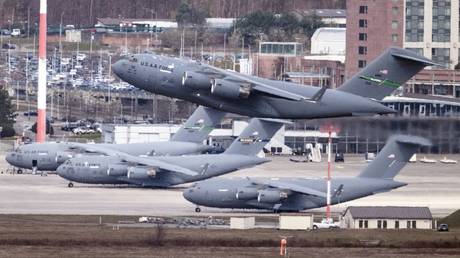
Reporting on troop and diplomatic drawdowns in the Middle East treats force movement as a binary signal of retreat or imminent attack, missing the underlying tradeoff between concentrated vulnerability and distributed survivability. When military and diplomatic footprints shift across the Persian Gulf and Levant amid active hostilities involving Iran and regional actors, surface-level headlines obscure how commanders and diplomats actually price risk.
Breaking down the logic behind reported base reductions and embassy departures—including movements linked to locations in Jordan, Qatar, Kuwait, and Saudi Arabia amid ongoing conflict dynamics around Iran, Houthi attacks, and Strait of Hormuz disruptions—requires separating verified reporting from strategic inference. This analysis maps the standard media narrative onto a structured decision framework so readers can distinguish routine force posture adjustments from true strategic inflection points.
Deconstructing the Standard Headline Narrative
Conventional breaking news coverage of base evacuations typically relies on four recurring elements: anonymous sourcing, historical analogy, domestic political timing, and threat-inflation framing. In coverage surrounding reports of US personnel relocating or departing Middle East installations, the core story line links reduced on-base headcount directly to potential escalatory strike options against Iranian facilities or infrastructure.
That narrative structure is easy to follow, yet it flattens complex operational decisions into a single cause-and-effect chain. A reduction in personnel at a given base or diplomatic post does not automatically prove an impending offensive, nor does an official denial of broader withdrawals automatically mean zero risk reallocation is occurring. Public statements from military spokespeople often emphasize routine force posture and readiness, while diplomatic spokespeople may dispute unconfirmed reports of sweeping embassy evacuations.
The analytical gap in standard coverage comes from treating force presence as a static meter of commitment rather than a dynamic variable in a risk-management equation. Fixed bases, airfields, logistics hubs, and diplomatic compounds present known coordinates to adversaries armed with drones, cruise missiles, and ballistic systems. Thinning non-essential personnel or dispersing forces alters the target profile before an adversary acts—or before a friendly operation triggers retaliation.
Known Facts vs. Educated Hypotheses
Rigorous geopolitical analysis requires a hard boundary between documented events and analytical interpretation.
Known facts in the reporting context include:
- Reports emerged in October 2026 that the United States was reducing or relocating military personnel at Middle East installations, including references to locations such as Jordan, Qatar, and Kuwait, alongside diplomatic departure measures affecting Saudi Arabia tied to security threats such as Houthi attacks on infrastructure and airports.
- Official communications around these movements included standard operational-security language regarding readiness and force positioning, alongside disputes over the scope of reported diplomatic withdrawals.
- The broader regional environment involves prolonged military friction and hostilities involving Iran, maritime disruption around the Strait of Hormuz, and intense diplomatic and political pressures.
Educated hypotheses include:
- Commanders may be thinning high-visibility or non-essential billets to lower potential casualty exposure in the event of retaliatory missile or drone salvos.
- Planners may be using pre-strike or crisis-response playbooks—similar in spirit to earlier pre-conflict posture shifts—without having locked in a final political decision on new operations.
- Diplomatic and civilian departures in Gulf states may reflect an effort to decouple embassy operations and expatriate families from commercial aviation disruptions and infrastructure strikes before travel corridors narrow further.
The Three Pillars of Force Posture Shifts
To evaluate any reported evacuation or drawdown systematically, examine three operational pillars: Survivability, Optionality, and Signaling.
Survivability and Target Signature Reduction
Fixed installations concentrate people, aircraft, fuel, command nodes, and air-defense batteries in predictable locations. In modern missile and drone environments, massing personnel at known compounds increases expected casualty value per incoming munition. Reducing headcount—especially non-combatants, support staff, or redundant headquarters elements—lowers the human cost of an unexpected strike while preserving core operational functions.
A critical nuance missed in simplified reporting is dispersal versus withdrawal. Moving personnel out of a high-profile base or into dispersed quarters or alternative locations is often a survivability measure rather than an exit from the theater. Even when personnel shelter in non-military facilities or shift between bases, the underlying objective is reducing predictable concentration.
Optionality Under Escalation Uncertainty
Decision-makers rarely hold complete certainty about how a crisis will evolve over the next 72 hours or 30 days. Reducing exposed personnel preserves strategic optionality:
- Pre-emption buffer: If leadership authorizes strikes against hardened targets, islands, or energy and military infrastructure, fewer exposed personnel on nearby bases reduces vulnerability to immediate counter-strikes.
- De-escalation runway: If backchannel negotiations or maritime ceasefires gain traction, a leaner, less provocative posture can avoid accidental escalation while keeping deterrent assets within reach.
- Logistical continuity: Shifting support roles before commercial flight cancellations or airspace closures hit civilian hubs prevents personnel from becoming stranded when crisis evacuation becomes harder.
Signaling to Adversaries, Allies, and Domestic Audiences
Every troop movement sends mixed signals simultaneously. Adversaries may read a drawdown as either preparation for an offensive strike or caution in the face of retaliation. Regional host nations may read diplomatic or military shifts as a sign of heightened danger to their own infrastructure, airports, or energy terminals. Domestic audiences often interpret the word "evacuation" as proof of impending war or strategic retreat, regardless of how narrowly the order was written.
Because signaling is inherently ambiguous, analysts should weight physical posture (where assets and personnel actually go) more heavily than rhetorical framing from any side.
The Cost Function of Regional Drawdowns
Every force movement carries operational, diplomatic, and economic costs. Thinking in terms of a cost function clarifies why leaders hesitate to execute full withdrawals and why partial reductions are far more common.
- Command-and-control friction: Relocating staff or thinning headquarters teams can slow coordination across air, naval, intelligence, and coalition channels at the exact moment rapid decisions are required.
- Logistics and sortie generation drag: Bases are not just dormitories; they are fuel hubs, maintenance bays, munitions storage sites, and radar/air-defense anchors. Fewer support personnel can constrain sustained operational tempo if a prolonged campaign begins.
- Host-nation reassurance strain: Gulf partners rely on security guarantees and visible deterrence to calm markets and protect critical assets such as ports, desalination plants, and oil terminals. Abrupt or uncoordinated departures can create anxiety among host governments and private operators.
- Commercial and market contagion: Diplomatic departure orders or travel warnings often coincide with airline suspensions, insurance spikes, and energy market jitter, amplifying the economic shock beyond the immediate military theater.
The second major tradeoff involves re-entry cost. Once personnel and support systems are pulled back or redeployed elsewhere, bringing them back into forward bases during an active threat window is slower, riskier, and more visible. That asymmetry explains why governments frequently favor incremental, reversible adjustments—such as authorized or ordered departures for non-essential staff and targeted troop relocations—over wholesale abandonment.
Cause-and-Effect Chains Standard Coverage Misses
Media reports often treat military planning, diplomatic departures, domestic politics, and energy markets as separate buckets. In practice, they interact through tight feedback loops.
Political Calendars vs. Operational Windows
Domestic political milestones—such as national elections—create strong incentives to manage or delay visible escalations, yet adversary actions do not pause for election calendars. A leader may prefer to avoid a major new campaign before a vote while simultaneously ordering protective adjustments because proxy attacks, missile threats, or regional friction are already rising. Treating a protective drawdown as proof that a political pledge has been abandoned conflates risk mitigation with offensive execution.
Maritime Chokepoints and Escalation Spirals
When conflict threatens shipping lanes such as the Strait of Hormuz or Red Sea approaches, military posture and commodity prices feed into each other. Strikes on export terminals, ports, or transit vessels raise energy and shipping costs, which increases economic pressure on all parties, which in turn sharpens incentives for either coercive strikes or negotiated off-ramps. A base drawdown sits inside this loop: it lowers exposed US headcount ahead of potential volatility, even though broader regional economic and maritime risks remain tied to the underlying conflict.
Asymmetric Retaliation and Civilian Proximity
Regional adversaries rarely match conventional air or naval power head-on; instead, they rely on asymmetric reach—drones, missiles, maritime harassment, and aligned regional militias. Because bases and diplomatic posts sit near dense urban areas, commercial airports, and energy infrastructure, force protection decisions inevitably intersect with host-country civilian risk. Shifting personnel away from vulnerable points is an attempt to shrink the target set without surrendering regional reach.
Step-by-Step Framework for Evaluating Future Reports
When new reports of Middle East base evacuations or diplomatic drawdowns appear, apply this five-step sequence before drawing conclusions:
- Classify the scope: Determine whether the report describes a full base closure, a targeted troop relocation, a reduction in non-essential personnel, or a diplomatic/family departure. Narrow scope points toward risk reduction; broad scope points toward major posture change.
- Separate military from diplomatic tracks: Military relocations address strike exposure and operational readiness, whereas embassy or family departures often track airport security, commercial flight availability, and civilian threat levels.
- Cross-check official language against operational incentives: Expect militaries to cite readiness and operational security, and expect governments to dispute rumors that could spark panic or market swings. Look for corroborating indicators such as airspace notices, commercial carrier cancellations, or regional air-defense alerts.
- Map the geographic exposure: Identify whether the named locations sit near active missile/drone ranges, maritime chokepoints, or contested borders. Geography determines how quickly a threat can materialize.
- Track second-order indicators: Watch maritime transit rates, energy risk premiums, host-nation statements, and diplomatic mediation channels rather than relying on a single leak.
Limitations of This Framework
No analytical model eliminates the fog of war or surprise. Covert movements, deception, sudden political reversals, and miscalculation by any party can upend clean categorizations. Furthermore, when exact headcounts and internal deliberations are classified, even disciplined analysts must work with incomplete information and update probabilities as verifiable facts emerge.
Strategic Recommendation for Decision-Makers and Analysts
Treat reported base drawdowns as an early-warning risk-management indicator, not a standalone verdict on war or peace. For corporate risk teams, energy analysts, and policy observers, the most disciplined play is to pair posture-shift alerts with real-time operational indicators—commercial aviation advisories, maritime security updates around key straits, and official host-nation alerts—while sizing exposure for two-sided volatility: sudden escalatory spikes on one hand, and abrupt diplomatic or ceasefire shifts on the other.