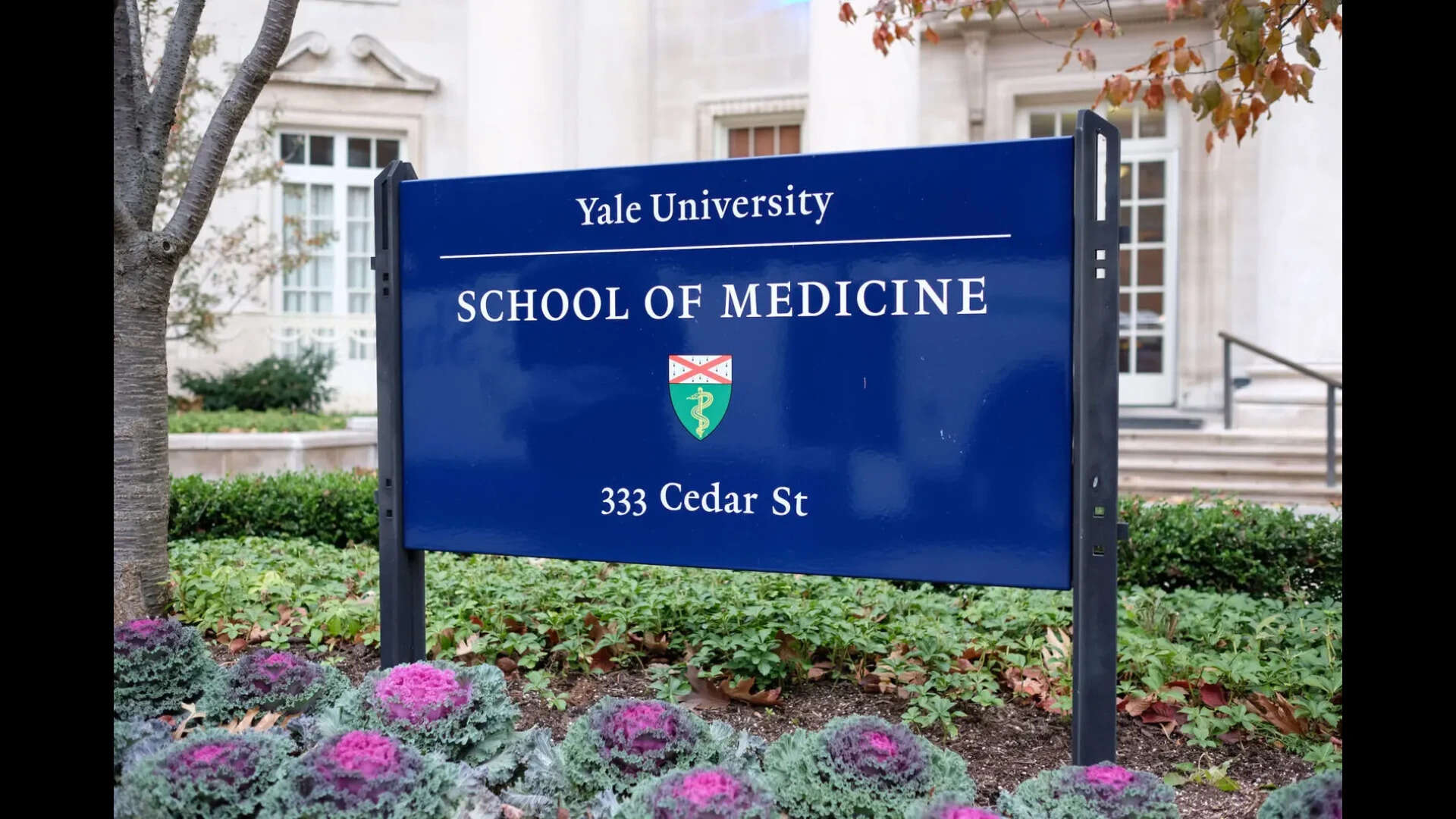
The Department of Justice under the Trump administration took a swing at Yale, claiming the Ivy League giant illegally discriminated against Asian and White applicants. The headlines screamed about unfairness. The public debated quotas. The ivory tower scrambled to defend its "diversity" goals.
They all missed the point.
The entire premise of the lawsuit—and the public outrage surrounding it—rests on a collective delusion: that elite university admissions were ever meant to be a meritocracy based on test scores and GPAs. They weren't. They aren't. And if we actually moved to a purely data-driven system, the very people screaming for "fairness" would be the first to burn the system down.
The Fraud of the Level Playing Field
The DOJ’s argument was simple: Yale used race as a "determinative factor" in hundreds of admissions decisions. They pointed to the statistical gap where Asian American and White students needed significantly higher scores to secure a seat compared to Black and Hispanic peers.
This isn't a secret. It’s a design feature.
I’ve spent two decades watching how high-stakes institutions select talent. Whether it’s a Tier-1 VC firm or a Yale admissions committee, the goal isn't to find the "best" individual. The goal is to curate a specific ecosystem. Yale isn't a school; it’s a hedge fund with a library attached, and its "portfolio" is its student body.
When you treat admissions like a math problem, you ignore the reality of institutional survival. If Yale admitted students solely on SAT scores and linear achievements, the campus would be a monoculture of high-achieving test-takers who look exactly alike on paper. That is a terrible business model for a global power broker.
The Asian American Penalty is a Branding Problem
The "bamboo ceiling" in Ivy League admissions is real, but it’s not just about race—it’s about the commodification of excellence.
The lawsuit highlighted that Asian American applicants with perfect scores were rejected at higher rates. The lazy consensus says this is "racism." The uncomfortable truth is that elite schools view high test scores as a commodity. When everyone has a 1580 SAT, the 1580 becomes worthless.
Elite admissions officers look for "angularity"—students who are world-class at one weird thing—rather than "well-rounded" students who are great at everything. Many Asian and White applicants are coached by the same high-priced consultants to be perfectly well-rounded. In the eyes of an admissions officer, "perfectly well-rounded" is synonymous with "boring."
The system doesn't hate Asian applicants. It hates predictable excellence.
The White Applicant Victimhood Complex
The inclusion of White applicants in the DOJ’s "discriminated against" group is the most cynical part of the entire litigation. It ignores the massive, invisible thumb on the scale that has favored White applicants for a century: Legacies, donors, and "niche" sports.
Let’s look at the data the lawsuits usually skirt around. At many elite institutions, legacy students—those whose parents attended the school—are admitted at rates quadruple that of the general pool. These spots are overwhelmingly occupied by White, wealthy applicants.
If we truly want to dismantle "discrimination," we have to stop talking about race for a second and talk about the "Development Office." If you’re a White applicant complaining about affirmative action while your neighbor got in because his dad donated a wing to the library, you’re pointing your anger at the wrong target.
Imagine a scenario where we remove race-conscious admissions but keep legacy preferences. The "fairness" the DOJ claimed to seek would simply result in a more entrenched aristocracy.
The Fallacy of the Test Score
We treat the SAT like it’s a measurement of innate brilliance. It’s not. It’s a measurement of how well you can navigate a specific, standardized puzzle.
Research from the College Board itself has shown that SAT scores are more closely correlated with family income than with first-year college success. When you argue that higher scores should guarantee admission, you are essentially arguing that the wealthiest families should have a guaranteed right to buy their way into the ruling class via test prep tutors.
Yale knows this. They know that a student who scored a 1400 while working a job and attending an underfunded rural school likely has more "grit" and long-term potential than a student who scored a 1600 after three years of private coaching in Greenwich, Connecticut.
Calling this "discrimination" is a gross oversimplification. It’s a sophisticated risk-assessment model.
Why "Race-Blind" is a Myth
The push for race-blind admissions is a quest for a vacuum that doesn't exist. You cannot evaluate a human being without context. If an applicant writes about their experience as a first-generation immigrant or their struggles with systemic poverty, you are seeing the "race" factor whether it’s checked in a box or not.
The DOJ’s demand that Yale stop using race as a factor is an impossible order. It’s like asking a scout to evaluate a baseball player but ignore the fact that the player was born in a country where baseball is the national religion. Context is everything.
The real tragedy isn't that race is considered; it's that we have so few seats at the table that we've turned the admissions process into a gladiatorial arena. Yale has an endowment of over $40 billion. They could double their class size tomorrow. They don't. Scarcity is what keeps their brand valuable.
The Actionable Truth for Applicants
If you are an applicant or a parent caught in this crossfire, stop playing the game the way it was played in 1990.
- Stop Chasing the 1600. Once you hit the 95th percentile, every extra hour spent studying for a standardized test has a negative ROI. Spend that time starting a business, writing a book, or failing at something spectacular.
- Lean Into Your "Otherness." Whatever makes you an outlier in your demographic is your greatest asset. If you’re an Asian student who hates math and loves 18th-century French poetry, lead with that.
- Accept the Corruption. The system is rigged. It’s rigged for the wealthy, the connected, and the historically marginalized—all at the same time. It is a messy, inconsistent, human process.
The End of the Ivy Monopoly
The Trump administration’s lawsuit was eventually dropped by the Biden administration, but the Supreme Court eventually finished the job by effectively ending affirmative action nationwide.
The result? Nothing changed for the better.
Schools just shifted their essays to "identity" prompts. The wealthy found new ways to signal their status. The underlying problem—the obsession with a handful of prestige brands as the only gateway to success—remains untouched.
We don't need "fairer" Ivy League admissions. We need the Ivy League to matter less. As long as we treat these schools like the only gatekeepers to the C-suite and the halls of power, we will continue to fight over the scraps of a broken, biased system.
The lawsuit was a distraction. The real scandal is that we still believe these institutions are the arbiters of merit in the first place.
Stop asking for a fair seat at a rigged table. Build a different table.