The sawdust on the floor of the mill used to smell like a future. For decades, the scent of Douglas fir and western larch meant steady paychecks, college funds for teenagers who had never left the valley, and the quiet, heavy pride of making something with your bare hands that would shelter a family a thousand miles away.
Today, that sawdust smells like panic.
Step inside a British Columbia plywood manufacturing plant right now. Listen. The rhythm is all wrong. The presses are stuttering. The men and women who run these massive, roaring hydraulic lines are checking their phones too often, waiting for an email that will dictate whether their shift next Tuesday even exists.
They are waiting on a guillotine blade. It is called a tariff. And it is set to drop at fifty percent.
Math is cold. Fifty percent is not just a percentage. It is a brick wall built at the border. It is a death sentence for margins that were already thin enough to read through.
Take Mark, for instance. (Though he is a composite of a dozen plant managers I have spoken with across the province, his ledger is painfully real.) Mark has spent thirty years in the timber industry. He started as a teenager sweeping resin off the concrete floor, worked his way up through the grading lines, and now oversees a payroll of two hundred workers. He knows the moisture content of a veneer sheet just by the way it flexes in his palm. He knows the exact humming pitch of the rotary lathes when they are chewing true.
What Mark does not know how to do is absorb a fifty percent tariff. Nobody does.
Margins in the forest products sector do not have room for a sudden, astronomical markup. When a board leaves a B.C. mill, it competes in a merciless North American market. Buyers in Seattle or Chicago or Toronto have options. If Canadian plywood suddenly spikes by half its value overnight because of a sudden trade penalty, those buyers do not sigh and pay the difference. They pivot. They buy structural panels from somewhere else. They substitute. They seal the door.
And when the buyers walk away, the presses stop. When the presses stop, the ledger bleeds out in days.
To understand why this moment feels so catastrophic, you have to look past the bureaucratic shorthand of trade disputes and look at the physical reality of what it takes to turn a log into a sheet of plywood.
Imagine peeling an apple in one continuous, perfect ribbon. Now scale that up to a three-ton log of timber, spinning at terrifying speeds against a razor-sharp steel blade. That is how veneer is born. It is an art form disguised as heavy manufacturing. It requires precision, immense capital investment, continuous energy, and a workforce that has spent generations learning how to squeeze maximum value out of a declining timber supply.
For years, B.C. manufacturers have weathered storms that would have flattened other industries. Beetle kills, devastating wildfires that charred timberlands to ash, fluctuating housing markets, and tightening provincial harvest quotas have squeezed the supply chain from every conceivable angle. Mills have closed permanently in towns where the mill was the only reason the grocery store stayed open.
Yet, the remaining plywood producers held on. They retooled. They automated where they could. They tightened their belts. They believed that structural wood products—the literal bones of North American homebuilding—would always find a market because people always need roofs over their heads.
Then came the looming deadline. The cliff edge.
A fifty percent tariff does not squeeze a business; it suffocates it. In the high-stakes game of commodity manufacturing, a company operates on single-digit profit margins during good years. A sudden cost increase of that magnitude is not an expense that can be passed down the line or absorbed through clever accounting. It is a wall. It means selling every single sheet of plywood at a catastrophic loss, or not selling it at all.
Consider the ripple effect. It does not stop at the mill gates.
When a B.C. plywood plant shuts down because the math no longer works, the shockwave travels backward and forward instantly. The independent loggers cutting timber in the rugged interior forests find their trucks parked indefinitely. The haulers burning diesel along winding mountain highways lose their routes. The local diner that depends on the 6:00 AM shift change for half its daily revenue starts trimming hours. The tax base of an entire municipality shrinks, threatening local schools and infrastructure maintenance.
This is the invisible stake of trade policy. It is easy for trade representatives in distant capitals to look at spreadsheets and treat percentages as abstract variables in a macroeconomic equation. But those numbers have names and addresses attached to them. They belong to people who know every knot and grain pattern in the wood they process, people whose identities are inextricably bound to the rhythmic thrum of the production line.
Mark walked the floor of his plant yesterday. He stopped by the primary lathe, running a gloved hand along the vibrating machinery. The air was thick with the familiar, sharp tang of wood tannin and hot oil. One of his veteran operators looked up from the control panel, offering a tight, anxious smile. No words were exchanged. There was nothing left to say that hadn't already been hashed out in emergency meetings, boardrooms, and union halls.
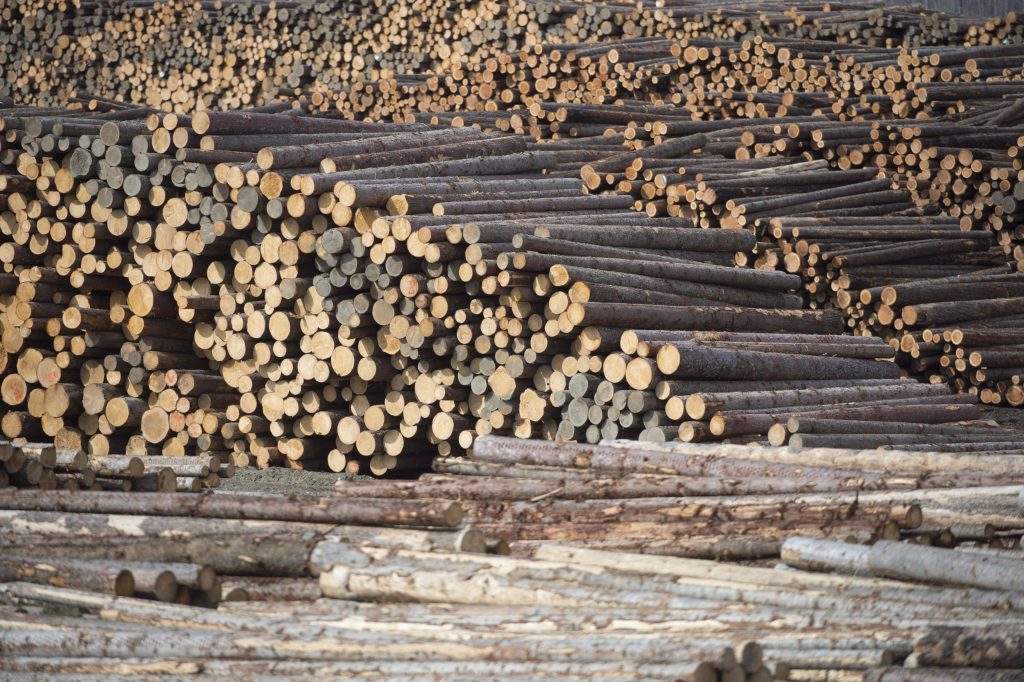
The deadline is approaching with the unyielding momentum of a freight train. The warehouse bays are stacked high with finished panels, gleaming under the sodium lights, waiting to be loaded onto flatbeds that may never arrive.
Outside, the B.C. mist clings to the evergreens, quiet and heavy. Inside, the machines are still running. For now. But the silence waiting on the other side of that deadline is deafening.