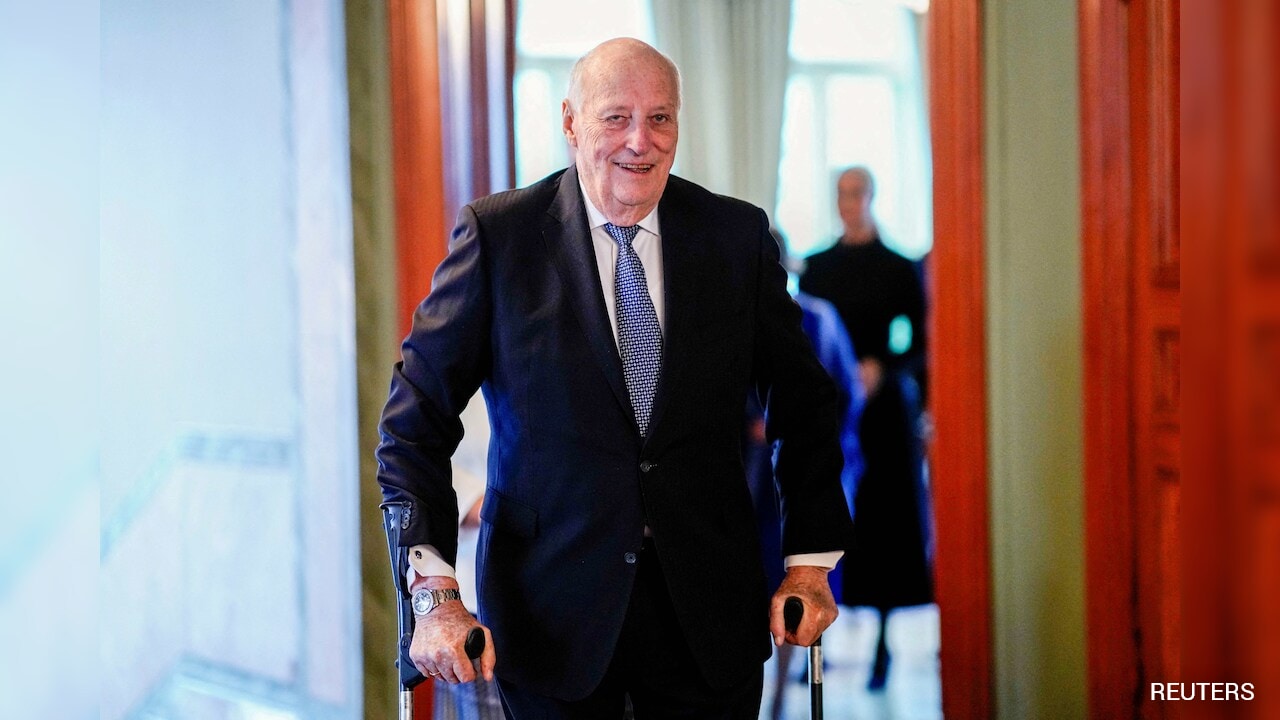
Flags fluttered at half-mast across Oslo on a quiet Friday morning as the Royal Palace confirmed that King Harald V had passed away at the age of 89. As Europe's oldest reigning monarch, Harald didn't just occupy a ceremonial throne for thirty-five years; he fundamentally redefined what it meant to wear a crown in a modern, egalitarian democracy. While other royal houses often stumbled behind closed doors, Harald kept his doors remarkably open, earning the affectionate title of a national grandfather who weathered historic crises alongside his people.
His life story reads like a twentieth-century epic. Born in 1937, he was only three years old when Nazi troops invaded Norway, forcing him and his family to flee. He spent part of his childhood as a refugee in the United States, living just outside Washington D.C. before returning to a liberated homeland in 1945. Those formative years of displacement forged a profound humility that stayed with him long after he inherited the throne in January 1991 following the death of his father, King Olav V.
Defying Tradition for True Love
Long before he became a unifying statesman, Harald faced a personal crisis that nearly broke the Norwegian monarchy. In 1959, he met Sonja Haraldsen, a commoner. For nearly a decade, the couple kept their relationship quiet while navigating a rigid constitutional and social wall that demanded a royal heir marry within nobility.
Public opinion was fiercely divided. Many traditionalists warned that a commoner bride would weaken the institution. Harald quietly stood his ground, letting it be known that he would remain unmarried rather than wed anyone else. Faced with the prospect of ending the royal line, the government and King Olav finally relented. When Harald and Sonja married in August 1968, it changed the DNA of the Norwegian court forever. It proved that the king valued personal authenticity over out-of-touch royal orthodoxy.
A Pillar During National Trauma
Monarchies in constitutional democracies survive on goodwill, and Harald earned his capital through unmatched empathy during times of profound national grief. Following the devastating terrorist attacks in July 2011, when a far-right extremist murdered 77 people, Harald stepped forward not just as a head of state, but as a grieving father and grandfather. His voice trembled on national television as he promised more openness, more democracy, and absolute humanity.
He doubled down on those progressive values in 2016 during a landmark speech in Oslo parklands, where he famously declared that Norwegians included "girls who love girls, boys who love boys, and boys and girls who love each other." He pointed out that Norwegians came from northern, middle, and southern regions, and that some had roots in immigrant communities from Kosovo, Iran, Pakistan, and elsewhere. By leaning into modern diversity, he shielded the monarchy from irrelevance.
Rejecting the Trend to Abdicate
In recent years, health scares mounted. He battled bladder cancer back in 2003, required various heart procedures, and received a permanent pacemaker during a vacation in Malaysia. When neighboring monarchs like Denmark's Queen Margrethe chose to abdicate, observers regularly asked if Harald would step down.
He always answered with absolute clarity. The oath he took before the Storting parliament in 1991 was for life. He maintained that duty until his final days at Oslo University Hospital, refusing to treat the crown as a 9-to-5 job you retire from when things get tough.
The Road Ahead for King Haakon VIII
With Harald's passing, the crown passes instantly to his 53-year-old son, who assumes the regnal name Haakon VIII. The transition happens smoothly under constitutional rules, requiring no immediate coronation.
Yet the new king inherits a complex landscape. The royal family has recently faced intense scrutiny regarding family controversies and scrutiny over past associations. Haakon takes over an institution that relied heavily on his father's personal warmth, moral clarity, and decades of earned trust.
Norway pauses to mourn a sailor, an Olympian, a survivor, and a king who proved that royal bloodlines matter far less than a genuine connection to ordinary people. Follow the upcoming extraordinary Council of State as Haakon officially takes his oath before parliament, marking the beginning of a brand new era in Scandinavia.