Municipal crisis management relies on two interdependent pillars: physical risk mitigation during acute confrontations and public trust preservation in the immediate aftermath. When an officer-involved shooting occurs in a highly sensitive urban corridor, these pillars face maximum operational stress. The July 2026 critical incident in Madison, Wisconsin—where a suspect fleeing on a bicycle was fatally shot following a physical struggle and the alleged deployment of a bladed weapon—exposes structural vulnerabilities in less-lethal escalation protocols, agency transparency timelines, and municipal risk management.
The Operational Mechanics of the Encounters
The sequence of events leading to fatal force illustrates a rapid collapse of less-lethal force options under high-arousal tactical conditions. Analyzing the mechanics reveals three distinct operational phases: pursuit, physical containment, and lethal force application.
[Initial Dispatch: Vehicle Check Calls]
                   │
                   ▼
[Tactical Pursuit: Suspect Flees on Bicycle]
                   │
                   ▼
[Physical Engagement: Four-Officer Containment Attempt]
                   │
                   ▼
[Force Escalation Failures]
 ├── Conducted Energy Weapon (Taser) ──> INEFFECTIVE (Probe disconnect / clothing barrier)
 └── Knife Brandished / Officer Injured ──> Dynamic breach of safety radius
                   │
                   ▼
[Lethal Force Application: 3 Rounds Discharged]
                   │
                   ▼
[Administrative Isolation: Post-Incident Investigation via DCI]
Phase 1: Pursuit and Interception Dynamics
Dispatch records indicate four responding officers intercepted a suspect fleeing on a bicycle after reports of attempted vehicle break-ins. In municipal policing, bicycle-mounted fleeing suspects present a high-velocity, fluid tactical problem. Officers must choose between vehicle containment tactics, physical dismounting, or setting static perimeters.
When officers closed the physical distance, the suspect dismounted—either forced or unseated by momentum—shifting the confrontation from a mobile chase to an intimate, close-quarters physical struggle.
Phase 2: Breakdown of Less-Lethal Intervention
During the ground struggle, officers attempted to gain physical control while one officer deployed a Conducted Energy Weapon (CEW or Taser). The deployment failed to achieve neuromuscular incapacitation. CEW failures in dynamic, dynamic physical struggles typically stem from three specific variables:
- Close-Proximity Probe Spread: CEWs require probe separation (ideally 12 inches or more) to achieve full motor-nerve override. In close-quarters grappling, probe spread is frequently insufficient to induce incapacitation.
- Clothing Barriers: Loose or heavy clothing prevents proper probe penetration into epidermal tissue.
- Target Movement: High-velocity movement during physical contact causes missed probe placement or rapid disconnection.
When the CEW failed to control the suspect, the tactical dynamic deteriorated. The suspect brandished a knife and injured an officer. In close-quarters combat—defined in law enforcement mechanics by the Tueller Rule framework—a bladed weapon within arm's reach presents an immediate, highly lethal threat, leaving officers fractions of a second to transition up the force continuum.
Phase 3: Transition to Fatal Force
The officer injured by the knife discharged three rounds from his service weapon, killing the suspect. From an operational standpoint, the transition from less-lethal containment to lethal defense occurred in seconds.
The structural problem in this tactical progression is clear: when less-lethal tools fail at zero range against an edged weapon, officers are forced into a binary binary choice between suffering severe personal injury or deploying fatal force.
Information Asymmetry and the Political Transmission Belt
The post-incident escalation occurred along two distinct vectors: real-time public narrative control and state-level political positioning.
Bystander Capture vs. Official Information Bottlenecks
In modern urban environments, public perception is governed by citizen-generated video long before official law enforcement briefings occur. Bystander mobile footage showing the physical struggle and three gunshots circulated rapidly across social media platforms within hours of the incident.
This creates an acute information asymmetry matrix:
| Information Channel | Transmission Speed | Contextual Scope | Public Impact |
|---|---|---|---|
| Social Media / Bystander Video | Immediate (Real-time) | Narrow (Third-person visual angle, lacks tactical perspective) | High emotional impact, swift mobilization |
| Law Enforcement Press Briefing | Delayed (Hours to days) | Broad (Internal dispatch records, officer statements) | High skepticism if unbacked by raw footage |
| Independent State Investigation (DCI) | Long-term (Weeks to months) | Definitive (Forensics, ballistics, autopsy, interview audio) | Low immediate impact on public unrest |
Because Madison Police Department officers involved were not equipped with body-worn cameras (BWCs), the department could not counter or contextualize bystander video with official first-person visual evidence. This lack of objective visual records amplifies public distrust and leaves an information vacuum that community advocacy organizations immediately fill with claims of systemic violence.
Political Signal Transmission
The vacuum forced high-ranking state officials to intervene quickly to insulate broader governance systems from the political fallout:
- Governor's Public Intervention: Governor Tony Evers issued immediate public statements emphasizing "transparency and accountability" and validating public grief. This serves a strategic function: signaling to constituencies that state oversight mechanisms will actively monitor municipal actions.
- Statutory Independent Review: Under Wisconsin state law (Wis. Stat. § 175.47), officer-involved deaths must be investigated by an independent state agency. The case was immediately turned over to the Wisconsin Department of Criminal Investigation (DCI). This statutory requirement removes the conflict of interest inherent in self-investigation but slows down the release of public facts while formal evidentiary chains are established.
Historical Friction Points and Municipal Risk Profiles
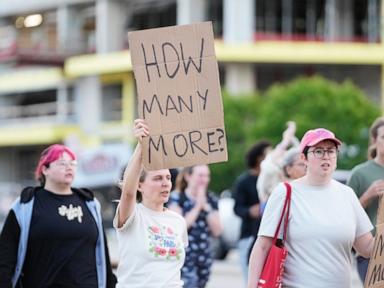
The Marquette neighborhood in Madison is an established flashpoint for municipal tension. The impact of a police shooting in this specific geographic zone is multiplied by historical precedents.
[2012: Paul Heenan Fatal Shooting]
       │
       ▼ (Exoneration / Public Frustration)
[2015: Tony Robinson Fatal Shooting]
       │
       ▼ (Mass Protests / DA Declines Charges)
[2026: Present Incident (Williamson & S. Baldwin St)]
       │
       ▼
[Compound Community Trauma & Immediate Unrest]
When an incident occurs in a location with prior high-profile fatal shootings, community reaction is not evaluated against the facts of the isolated event. It is evaluated against the accumulated precedent of past exonerations. Consequently, standard police messaging ("wait for the investigation") fails because the public views the investigative process itself as a mechanism designed to shield officers from legal consequences.
Operational Directives for Municipal Leadership
To mitigate operational failures and stabilize municipal trust following critical incidents, public safety agencies must implement a rigorous crisis protocol:
- Mandate Universal Body-Worn Camera Deployment: Operating a major metropolitan police force in a high-density urban core without body-worn cameras creates an unsustainable legal and political liability. Body cameras provide immediate, objective corroboration of force continuum escalation, protecting both officers acting within policy and the public against excessive force.
- Overhaul Close-Quarters Less-Lethal Defense Tactics: Training programs must reassess the deployment parameters of Conducted Energy Weapons during close-range physical struggles. Agencies should train officers to prioritize physical distance management or alternative physical control techniques when edged weapons are suspected, rather than relying on CEWs in low-probability engagement windows.
- Establish Rapid Video-Release Frameworks: To reduce narrative asymmetry, municipalities must create legal and policy pathways to release relevant raw evidence—including bystander footage reviewed by investigators and 911 audio—within 48 to 72 hours of an incident, provided it does not compromise witness integrity.
- Decouple Crisis Response Communications from Strategic Silence: Police leadership must replace standard, scripted sympathy statements with transparent updates regarding exact procedural steps, precise timelines for investigation milestones, and clear explanations of statutory constraints.
The path toward stabilizing public trust does not rest on public relations appeals following a crisis. It requires the deliberate implementation of objective record-keeping technology, tactical training grounded in realistic physical dynamics, and an uncompromised commitment to independent procedural oversight.